



Maybe you’ve heard that before. Be grateful. Keep a gratitude journal. Count your blessings. It’s advice that’s popping up everywhere, from therapists’ offices to social media captions to Self-help books that are It will change your life.
But does it actually work?
This is a fair question. Wellness culture moves quickly, and not everything it espouses stands up to scrutiny. Some practices are genuinely supported by evidence. Others are more about feeling good in the moment than being productive Real and lasting change.
Gratitude falls firmly into the first category. Over the past two decades, researchers have seriously studied it in clinical settings, with brain scans, with large sample sizes, and with appropriate controls. What they found holds: Gratitude improves mental health, and in ways deeper than just that Feeling a little better At this moment.
Here’s what the science actually says, including the parts most articles ignore.
What science actually shows

Research on gratitude and mental health is well established and substantial.
One of the most important foundational studies came from psychologist Robert Emmons at UC Davis and his colleague Michael McCullough. In their landmark 2003 study, participants who kept a weekly gratitude journal reported feeling 25% better overall than those who journaled about daily annoyances or neutral events. They also exercised more and had fewer physical complaints. This study became the basis for decades of follow-up research.
Recently, a 2024 study was published in JAMA Psychiatry It was based on data from 49,275 women enrolled in the long-term Nurses’ Health Study. Participants with the highest gratitude scores were 9% less likely to die over the next four years than those with the lowest scores. The researchers controlled for physical health, economic circumstances and other mental health factors. Impact contract.
In a widely cited study from Greater Good Science Center at UC Berkeleyresearchers worked with nearly 300 adults who were seeking mental health counseling. One group was asked to write letters of gratitude to people in their lives once a week for three weeks.
Compared to the groups who journaled about negative experiences or did not journal at all, the gratitude letter writers reported significantly better mental health and showed significantly greater activity in areas of the brain associated with empathy and positive emotion, even three months after the study ended.
The effects are real. They are measurable. They appear across a wide range of mental health outcomes, including depression, anxiety, stress and resilience.
😔Depression
Practicing regular gratitude is associated with decreased symptoms of depression and reduced risk of relapse over time.
😰 Anxiety
Gratitude reduces activity in the brain’s threat-detection center, quieting the mental noise that fuels anxious thinking.
😤 Stress
Grateful people show lower cortisol levels and better heart rate variability, two reliable signs of a calmer response to stress.
💪 Flexibility
People who consistently practice gratitude bounce back faster from setbacks and report higher emotional stability over time.
How gratitude changes the brain
the The mental health benefits of gratitude It’s not just self-reported feelings. It shows up in brain scans.
When you consistently practice gratitude, many things happen on a neurological level. The prefrontal cortex, which is the part of the brain responsible Taking perspective, controlling impulse, and making informed decisionsshows increased activation. This is why grateful people tend to respond to difficulty more calmly rather than impulsively.
Meanwhile, the amygdala, your brain’s threat-detection center, becomes less reactive over time. This is important because An overactive amygdala is one of the core features of both anxiety and depression. Gratitude does not silence him, but it lowers the volume.
Gratitude also activates reward pathways in the brain, leading to the release of dopamine and serotonin. These are the same neurotransmitters targeted by many antidepressant medications. The difference is that gratitude gradually builds the path through repetition, rather than chemically modifying the baseline.
This is where neuroplasticity comes in Explains positive psychologyThe brain is not static. It renews itself based on what we repeatedly think and do. Every time you focus on something you’re grateful for, the neural pathway that supports that response becomes a little stronger. Over the weeks and months, noticing the good things becomes less like effort and more like negligence.
Why it works – the mechanism
Knowing that gratitude helps. Understanding why it works makes it easier to actually do it.
Researchers have identified three psychological mechanisms behind the effect of gratitude on mental health:
🔍 Attentional shift
Gratitude redirects what your brain is searching for. Instead of giving in to threat and imperfection, they start looking for support, progress, and small moments of goodness. This is not wishful thinking. It is a cognitive habit that can be trained.
🪞 Change self-perception
Gratitude softens the harsh inner voice amplified by depression and anxiety. When you constantly notice what is going right, including things you have done or handled well, self-judgment loses some of its control.
🤝 Social cohesion
Expressing gratitude strengthens relationships, and strong relationships are one of the most consistent indicators of good mental health. Feeling connected to others reduces isolation, an important driver of both depression and anxiety.
None of these mechanisms require you to feel happy first. This is the part that most people get wrong. Gratitude doesn’t work by making you feel positive and then producing benefits.
It works by shifting what your brain pays attention to, which then changes how you feel over time. Feeling follows practice, not the other way around.
What actually works in practice
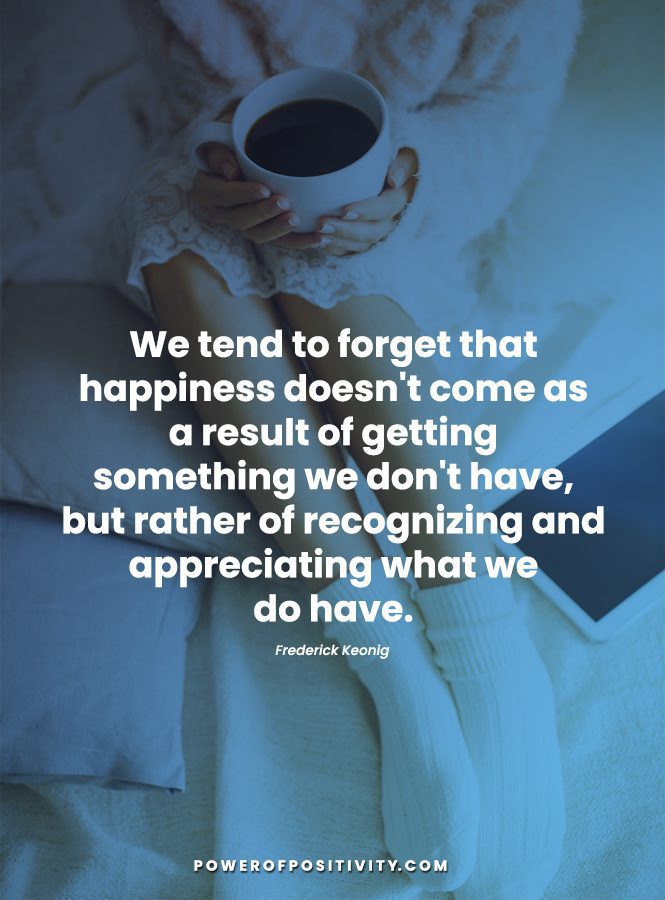
The good news is that the practices supported by the strongest evidence are also the simplest. You don’t need a special journal, app, or dedicated hour in your morning.
according to Positive psychology research reviewThere are three practices that consistently produce measurable mental health benefits:
1. Gratitude journal, two to three times a week
Not daily. Interestingly, research conducted by Sonya Lyubomirsky of the University of California, Riverside found that journaling once or twice a week produces stronger results than doing it every day. Daily practice may feel mechanical, which reduces its effectiveness. Write down three to five specific items two or three times a week.
2. Thank you letter
Write a letter to someone you have never thanked properly before. You don’t have to send it, although sending it amplifies the effect. Brown and Wong’s study at UC Berkeley found that this single exercise had the strongest short-term effect of any gratitude intervention tested.
3. Three useful things
At the end of the day, write down three things that went well and why they did. This practice, developed by Martin Seligman at the University of PennsylvaniaIt showed significant reductions in depression and increases in happiness after six months of follow-up in randomized controlled trials.
Start with one. Try it for two weeks before deciding whether it works or not.
Frequently asked questions
How long before practicing gratitude starts to change my mental health?
Most research suggests two to four weeks of consistent practice before noticeable transformations appear. Early changes tend to be subtle: a little less rumination, a calmer response to stress. The most profound changes in mood and resilience accumulate over months, not days.
Can gratitude replace therapy or medication for depression?
No, gratitude is an obvious complement to occupational therapy, not a substitute for it. If you suffer from clinical depression or anxiety, please work with a qualified mental health professional. Practicing gratitude works best alongside therapy, not instead of it.
Does gratitude work if you’re not a positive person by nature?
Yes. The research does not require optimism as a starting point. In fact, many studies show the greatest benefits in people who don’t naturally feel gratitude. This practice works by building a new habit of interest, not by amplifying an existing trait.
What is the most effective gratitude practice?
Based on current research, a gratitude message produces the strongest single-session effect. Writing to someone you’ve never properly thanked before activates more areas of the brain and leads to long-lasting mood improvements than journaling alone.
Final thoughts
The evidence is clear and has been building for more than two decades. Gratitude really improves mental health. It reduces symptoms of depression and anxiety, reduces stress hormones, strengthens relationships, and gradually rewires the brain to notice more of what is good and less of what is threatening.
But it is not magic, and it is not a cure. It works when it is honest, specific and consistent. It works best in conjunction with other forms of care, not as a substitute for them.
If you were skeptical, that doubt was reasonable. However, the research has held up.
Choose one exercise from this article. Try it for two weeks. Let the evidence speak for itself.

