
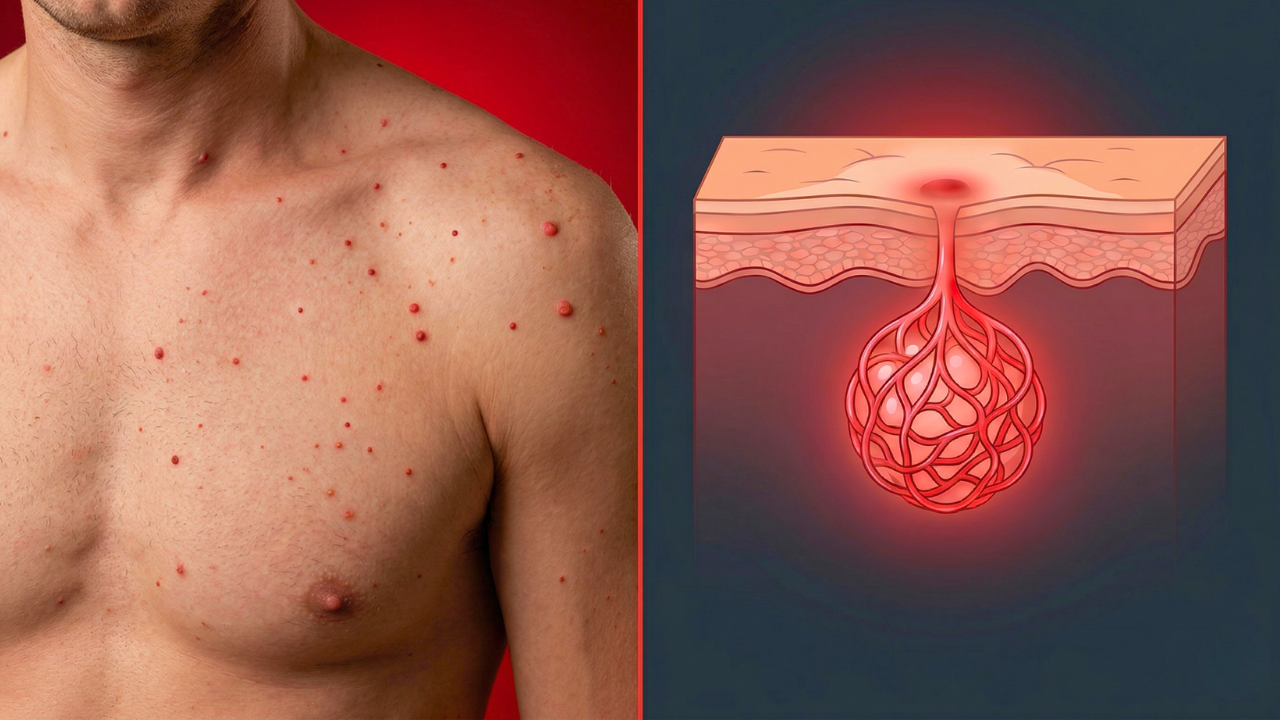

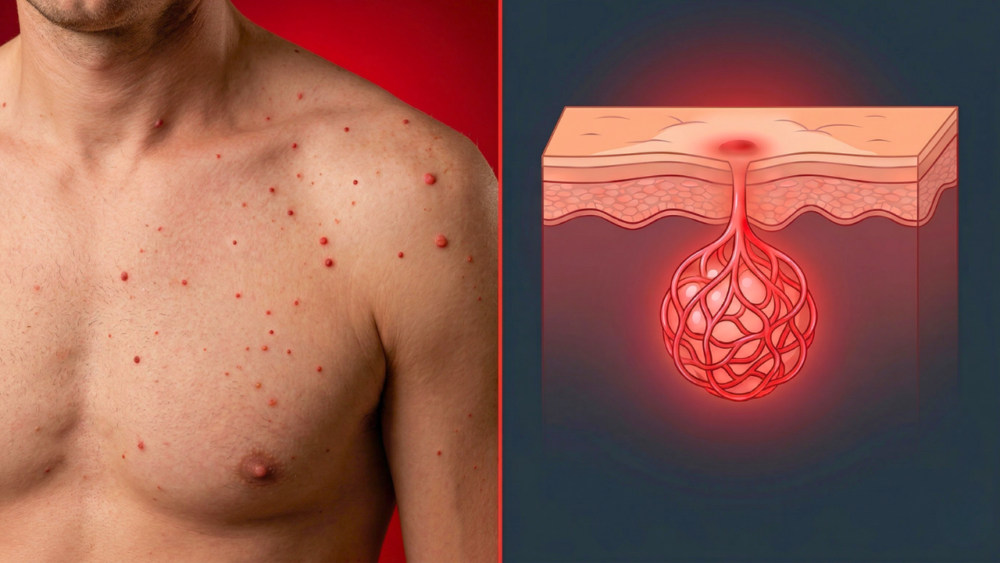
Have you ever gotten out of the shower or changed your clothes and noticed a small, bright red dot on your skin that wasn’t there before? It’s a common experience, and it can certainly be a little unnerving. Your mind may start racing, wondering who it is, where it came from, and whether you should be worried. Is it just a random blemish, or is your body trying to tell you something important?
Today I want to talk to you about these little red dots because understanding what they are is the first step to calming your mind or taking the right action. While many of these spots are completely harmless and a normal part of life, some can be a sign that you need to pay close attention to your health. We’ll break down the most common causes, from those that are completely benign to those that require contacting your doctor. You’ll learn how to differentiate between them and what your body may transmit through your skin.
Key takeaways
- Most of the small red dots are harmless cherry hemangiomas, which are non-cancerous skin growths that increase with age.
- Some red spots, called telangiectasia, are broken blood vessels caused by long-term sun exposure.
- Red or purple dots that appear suddenly and do not go away when pressed are called petechiae. This could be a sign of bleeding under the skin and requires medical evaluation.
- Petechiae can be caused by anything from a severe cough to more serious underlying conditions that affect platelets, such as infections, autoimmune disorders, or even blood cancers.
- Pay attention to when and how the spots appear. Sudden clusters, especially with other symptoms such as fatigue or fever, should prompt an immediate visit to a doctor.
1. You have cherry angiomas (the most common cause)
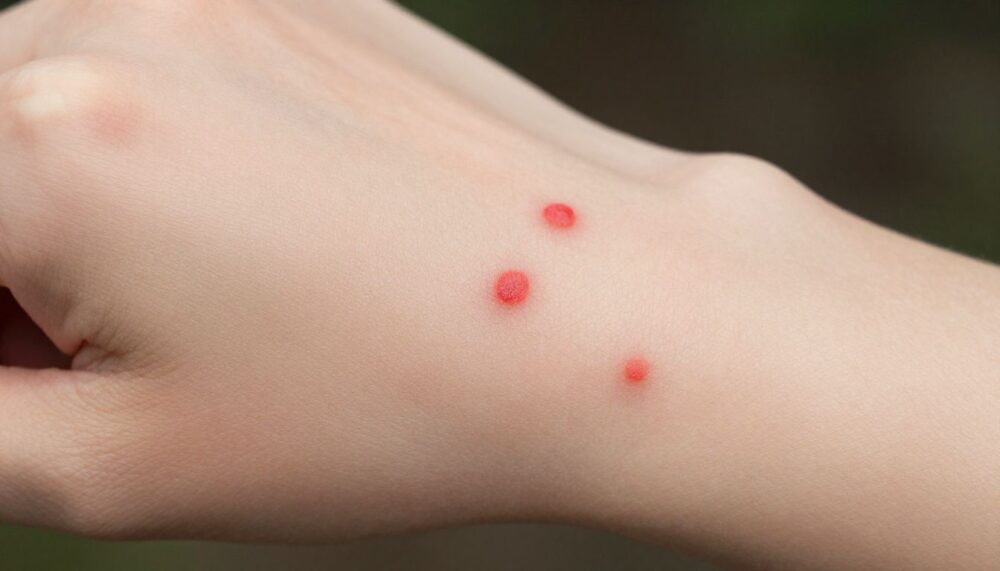
Let’s start with the most likely cause of those little red dots: Cherry hemangiomas. If you have small, bright, cherry-red spots on your torso, arms, or legs, you’re probably looking at one of them. It is incredibly common, especially when you are over the age of 30. In fact, the Cleveland Clinic suggests that about half of adults will have them by the time they reach middle age. It is completely benign, meaning it is not cancerous and does not pose any threat to your health. It is simply a group of small blood vessels clustered together near the surface of the skin.
Most people find them by accident and can’t even remember when they first appeared because they grow very slowly over months or even years. It is usually painless and does not cause any symptoms. For this reason, it is considered a cosmetic rather than a medical issue. However, if you notice that the spot you think is a cherry hemangioma begins to change in shape, size, or color, or if it begins to bleed without any injury, it is always a good idea to see a dermatologist to be sure.
2. Years of sun damage show
If the red spots you see look more like small, thin red lines or spider-like patterns, you probably have it Telangiectasiawhich are often called “spider veins.” These are common in areas that get a lot of sun exposure, such as your face (especially around the nose), chest, shoulders, and back. What’s going on here? Over many years, ultraviolet rays from the sun weaken the walls of small blood vessels just below the surface of the skin. This damage causes them to expand and become more noticeable.
People with fair skin who have had a lot of unprotected exposure to the sun throughout their lives are more susceptible to it. Study published in Journal of the American Academy of Dermatology He emphasized that this cumulative exposure to sunlight is a major factor, and these signs become more noticeable as we age, especially after the age of 40. While telangiectasia is generally harmless, you should think of it as a visual report card of your sun exposure history. It’s a powerful reminder of how sensitive your skin is to the sun’s rays and why using sunscreen consistently is one of the best things you can do for the long-term health of your skin.
3. You have petechiae (a sign of bleeding)
Now, let’s move on to the kind of red spots you should take seriously. If you see small, flat, red or purple dots that appear suddenly, you may have so-called Petechiae. Unlike cherry hemangiomas, these are not tumors. They are microbleeds, which means a small amount of bleeding occurs from the capillaries under your skin. The most important way to tell them apart is through a simple pressure test: If you press on a cherry hemangioma, it will briefly turn white (white) and then turn red. Petechiae will not. Since the blood has already seeped out of the vessel, applying pressure on it does not affect the color.
Petechiae often appear in clusters and are most commonly found on the lower legs and ankles, but they can appear anywhere. Their appearance is a sign that something is preventing your blood from clotting properly at a microscopic level. This is why it serves as a potential red flag that something else is going on inside your body.
4. Your platelet count is low
The most common cause of lentigo formation is a low platelet count, a condition known as Thrombocytopenia. Platelets are small blood cells that rush to the site of injury to form a plug and stop bleeding. When you don’t have enough of them, even just a little, the daily pressure on your capillaries can cause them to leak, leading to lentigines. So, the question becomes: Why is my platelet count low?
There are many possible causes. It could be something temporary, like a viral infection (flu, mono, etc.) that your body is fighting. Some medications, including some antibiotics and over-the-counter pain relievers, can also affect platelet levels. However, low platelets can also be a sign of more serious chronic conditions. Autoimmune disorders, where the body’s immune system mistakenly attacks its own platelets, can be a cause. Problems with the bone marrow, where platelets are made, can also lead to low platelet counts. This includes serious conditions such as leukemia or other blood cancers, which is why the sudden appearance of petechiae should never be ignored.
5. You have been experiencing severe physical stress
Interestingly, you do not have to have an underlying medical condition to develop lentigines. Sometimes, it can appear in completely healthy people after a period of intense physical stress. This happens because a sudden and strong increase in pressure inside your body can cause fragile capillaries to rupture. For example, a severe and prolonged bout of coughing or vomiting can cause petechiae to appear on the face, neck and chest. The same thing can happen after lifting very heavy weights or even after the stress of childbirth.
In these cases, lentigines are the direct result of a temporary physical event. They are usually harmless and will go away on their own within a few days as your body reabsorbs the blood. The main difference here is the clear association with a specific and strenuous activity. If you cannot link the appearance of petechiae to an event like this, it is likely related to an internal problem that needs to be investigated.
6. How to know the difference and when to act
With all this information, how do you solve it on your body? Let’s summarize. Cherry hemangiomas are bright red, raised or flat, and grow slowly over the years, usually on the trunk. Telangiectasia is red, spider-like lines in sun-exposed areas. Petechiae are flat red or purple dots that appear suddenly, often in clusters on your lower legs, and do not turn white when pressed.
So, when should you see a doctor? While most red spots are benign, any new or changing spot on your skin is worth checking, especially in sun-exposed areas, to rule out skin cancer. However, you should seek urgent medical evaluation if you notice sudden onset of petechiae. This is especially critical if they are accompanied by other symptoms such as unusual fatigue, fever, easy bruising, unexplained headache, or bleeding from the nose or gums. As a review for 2021 in Practical and conceptual dermatology Highlights: The sudden appearance of petechiae with these systemic symptoms requires prompt examination to rule out serious blood disorders. Early detection is absolutely key.
conclusion
Your skin is an incredible organ. It is not just a barrier that protects you from the outside world; It is also a mirror that reflects what is happening inside. While it’s easy to panic when you see something new like little red dots, it pays to be curious. Most of the time, these spots are just part of your skin’s natural aging process. But sometimes, they serve as an early warning system. By taking care of your body, understanding the key differences between these spots, and knowing when to seek professional advice, you are taking a proactive and empowering role in your health. Don’t ignore what your body is telling you, listen to it, and when in doubt, let your doctor help you translate.
sources
- Cleveland Clinic. (2022). Cherry hemangioma. Retrieved from Cleveland Clinic website.
- Shah, S., and Khatri, S. (2021). Petechiae, lilacs and bruises. Practical and conceptual dermatology11(4), e2021129.
- Yu, Sh., et al. (2019). Clinical approach to skin imaging. Journal of the American Academy of Dermatology80(1), 1-12.

