


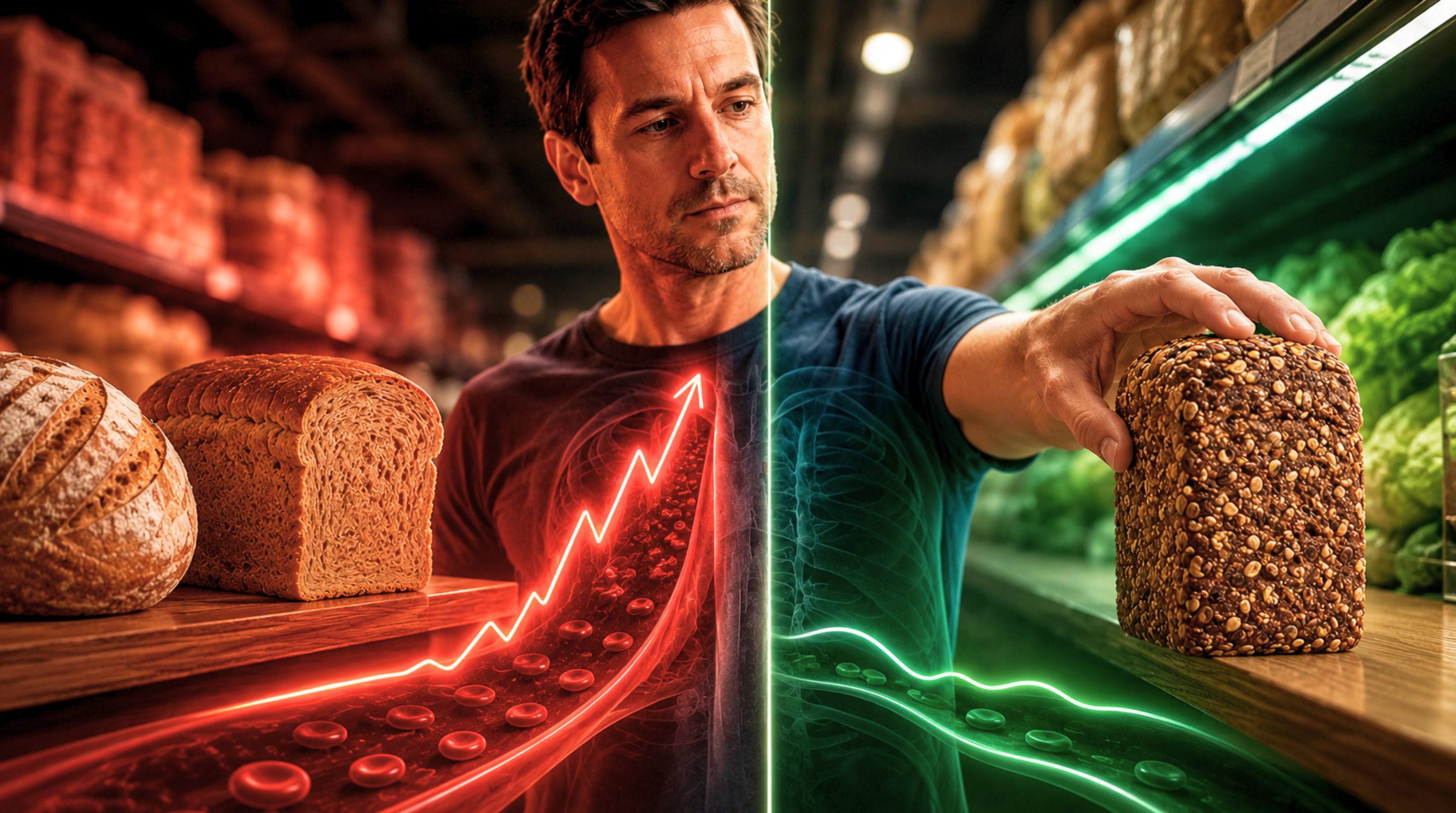
If there’s one thing that’s incredibly hard to give up, it’s bread. For many people, a no-bread breakfast seems like it’s not a real breakfast at all. You’ve probably spent years buying whole wheat bread, thinking you’re making the healthy choice. Many people do this with good intentions, thinking they are taking better care of themselves. The problem is that many “healthy” whole wheat breads sold in the supermarket raise your blood glucose almost as much as regular white bread. Their glycemic index is often similar to table sugar, which means they can raise your blood sugar just as quickly. It turns out that the bread you trust most may not be what you think it is.
If your glucose level has reached the ceiling, or you simply want to take care of your health without giving up bread, keep going. In this article, I’ll rank the types of bread from the kind that raises blood glucose the most to the kind that barely stirs it. I’ll explain the science behind this, the true cost, and why the healthiest option isn’t always the most expensive. No miracles, no scare tactics — just the truth about what actually moves your blood sugar. (Based on the insights of Dr. Alberto Sanagstín)
Key takeaways
- It is starch: The main cause of the high glycemic load from bread isn’t just the added sugar; It is starch that breaks down into glucose. the speed It is this collapse that matters most.
- Don’t be fooled: Many commercial breads made with “whole wheat,” “multigrain,” and “gluten-free” can raise blood sugar just as quickly as white bread.
- Better, not perfect: It is true that long-rising sourdough and dense whole-rye breads are better options that slow the release of glucose, but they still contain a significant amount of starch.
- Winners: The best low-glycemic breads are made with almond flour and surprise champion, flaxseed flour, due to their extremely low starch content.
- Context is everything: What you put on your bread and how you prepare it can make or break your blood sugar goals.
1. Bread that fools you: The worst blood sugar offenders
Let’s start with the worst criminals. One of these things might be your current preference, and the truth might be a little bit painful.
At the top of the list is Sliced sandwich bread. This is the most processed of them all. Many brands contain added sugars on top of the starch. Notice how soft this bread is? It is designed to be easy to chew and digest. It is as if the digestion process has already begun for you. The result? Glucose molecules are released into the bloodstream incredibly quickly.
Right behind it is Classic White bread. This is made from refined starch with almost nothing to slow it down. To understand why, imagine that starch is like a string of pearls, where each pearl is a glucose molecule. As long as the pendant is intact, it’s okay. But when you digest it, your body breaks the string, and all the pearls (glucose) are released into your blood. With white bread, this thread is cut almost immediately, resulting in a high glycemic index and a rapid rise in blood sugar.
And now to the big trap: Whole wheat supermarket bread. You may be thinking, “But I’ve been buying this for years for the fiber!” I understand. But let’s look at the objective data. Many commercial whole-wheat breads raise your glucose almost as much as white bread. The glycemic index numbers are often very similar, hovering around 70, while table sugar is around 65. This doesn’t mean sugar is better; It means that the glycemic index doesn’t tell the whole story and that this type of bread is not the armor you thought it was. Why is this happening? In many of these breads, the flour is ground so finely that the starch is digested as quickly as refined starch. Yes, bran fiber helps, but it’s often not enough to significantly slow down the process of breaking down starch knots.
What about Multigrain or seed bread? Wait a minute. The problem is that many types of bread sold in supermarkets carry only a health halo. They often use the same old refined wheat flour and sprinkle some seeds on top to make it look different. You have to read the first ingredient on the label to see what you’re really getting.
and Gluten-free commercial bread? Here’s something counterintuitive: It often raises blood sugar just as much, or even more. Manufacturers replace wheat with starches from rice, corn, tapioca or potatoes. This is like changing the driver of a car while leaving the same engine. The car will still go at the same speed. While there are exceptions — specialty formulations rich in fiber, protein, or resistant starch — they are not the rule. If you suffer from celiac disease, gluten-free baking is essential. But “gluten-free” does not mean “low glucose.”
2. The middle ground: better baking options
Now we move to the middle area. These types of breads will continue to move the needle on your blood sugar, but less severely.
First up is Real sourdough bread. Sourdough is not magic. It’s fermentation. Think yogurt. Milk turns into yogurt because bacteria work on it for hours, eating the sugars and leaving the acids behind. Something similar happens with leavened bread. During the long fermentation process, bacteria and yeasts work on the dough, producing natural acids. These acids change the structure of the bread, making the starch more difficult to digest. It is as if the pearl necklace is tied into a tighter knot. It takes your body longer to break it down, so glucose enters your blood more slowly. This helps, but make no mistake, it is still a starchy bread. It does not automatically become a low-carb food. The effect is promising and mild, but it is not a magic bullet. Beware of fake sourdough in the supermarket, which is often just plain bread with an added sour flavour. What matters is the long fermentation of several hours.
Next is Dense whole rye breadlike Pumpernickel style. They are dark, compact, and full of fiber and density. This makes it difficult for your body to break down these starch complexes. This is useful, but be careful. Much of what is sold as “rye bread” is actually a blend of rye and wheat flour. You need to look for a really dense and heavy loaf.
Finally, there it is Buckwheat bread. Buckwheat is not even a type of wheat and does not contain gluten. It behaves better than regular wheat in terms of blood sugar, but it is not a zero-sum food. It still has starch. It’s in the good area, but it’s not at the top of our list.
3. Winners: Best breads for stable blood sugar
Now we get to the bread that barely moves your glucose levels. Here you will find our winner and a surprise about the price.
Among the best is Almond flour bread (Unless you have a nut allergy, of course). If it is really made from almond flour without mixing it with other starches, its effect on glucose is usually very low because it contains almost no starch. It works very well, but it has one major problem: cost. Depending on the store and brand, almond flour can be very expensive, which can add up if you eat it daily.
And the winner is… Flax seed bread. You may not have expected this, but if it’s made from real flaxseed meal with no added flour or starches, its effect on glucose is usually minimal. Why? Because flax contains almost no starch. There is hardly a pearl necklace that can be broken. But that’s not all. When you grind flaxseeds, they release mucilage, a type of gel that acts like a little plug in the intestines. It can slow the absorption of glucose from your entire meal. It doesn’t block glucose, but it helps the entry be slower and more gradual. This has been observed in human studies, so it’s not just a laboratory theory. The effect is modest but can be beneficial, especially with continued use.
The biggest surprise is the price. Flax seeds are usually much cheaper than almond flour. In many countries, you can find it at a very affordable price, especially if you buy it in bulk. This is a case where the healthier option doesn’t have to be the most expensive option.
4. How to eat bread the right way to improve blood sugar
Choosing the right bread is only half the battle. These three details can change the entire outcome.
First, forget the myths about “fixing” stale bread. Toasting, freezing, or cooling white bread may slightly alter glucose response in some cases due to the formation of resistant starch, but the effect is modest and highly variable. It doesn’t turn bad bread into good bread. Don’t build your health strategy around this trick.
Second, if you use whole flax seeds, Grind them first. If you eat them whole, many of them will pass through your system undigested, and you will miss out on the benefits. You can buy them pre-ground, but they can spoil more quickly once opened. The ideal way is to buy whole seeds and grind them just before use. If you buy it ground, store it in an airtight container in a cool, dark place.
Third, and this is the most important rule of all: Watch what you put on top. Jam, honey and similar toppings will turn a low-carb bagel into a high-glycemic breakfast. Instead, pair your bread with healthy fats and proteins like olive oil, avocado, eggs, or a little cheese. These accompaniments are delicious and won’t usually spike your glucose, as long as your portions are reasonable.
5. Important warnings before switching
Before you run out and buy flaxseeds, there are some honest warnings.
If you are taking medication, stability is the golden rule. If you are taking levothyroxine for your thyroid, take it on an empty stomach as directed and separate it by several hours from meals that are very high in fiber. If you take anticoagulants such as warfarin, eating a normal portion of flax in a meal is usually not a problem, but avoid making sudden drastic changes to your diet without consulting your doctor.
What about the idea that seeds can harm the kidneys? In normal food amounts, there is no need to worry. However, if you have a history of kidney stones (especially calcium oxalate stones) or are on a renal diet, talk to your doctor or dietitian before starting to eat large amounts of almonds or flaxseeds daily.
Bottom line: one small, informed change
If you take away just one thing from this article, let it be this: This week, try changing just one bread, like the bread you eat for breakfast. You don’t have to be perfect; You just have to make an informed decision. As you saw today, the food you trust the most can be one of the biggest contributors to high blood sugar. By understanding the difference between fast-digesting starches and low-carb alternatives, you can still enjoy baking while taking control of your health.
source: Dr. Alberto Sanagstín

