


Published on July 21, 2026 at 06:00 AM
On a recent midsummer afternoon, three generations of Davis men gathered around a kitchen table in upstate New York: family patriarch Don, his son Evan, and the newest member of the trio, eight-month-old Jacob. Good things seem to come in threes, like triathlons.
Family has always been at the heart of the Davis clan, and nowhere is that more evident than in the community they have built around Survival of the Shawangunks (SOS) Triathlona point-to-point endurance race that combines running, open water swimming and road cycling through New York’s Shawangunk Mountains. What began decades ago as a spark of inspiration while Don Davis was training for the IRONMAN World Championships has evolved into one of the sport’s most distinctive and enduring popular events.
On Sunday, August 30, Survival of the Shawangunks (SOS) will celebrate its 40th anniversary, a rare event in the endurance sports scene. Increasingly dominated by large ethnic organizations. Its longevity is something its founder Don Davis, now 80, describes as “both surprising and freeing.”
“It’s you versus the mountain.”
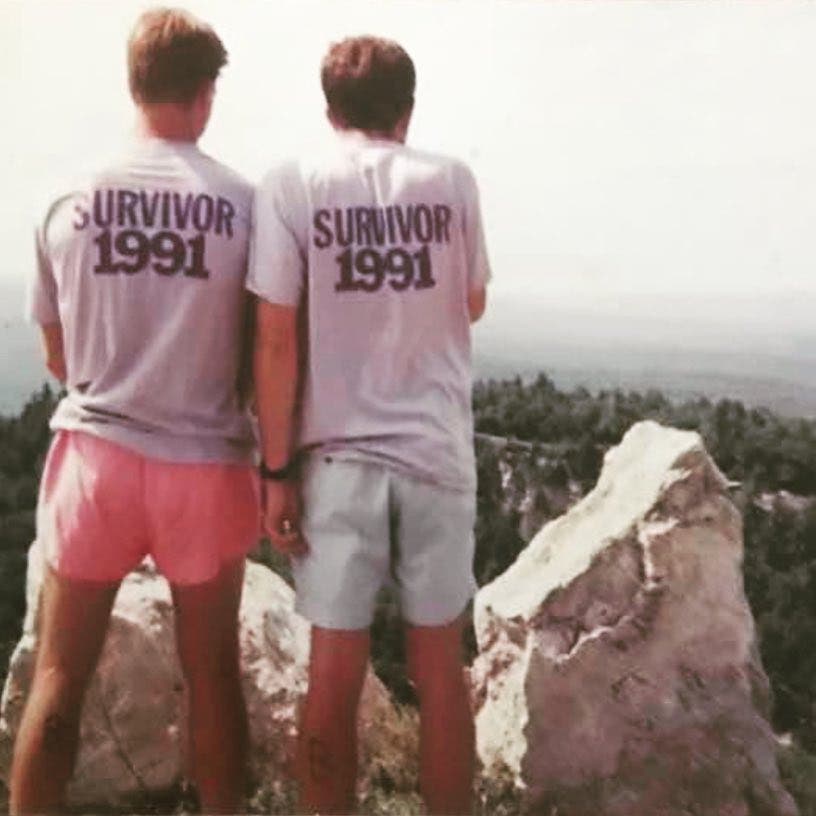
In the early 1980s, Don Davis was immersed in the endurance boom before the rest of the world could fully catch up. After spending a summer biking from Brooklyn to Rockaway Beach in Queens, where he worked as a lifeguard for 30 years, he discovered distance running, checking the New York City and Boston Marathons off his list before setting his sights on an Ironman race in Hawaii, then in its infancy.
About 90 miles north of New York City, the Shawangunk Mountains, known simply as “the Gunks” to locals, became Davis’s training ground. As he drove up the winding mountain roads past the region’s glacially clear lakes, an idea began to form: What if one workout connected them all?
“Mother Nature placed these beautiful lakes in the middle of the Shawangunk Mountains,” Don Davis said. “I made the first lake the longest, the second lake the middle distance, and then you can run the third lake.”
He invited a group of friends to try out the challenge, and from that adventure, Survival of the Shawangunks was born.
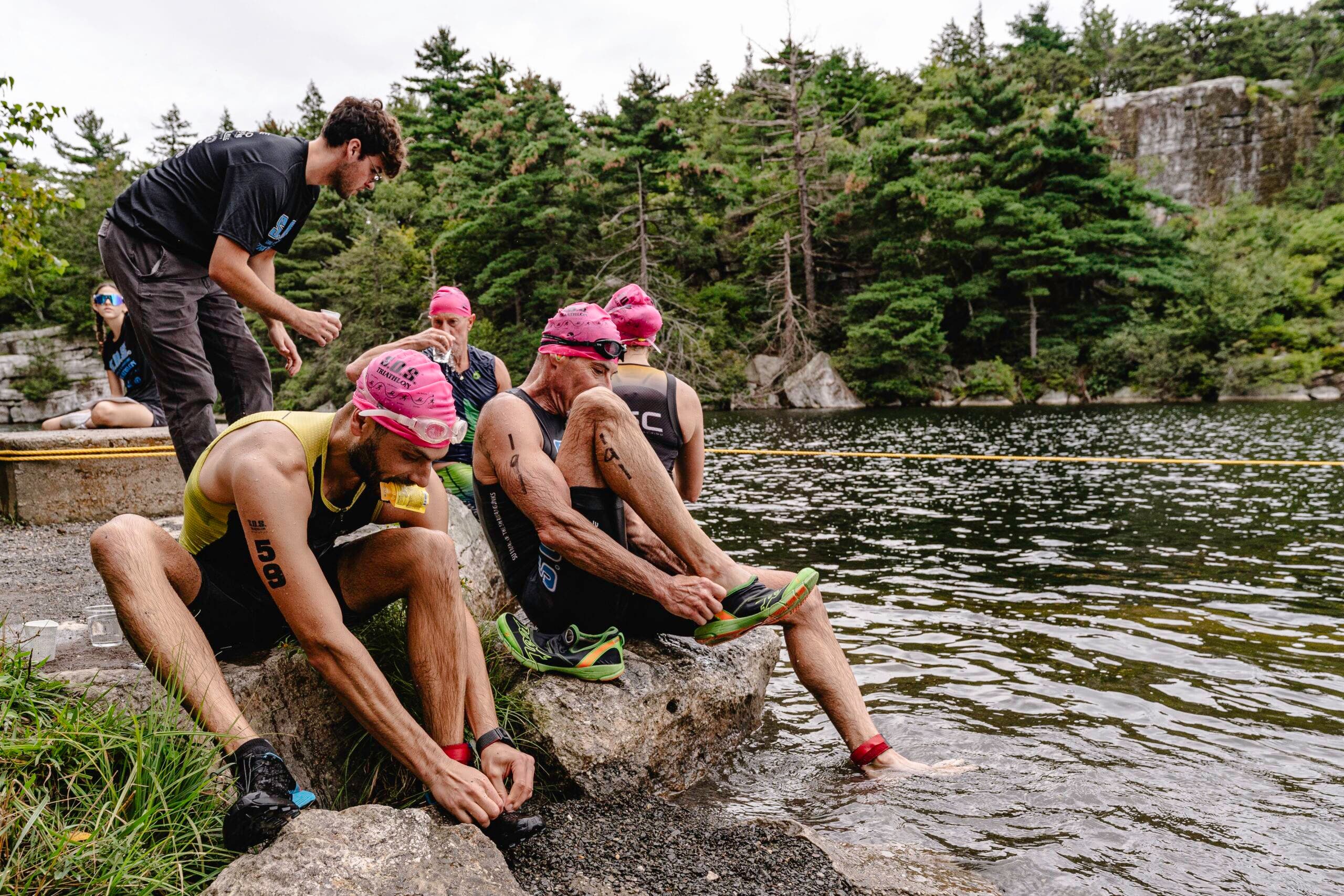
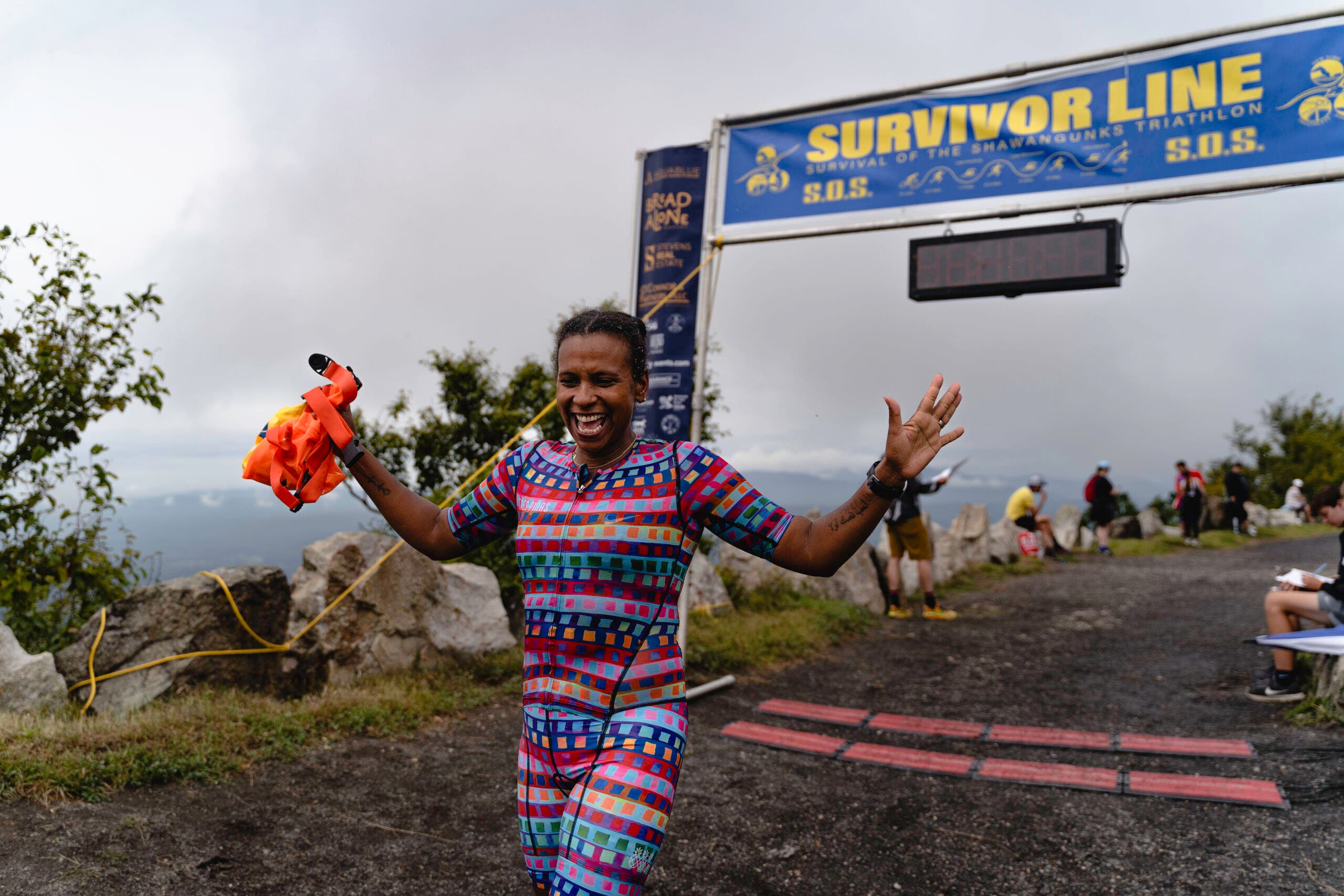
Forty years later, the landscape still dictates almost every aspect of racing. In the eight-stage event, athletes bike more than 30 miles through the mountains and complete four running segments on gravel cart trails totaling 18.7 miles. In between, they swim 2.1 miles across three lakes, carrying their running shoes across each crossing before returning to shore. The race culminates with a 0.7-mile climb to the finish atop the Sky Top Tower, a historic stone lookout located at about 1,550 feet and accessible only by foot.
There are no traditional transition areas and few spectators lining the track. Instead, competitors spend most of the day alone with the mountains.
“It’s definitely an adventure,” said Evan Davis, who has gradually taken over most of the leadership of the event and also serves as CEO of the New York Triathletes Association, which his father founded. “It’s really man versus nature. It’s a very beautiful event that breaks the mold.”
For triathlete Rebecca Wassner, a four-time SOS champion who currently holds the women’s record of 4 hours and 40 minutes, the race’s challenging terrain is part of its appeal.
“When you’re out there racing, it’s 100 percent about you versus the mountain. It’s relentless. You have a lot of time to think, and at the same time, you can turn your shoulder and see these amazing, beautiful views,” Wasner said. “Then there’s the final swim at Mohonk, when you can see the finish line there and know you’re so close, but you still have that final ascent to the Sky Top Tower ahead of you. It really defines what it means to be a survivor.”
Keep the dream alive
While the race has stayed remarkably close to its original vision (and course), including limiting the field to just 300 entrants (entries sell out in minutes), SOS has not remained frozen in time.
The biggest operational changes came during the COVID-19 pandemic, when organizers had to rethink logistics. Before then, each rider needed a personal support crew to transport their bike between stages. The race now offers official bike transportation from the start at the Ulster County Fairgrounds through the transition from bike to run, eliminating the need for athletes to recruit their own crew. The fairgrounds also serves as a center for post-race festivities and participant camping, making the event more accessible and community-based.
The Davis family credits their volunteers, many of whom have been involved in the race since the beginning, with helping to maintain the event’s unique spirit.
“We have volunteers dating back over 40 years,” Evan Davis said. “There’s a great community surrounding this event and it’s stayed strong, and I think that’s one of its biggest strengths.”
A family affair at SOS Triathlon
Of course, it is beneficial for the event to remain a family affair, both in its leadership and among its participants. Don Davis competed in the race countless times and eventually recruited Evan to join him.
“I grew up with race, and my father and all his friends were like gods among men to me,” Evan said. “Eventually, my father and I did it together. He stayed with me the whole time, even though he could have gone much faster. People were proud of themselves because they beat Don Davis, but in reality they only beat Evan Davis.”
Now, as he watches his son, Jacob, grow up around racing, Evan hopes the tradition will continue for another generation.
“Keeping the dream alive and going strong in this day and age is in itself a very exciting accomplishment,” Evan said. “We are grateful, and we hope its success continues. You never know what the future holds, but we are grateful for where we are.”

