
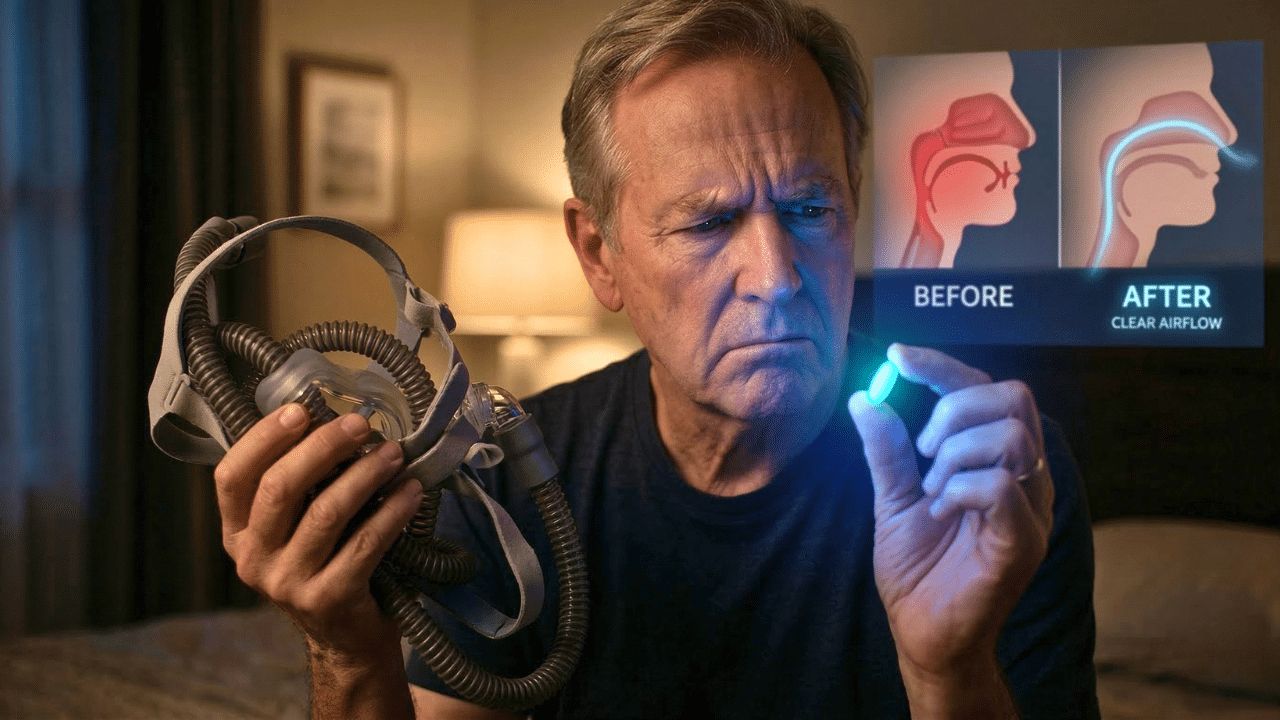


A new era in sleep apnea treatment may be on the horizon as clinical trials show promising results for a new pill-based treatment. This development could provide a much-needed alternative to millions suffering from current mask-based treatments like CPAP, potentially revolutionizing how obstructive sleep apnea (OSA) is managed.
Key takeaways
- A new drug combination, AD109, has shown significant success in reducing breathing disorders in a large clinical trial.
- Another drug, Sulthiame, showed a significant reduction in apnea and improved sleep quality in European trials.
- These pill-based treatments aim to provide a more effective and acceptable alternative to continuous positive airway pressure (CPAP) machines.
- Researchers are optimistic about the potential of these new treatments to improve the lives of millions affected by sleep apnea.
A new dawn for the treatment of sleep apnea
For decades, it has been the primary treatment for Obstructive sleep apnea (OSA) It is continuous positive airway pressure (CPAP) therapy, which involves wearing a mask connected to a machine that delivers pressurized air to keep your airway open while you sleep. While CPAP masks are effective for many, discomfort and inconvenience lead to poor adherence, with up to half of patients stopping their use within a year. This has led to the continued search for alternative treatments.
Recent clinical trials have brought this research closer to a successful outcome. One promising development involves a drug combination, known as AD109, which has proven surprisingly successful in a large clinical trial. This combination, which consists of atomoxetine (used to treat ADHD) and a modified form of oxybutynin (used to treat overactive bladder), works by stimulating the muscles that keep the upper airway open during sleep. In a trial of 646 participants, AD109 reduced breathing disturbances by 56% compared to placebo. Furthermore, 22% of patients treated achieved complete control of their condition, defined as fewer than five airway obstructions per hour.
Solthiami: Another promising candidate
In parallel, A European clinical trials He highlighted the potential of sulthiame, an existing drug approved for pediatric epilepsy, as a treatment for sleep apnea. In a study of 298 participants with moderate to severe OSA, high doses of sulthiame resulted in up to a 47% reduction in sleep apnea, along with improved nighttime oxygen levels. Researchers believe that sulthiame stabilizes respiratory control and increases respiratory drive, thus preventing airway collapse.
How do new treatments work?
Both AD109 and sulthiame target the underlying mechanisms of sleep apnea, providing a pharmacological approach to managing the condition. AD109’s dual mechanism of action targets norepinephrine and acetylcholine pathways, which are essential for maintaining airway muscle tone during sleep. On the other hand, sulthiame appears to enhance the body’s natural breathing regulation.
Addressing the challenges of current treatments
OSA affects an estimated 60 to 80 million people in the United States and more than 1 billion people globally. Beyond daytime sleepiness, untreated sleep apnea greatly increases the risk of serious health problems, including high blood pressure, cardiovascular disease, stroke and type 2 diabetes. The development of effective oral medications can significantly improve patient compliance and long-term health outcomes.
While these results are very encouraging, more research and larger, longer-term studies are necessary to confirm the sustained efficacy and safety of these new treatments. Doctors are also keen to see data on whether these pills improve patient-reported symptoms, such as daytime fatigue, and their impact on long-term cardiovascular risk. However, the prospect of a pill that can effectively treat sleep apnea without the need for a mask represents a major leap forward in sleep medicine.

