


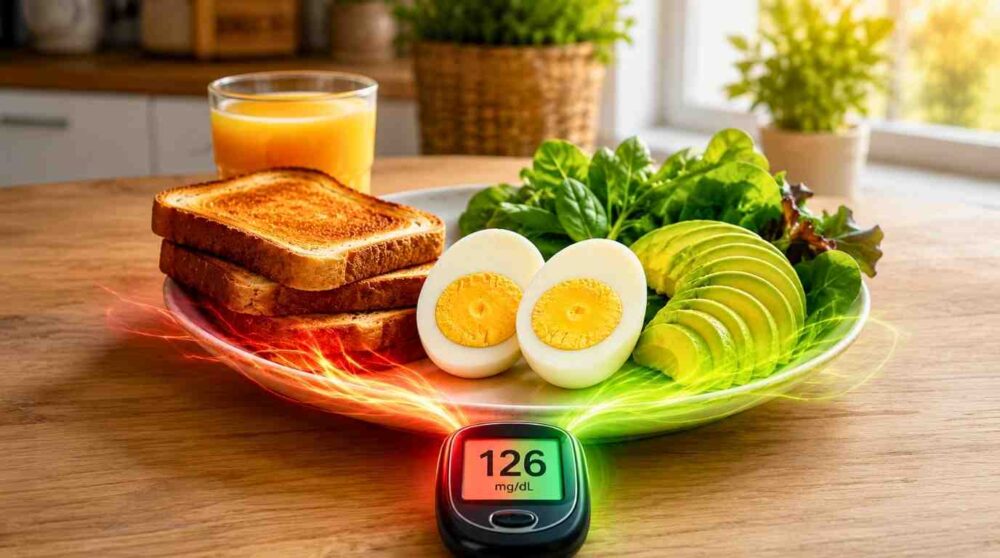
Many diabetics stopped eating eggs years ago because of cholesterol concerns, often replacing them with oatmeal, toast and juice — a swap that can make morning blood sugar control more difficult, not easier. That’s why eggs, prepared the right way, can be one of the most beneficial breakfast tools for stabilizing blood sugar.
Key takeaways
- Eggs have a glycemic index of zero and don’t raise blood sugar on their own – it’s the way they’re cooked and what they’re paired with that makes the difference.
- Current research shows that dietary cholesterol has a lesser effect on blood cholesterol than refined sugar and trans fats. Eggs can actually improve the size of HDL and LDL particles.
- Egg yolks contain most of the beneficial nutrients: choline, vitamin D, lutein/zeaxanthin, and B vitamins, all of which are particularly relevant to diabetes management.
- Cooking without oil and mixing eggs with avocado and vegetables (instead of toast and juice) supports more stable blood sugar for 4-5 hours.
- If you take insulin, tell your doctor about increasing your protein intake, because it can make the insulin more effective and may require a dose review.
Why eggs barely affect blood sugar
Not all foods affect blood sugar in the same way. The protein acts as a traffic controller, slowing the rate at which glucose enters the bloodstream rather than allowing it to flow out all at once. Two whole eggs provide about 12 grams of high-quality protein, and eggs’ glycemic index — a measure of how quickly a food raises blood sugar — is zero. Eggs on their own do not raise blood sugar.
Reconsidering anxiety about cholesterol
For decades, the guidelines have been simple: eggs contain cholesterol, so avoid them to protect your heart. Current research paints a more nuanced picture — the cholesterol you eat is not the main driver of your blood cholesterol levels, as your liver produces cholesterol independently, and it’s the refined sugar and trans fats that most influence how much your liver produces. Research has also found that eating whole eggs regularly can raise good cholesterol (HDL) and convert LDL particles into a larger, less harmful form.
Don’t skip the egg yolk
Most of the beneficial nutrients in an egg are concentrated in the yolk:
- Choline – Supports healthy processing of fat in the liver, which is especially important for people with diabetes.
- Vitamin D – Supports the extent of cell response to insulin. Many diabetics suffer from vitamin D deficiency without realizing it.
- Lutein and zeaxanthin – Support eye health, which is especially important because high blood sugar for a long time can lead to damage to small blood vessels in the eye.
- B vitamins – Support nerve health, to prevent tingling or numbness in the hands and feet associated with high blood sugar in the long term.
How you cook eggs is more important than the eggs themselves
The problem usually isn’t the egg, but rather what’s surrounding it. Frying in oil or butter adds extra saturated fat on top of the egg’s natural fat, and pairing eggs with white toast adds fast-digesting carbohydrates, which together raise blood sugar almost as much as a bowl of cereal does.
Three preparation methods support blood sugar stability
Maqluba without oil: Eggs contain enough natural fat to cook them in a good non-stick frying pan without adding oil – over medium heat, stirring gently for 2-3 minutes.
boiled: Place it in cold water, bring to a boil, and cook for 10 minutes for a firm yolk or 6 minutes for a softer yolk. They can be prepared in advance and kept in the refrigerator for a grab-and-go option.
Vegetable omelet: Beat two eggs, then pour them into a non-stick frying pan without oil, then add spinach, tomatoes, mushrooms or onions. The added fiber from vegetables slows the absorption of blood sugar while adding bulk and helping you feel full.
What to pair with your eggs
Half an avocado adds healthy fats that further slow digestion. Spinach provides magnesiumwhich supports insulin function more efficiently. Tomatoes, peppers, and mushrooms are low in carbs, high in fiber, and add bulk to the dish. Two eggs, cooked without oil, half an avocado, and a generous serving of vegetables can help keep blood sugar stable for four to five hours.
Three mistakes to avoid
Frying in olive oil: Olive oil is a healthy option cold on a salad, but heating it at high temperatures breaks down its protective properties and adds fats that the egg doesn’t need because eggs already contain natural fats.
Drink orange juice with breakfast: Even fresh juice is essentially concentrated sugar once you remove the fiber from the orange, and it can spike your blood sugar almost as quickly as soda. Instead, eating the whole orange keeps the fiber intact, which slows sugar absorption.
Add processed meat or packaged cheese: Packaged ham, sausage and cheese are usually high in sodium and additives without adding a meaningful nutritional benefit. Fresh cheese or a small amount of cheese is a better option if cheese is desired.
Eggs aren’t just for breakfast
Eating high-quality protein at dinner instead of rice, bread or tortillas can also affect your blood sugar in the morning. Overnight, the liver releases a steady stream of glucose into the blood. A carbohydrate-based dinner tends to stimulate the release of more glucose overnight, while a protein-focused dinner — such as eggs with vegetables — is associated with a more gradual and controlled release, which for some people translates into a noticeable drop in fasting blood sugar the next morning.
Simple daily frame
breakfast: Two eggs (boiled or without oil), half a ripe avocado, and a generous serving of vegetables. If you want something extra, you can eat a small slice of dense whole-grain bread after the eggs, because the protein first buffers the effect of carbohydrates that follow on your blood sugar.
Mid-morning (if necessary): One boiled egg with a small handful of nuts or almonds.
dinner: A simple two-egg omelet with vegetables without bread.
Important note about the medication
If you take metformin, eggs are completely safe with it, there is no interference. If you take insulin, tell your doctor when to increase your protein intake at breakfast, because protein can make insulin more effective — meaning your blood sugar may drop less than expected. This is not necessarily a problem, but your doctor may want to review your dosage. Always keep your healthcare team informed of any dietary changes, especially if you are taking medication.
A note about egg quality
Organic, pasture-raised eggs tend to be somewhat higher in omega-3 and vitamin D than standard supermarket eggs. If they’re accessible and affordable, they’re a good option — but regular eggs, prepared the right way, are still touted as a superfood. The benefit of eating eggs correctly is much more important than the difference between organic and conventional eggs.
Frequently asked questions
Are eggs really bad for cholesterol if you have diabetes?
Current research suggests that dietary cholesterol has less effect on blood cholesterol than previously thought, because the liver produces cholesterol independently and is more affected by refined sugar and trans fats. Research has also linked regular egg consumption to improved HDL and LDL particle size.
Is orange juice acceptable with breakfast if you have diabetes?
It’s not ideal, even if it’s fresh, as removing the fiber from the orange by juicing it allows the sugar to enter the bloodstream quickly, similar to soda. Eating a whole orange keeps the fiber intact, which slows down sugar absorption.
Is it safe to eat eggs if I take metformin or insulin?
Eggs are considered completely safe with metformin, and there are no interventions. If you take insulin, tell your doctor when increasing your protein intake, because protein can make insulin more effective and may lower your blood sugar more than expected — your doctor may want to review your dose.
Do I need organic or pasture-raised eggs to get these benefits?
No, organic, pasture-raised eggs are somewhat higher in omega-3 and vitamin D, but regular supermarket eggs, prepared the right way, still provide the essential benefits described here. How you cook and pair your eggs is more important than which type you buy.
Quick start checklist
- ☐ Cook scrambled eggs without oil, hard-boiled or as a vegetarian omelet
- ☐ Pair eggs with half an avocado and a generous serving of vegetables
- ☐ Skip orange juice, processed meats and packaged cheese at breakfast
- ☐ Eat eggs before any bread or carbohydrates on the plate
- ☐ Consider eating a protein-based dinner (such as an omelet) instead of rice or bread
- ☐ Tell your doctor about increasing your protein intake if you take insulin
Disclaimer: This article is for educational purposes only and is not a substitute for professional medical advice. Always talk to your doctor before making changes to your diet or medications, especially if you take insulin or other diabetes medications — changes in protein intake can affect how your medication works, and your doctor may need to adjust your dose.

