


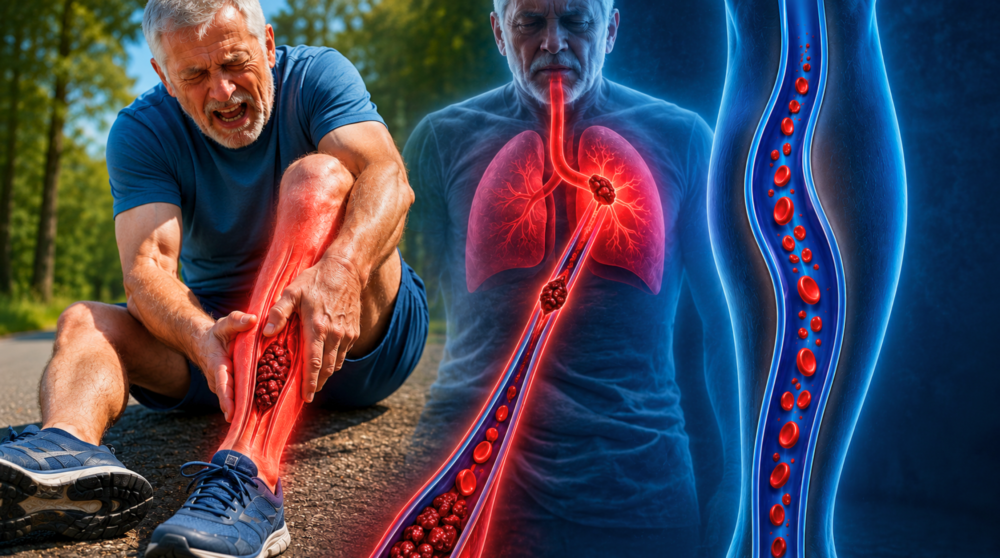
What if that tight, sore calf muscle isn’t just a simple cramp from a workout or a long day on your feet? What if it’s a silent, deadly warning sign that you can’t ignore at all? Many people ignore calf pain, but in some cases, it can be a sign of deep vein thrombosis, or a blood clot that forms in a deep vein, usually in your leg.
This is not something to be taken lightly. A piece of that clot can break off, travel through your bloodstream, and become lodged in your lungs. This is called a pulmonary embolism, and it can be fatal. In fact, there are an estimated 600,000 cases of DVT in the United States each year, and sadly, about 60,000 people die from complications. The good news is that with the right knowledge, you can learn how to spot warning signs, understand your risks, and take preventive action. In this article, we’ll give you the tools you need to evaluate your calf pain, understand when you should seek immediate medical help, and learn powerful strategies to maintain healthy circulation and prevent clots from forming in the first place. (Based on insights from Dr. Bob Schrupp and Dr. Brad Hynek)
Key takeaways
- What is deep vein thrombosis: Deep vein thrombosis (DVT) is a blood clot in a deep vein, most often in the calf. It’s dangerous because the clot can travel to the lungs, causing a life-threatening pulmonary embolism.
- Main symptoms: DVT is more than just a simple spasm. Look for swelling (especially on one side), redness, a feeling of warmth in the affected area, and persistent, often burning, pain.
- Homan’s test: This is a simple screening test you can do to check for DVT. Although a positive result is not a definitive diagnosis, it is a strong indication to visit a doctor immediately.
- Prevention is crucial: Simple habits such as regular movement, staying hydrated, using compression stockings while traveling, and managing your overall health can significantly reduce your risk of developing deep vein thrombosis.
1. What is deep vein thrombosis (DVT) and why is it so dangerous?
A Deep vein thrombosis It occurs when your blood, a fluid that normally flows, thickens and clumps together to form a solid clot within a major vein. Think of it like a traffic jam on a circulatory highway. While this can occur in any deep vein, it is most common in the lower leg or thigh. The surrounding area can become painful and swollen, but the real danger lies in the ability of the clot to move. If a piece of clot (embolus) breaks off, it travels up toward your heart and can then be pumped into your lungs, blocking a vital artery. This blockage, a pulmonary embolism (PE), prevents blood from reaching part of the lung, which can cause that part of the lung to die. This can lead to severe shortness of breath, chest pain, and, in many cases, sudden death. It is a stark reminder of how serious this condition is. A tragic example of this is the story of David Bloom, a 39-year-old NBC journalist who died from an injury while stationed with the troops during the Iraq War. It is possible that his prolonged immobilization while riding in armored vehicles led to the formation of the deep vein thrombosis that ultimately took his life.
2. Warning signs: More than just a cramp
So how can you tell the difference between benign? Muscle spasm And potentially dangerous deep vein thrombosis? You need to look for a specific set of symptoms. A muscle spasm is usually a sharp, sudden, temporary contraction. DVT, on the other hand, presents with more consistent and significant signs. Pay close attention to the following:
- Swelling on one side: This is one of the most common indicators. You will notice that one leg or leg is visibly swollen more than the other. If you recently had surgery, you may have generalized swelling in both legs, but deep vein thrombosis usually affects only one side.
- Redness and warmth: The skin over the affected area may appear red or discolored. When you touch it, it will likely feel noticeably warmer than the surrounding skin or other leg. This is due to inflammation caused by obstruction of blood flow.
- Burning or aching pain: The pain of a deep vein thrombosis is often not described as a sharp spasm, but rather as a constant pain, aching or even a burning sensation. It does not disappear when resting or stretching. The calf may be very tender to the touch.
If you experience this combination of symptoms — swelling, redness, warmth, and persistent pain in one leg — that’s a big red flag. Don’t wait for it. It’s time to think about getting it checked out.
3. Homan Test: Simple at-home assessment
Physical therapists often use a quick screening tool called the Homan test or Homan sign to evaluate the possibility of deep vein thrombosis. It is important to understand that this is It is not a final diagnosisBut a positive result strongly indicates that you need to see a doctor immediately. It is better to be wrong and get checked than to ignore a possible clot.
Here’s how to do the test:
- Entry into position: Sit or lie with your leg extended straight out in front of you. Make sure your calf muscle is as relaxed as possible.
- Dorsiflex your foot: Gently and passively pull your toes toward your nose. This movement stretches the calf muscle. For some people, this procedure alone may cause the characteristic pain of deep vein thrombosis.
- Calf pressure: If pulling your toes back doesn’t cause pain, the next step is to gently but firmly squeeze the fleshy part of your calf muscle with your hand.
A Positive Homan’s sign It is when this combination of movement and pressure causes a sharp, distinct pain deep in the calf. You will not feel typical muscle pain; It is often the intense pain that makes you want to withdraw. You can certainly try it on your other, non-painful leg. If the sensation is uncomfortable on both sides, you may just be sensitive. But if the painful leg reacts with a sharp jolt of pain while the other does not, this should be treated as a positive sign.
4. When should you visit a doctor immediately?
If you have a positive Homans test or experience the main symptoms of DVT (one-sided swelling, redness, warmth, pain), you need to call your doctor or go to an urgent care center or emergency room without delay. Do not massage the leg, as this may dislodge the clot. When you see a specialist, he or she will likely perform a more specific test. The gold standard for diagnosing deep vein thrombosis is Doppler ultrasound. This is a non-surgical, painless procedure that uses sound waves to create images of blood flow and can clearly show if a clot is blocking a vein. If deep vein thrombosis is confirmed, treatment will begin immediately, usually with anticoagulant medications (blood thinners) such as warfarin or others. These medications do not break up an existing clot, but they do prevent it from getting bigger and prevent new clots from forming, giving your body enough time to dissolve the clot naturally.
5. Prevention Tip #1: Keep Moving!
The number one cause of deep vein thrombosis is inability to move. When you sit or stand still for long periods, the blood in your legs can become stagnant because it is not being pumped effectively to the heart. The leg muscles act as a powerful pump; Every time it contracts, it compresses the veins and pushes the blood upward. Therefore, the best way to prevent clots is to keep moving.
- If you have an office job: Get up and walk around for a few minutes every hour. Go to the water cooler, walk to your colleague’s desk instead of sending an email, or just take a walk around the office.
- If you are traveling (plane, car or train): Perform ankle pumps regularly. Simply point your toes down and then pull them up toward your nose. Repeat 10-15 times every hour. This contracts the leg muscles and keeps the blood moving. Also try to avoid crossing your legs for long periods, as this can curl the veins and impede circulation.
6. Prevention Tip #2: Use compression and stay hydrated
Two simple but powerful preventative tools are compression and hydration.
- Compression socks: These are especially useful for long trips or car rides. These are not your ordinary socks. They are designed to apply gentle pressure to your legs, with the most pressure at the ankle and gradually reducing the calf. This gradient helps veins and muscle pumps move blood more efficiently against gravity, reducing the risk of pooling and clotting.
- Stay hydrated: When you become dehydrated, your blood becomes thicker and more viscous, making it more likely to clot. Make sure to drink plenty of water throughout the day, especially when traveling. Try to limit alcohol and excessive caffeine intake, as they can contribute to dehydration.
7. Prevention Tip #3: Be vigilant after surgery and with your lifestyle
Certain situations and lifestyle factors put you at greater risk of developing deep vein thrombosis.
- Post surgery: Major surgery, especially on the hips or legs, is a significant risk factor due to lack of mobility during and after the procedure. It is very important to follow the advice of your medical team. Start moving as soon as medically possible. Your doctor will often prescribe anticoagulant medications for a period after surgery to prevent clots from forming. Take this medication exactly as prescribed; It exists for a very important reason.
- General lifestyle: Maintaining a healthy weight reduces pressure on the veins in the legs and pelvis. Maintaining physical activity as a regular habit keeps the entire circulatory system in good condition. Finally, if you smoke, stopping smoking is one of the best things you can do for your vascular health. Smoking damages the lining of your blood vessels, making clots more likely to form.
conclusion
It can be easy to ignore calf pain, but it’s important to listen to your body and understand the difference between minor pain and a serious warning sign. Deep vein thrombosis is a medical emergency that requires immediate attention. By learning to recognize key symptoms, using the Homans test as an initial screen, and understanding when to seek help, you empower yourself to take control of your health. Most importantly, by incorporating simple preventive strategies into your daily life — such as moving regularly, staying hydrated, and managing your overall health — you can significantly reduce your risks and keep your blood flowing freely and safely. Be proactive and careful and never hesitate to have your condition checked if you have any concerns.

