
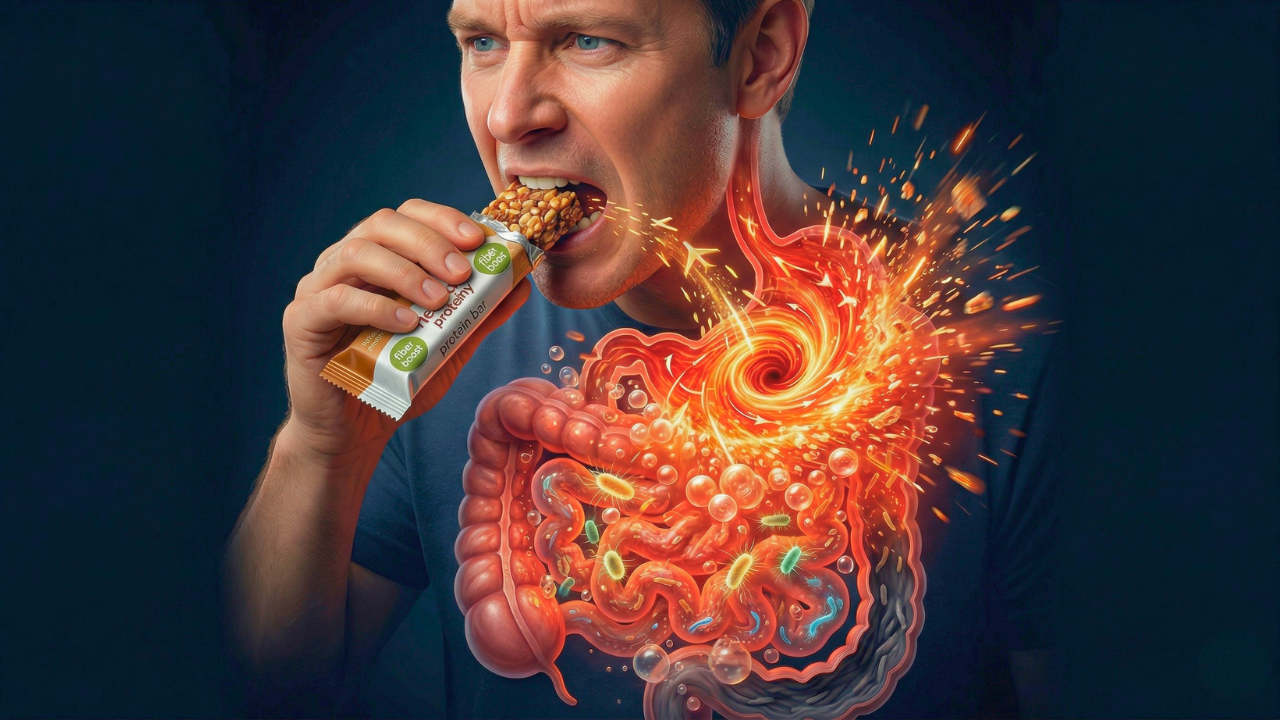

What if I told you that one of the most popular nutrients in the health world can harm your gut? You’ve heard it a million times: “Eat more fiber!” We are accustomed to believing that eating fiber is the key to a healthy digestive system. But there’s a dangerous secret hiding in plain sight, lurking in protein bars, keto snacks, and even daily supplements. The number one most dangerous fiber in the world is… Refined fiberIt’s time to understand why this popular healthy ingredient may be the junk food your gut microbes never asked for.
We’ve spent decades learning about the dangers of refined sugars and carbohydrates. We know that when you eat a whole food like sugarcane, and strip it of all the vitamins and minerals, you are left with a pure, refined substance that can be harmful to your body. Well, we do exactly the same thing with our gut microbiome using refined fiber. You see, fiber isn’t really for you; It’s for the trillions of bacteria that live in your gut. In its all-natural form, fiber feeds these microbes, helping them grow. But when it is refined and isolated, it becomes a highly processed food for them. This is not just a simple problem. Fascinating and frankly shocking research has linked certain refined fibers to the development of liver cancer in animal studies. Let’s dive into what refined fiber is, how it’s bad for you, and what you can do to protect your gut health. (Based on insights from Dr. Eric Berg)
Key takeaways
- Not all fiber is created equal: Refined fiber is stripped of important compounds called polyphenols, which act as a homing system for gut microbes. Whole dietary fiber almost always contains both.
- Fast foods for your gut: Without polyphenols, refined fiber can feed the wrong bacteria, causing an imbalance in your microbiome.
- Root of gastrointestinal distress: Refined fiber ferments too quickly and in the wrong part of your intestine (small intestine), leading to bloating, gas, and conditions like SIBO (small intestinal bacterial overgrowth).
- Starving the colon: This premature fermentation means the lower colon doesn’t get the fuel it needs, forcing microbes to eat away at the intestines’ protective lining, which can lead to leaky gut and inflammation.
- Focus on whole foods: The solution is not to avoid fiber, but to get it from whole, colorful food sources such as vegetables, fruits, nuts and seeds, and to avoid processed foods and supplements that contain added and isolated fiber.
1. What is refined fiber, and why is it a problem?
Think of refined fiber the same way you think of refined sugar. When you eat a piece of fruit, you get sugar, but it’s full of fibre, water, vitamins and minerals that slow down its absorption. Refined sugar is just pure, isolated sugar, and its effects on your body are completely different. The same principle applies to fiber. In nature, fiber does not exist by itself. It is part of a complex plant cell wall, intricately woven with other vital compounds.
On the other hand, refined fibers are isolated from their natural source using industrial processing. Common examples you’ll see on ingredient labels include: Chicory root fiber (inulin), Soluble corn fibreand Tapioca fiber. The manufacturing process uses heat, chemicals and enzymes to break natural bonds and extract the pure fiber powder. This is essentially an ultra-processed food ingredient. The food industry loves this fiber because it can be added to products to increase the fiber count on the label, replace fat, and improve the texture or “mouthfeel” of processed foods such as protein bars, low-carb bread, and yogurt. The problem is that this processing strips away the fiber’s natural partners, creating a product that your gut doesn’t know how to handle properly.
2. The missing piece: Why polyphenols are your gut’s best friend
So, what exactly is missing from refined fiber? The most important components are Polyphenols. You may have heard of it in connection with red wine, green tea, or dark chocolate, but it is found in every plant on Earth. In whole foods, polyphenols are physically and tightly bound to fiber. It is meant to be consumed as one complete package.
Think of your colon like a crowded airport. Bacteria are airplanes, and fiber is the fuel everyone wants. When you consume whole food fiber with polyphenols attached to it, the polyphenols act as an air traffic controller. It’s an advanced steering system that directs what happens to the fiber fuel. They decide which bacteria have access to the fuel, how much they get, and ensure they don’t get too much of it at once. This is a crucial function. Research published in Journal of Nutritional Biochemistry showed that when gut microbes break down polyphenols, beneficial species multiply while numbers of harmful bacteria decrease dramatically. The polyphenols were selectively enhancing the good guys!
Moreover, the 2025 revision in Frontiers in nutrition It has been confirmed through many human experiments that when people eat foods rich in it both of them Fiber and polyphenols (such as nuts, spices, and whole grains), they constantly produce more microbes that produce beneficial short-chain fatty acids, which are the primary fuel for colon cells. The anti-inflammatory effects were much stronger than in the groups that received only fiber or only polyphenols. They amplify each other. When you consume refined fiber, you send a huge tanker of jet fuel to the airport without an air traffic controller. It’s pure chaos.
3. The three dangers of consuming refined fiber
When you flood your system with this isolated, uncontrolled fuel, three dangerous things happen:
First, the wrong bacteria take over. Without the polyphenol channeling system, fiber becomes available to everyone. Often, fast-growing, less beneficial bacteria can take over, consuming fuel and creating an imbalance in the delicate gut ecosystem.
Second, the fiber ferments too quickly and in the wrong place. This is a big problem. Whole dietary fiber is complex and breaks down slowly as it travels through the digestive tract, with most of the fermentation occurring in the large intestine where it belongs. However, the refined fibers have already been broken down. It hits the small intestine and begins to ferment quickly. We don’t want too much bacteria or fermentation in the small intestine. When this happens, it leads to a condition called small intestinal bacterial overgrowth, or SIBO. The classic symptoms are BloatingAnd the gas, abdominal pain and discomfort that many people experience after eating a high-fiber protein bar.
Third, your lower colon is starving. Because all that refined fiber is fermented and used very early in the small intestine, there is no fuel left for the microbes in the large intestine, especially the lower colon. What do these hungry microbes do? They have no choice but to start eating the other food source available to them: the protective mucus layer that lines the intestinal wall. Erosion of the mucus barrier leads to a condition known as “leaky gut,” in which the lining of the intestine becomes permeable. This can allow toxins and undigested food particles to enter the bloodstream, leading to widespread inflammation and even autoimmune problems.
4. Shocking research: Is it related to a serious illness?
This is not just a theory. In 2018, researchers at the University of Toledo published a landmark study in cellone of the most prestigious scientific journals in the world. They fed the mice a diet containing refined inulin, one of the most popular fiber additives on the market. The results were astonishing: a large portion of these healthy mice developed liver cancer.
But here is the most important part of the study. When they fed another group of mice Exactly the same amount of insulin, but in its complete, natural form (as part of a balanced diet), there was no cancer in that group at all. This strongly suggests that the fiber itself was not the problem, but the fact that it was refined, isolated, and consumed in concentrated form without its natural polyphenol partners. Although this was an animal study and we cannot apply it directly to humans, it is a serious red flag. We simply don’t need another ultra-processed ingredient in our food supply, especially one that can be so harmful to our microbes.
5. Your action plan for a healthy gut
So, what should you do? The answer is not to be afraid of fiber, but to deal with it intelligently. It’s time to shift your focus from quantity to quality.
- Stop chasing fiber numbers: Forget the marketing claims on the front of the box. Instead of trying to reach a certain amount of fiber each day, focus on eating a variety of real, whole foods.
- eat rainbow: The vibrant colors in fruits and vegetables come from polyphenols. By eating a wide variety of colorful plants, you are naturally ensuring that you are getting fiber and its polyphenol routing system together, as nature intended.
- Read ingredient lists: Be a detective. Scrutinize packaged food labels, especially those marketed as “healthy,” “keto,” or “high-fiber.” If you see ingredients like inulin, chicory root fiber, soluble corn fiber, or tapioca fiber at the top of the list, it’s best to avoid that product.
- Avoid high-fiber supplements: I do not recommend taking isolated fiber supplements. Many people with gut problems are told to eat more fiber, but adding these refined supplements often worsens bloating, gas, and inflammation because they feed the underlying problem.
- Eating fermented foods: Integrate naturally Fermented foods Such as sauerkraut, kimchi, kefir, and plain yogurt to help support a diverse, healthy gut microbiome.
Bottom line: Choose real food instead of refined products
The modern fiber craze has led many of us astray. We’ve focused so much on the quantity of fiber that we’ve completely ignored its quality. The truth is that your body and gut microbes have evolved over millions of years to process food in its whole form. They thrive thanks to the complex synergy between fiber, polyphenols, and all the other nutrients found in real plants. By choosing whole, colorful foods and avoiding processed products that contain extra refined fiber, you can stop the all-consuming chaos in your gut and restore a natural, harmonious balance. You are the keeper of your gut, and making this simple shift can have a profound impact on your digestive health and overall well-being.
source: Dr. Eric Berg

