
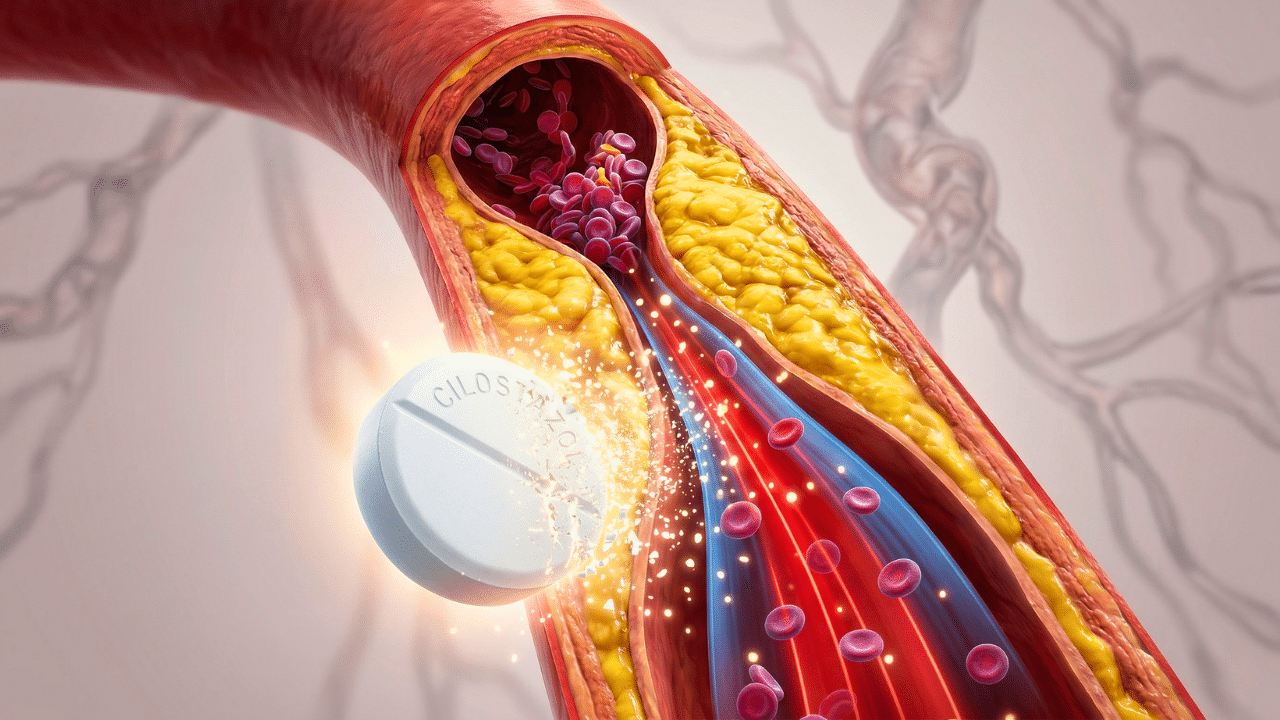


Have you heard that Cilostazol is one of the most powerful medications to treat poor blood circulation? It’s a powerful tool, but what exactly does it do? Is it to break up blood clots in your veins? Does it magically remove clogged arteries? It is important to understand what this medication is for, how it works, and most importantly, when and when not to use it.
If you’ve dealt with the painful reality of poor circulation, you know how debilitating it can be. Simple activities like walking can become quite a challenge. The medication cilostazol, sold under brand names such as Pletal, is often prescribed to help. In this article, we will delve into this medication. We’ll explore how it targets clogged arteries, why it’s not the right choice for vein problems like varicose veins, and what you need to know to use it safely and effectively. Think of this as your friendly, straightforward guide to understanding the key player in the fight against arterial disease. (Based on the vision of Dr. Antonio Caschelli)
Key takeaways
- Cilostazol for arteries, not veins: Its primary function is to help Poor blood circulation Caused by clogged arteries (atherosclerosis), specifically in the legs. It is not used to treat varicose veins or deep vein thrombosis (DVT).
- Improves walking distance: The main benefit of cilostazol is its ability to increase the distance you can walk without pain, a condition known as intermittent claudication.
- How it works: Cilostazol is a vasodilator, which means it widens blood vessels. It also makes your blood less sticky, which helps prevent clots from forming on plaques.
- It is not a standalone treatment: This medication is part of a comprehensive treatment plan that should include lifestyle changes such as a healthy diet, exercise, smoking cessation, and management of conditions such as high blood pressure and diabetes.
- Medical supervision is necessary: Cilostazol has potential side effects and is not safe for everyone, especially those with certain heart conditions. Always use under the supervision of a healthcare professional.
1. What is poor blood circulation in the arteries? (Explanation of atherosclerosis)
To understand how cilostazol works, you first need to understand the problem it is designed to treat: atherosclerosis. This is the medical term for hardening and narrowing of the arteries. Think of your arteries as flexible tubes that carry oxygen-rich blood from your heart to every part of your body. When healthy, these tubes are clear and open.
Atherosclerosis is a slow, progressive disease in which plaque — a sticky substance made up of fat, cholesterol, calcium and other substances — builds up on the inner walls of the arteries. This process has been documented for centuries. Even ancient Egyptian mummies were found to have clogged arteries! Over time, this plaque hardens and narrows the arteries, restricting blood flow. It’s like a pipe getting clogged with dirt over the years. When blood can’t circulate properly, your cells don’t get the oxygen and nutrients they need to function. This is the root cause of many circulation problems, including heart attacks (blocked artery in the heart), strokes (blocked artery in the brain), and peripheral arterial disease (blocked arteries in the legs).
2. Understanding intermittent claudication: the obvious sign of blocked leg arteries
When atherosclerosis affects the arteries in your legs, it is called atherosclerosis Peripheral arterial disease (PAD). The most common symptom of peripheral artery disease is a painful cramp in the leg muscles (calves, thighs, or hips) that occurs when walking or exercising and goes away with rest. This is called intermittent claudication.
Here’s what happens: When you walk, your leg muscles need more oxygen. But because the arteries are narrow, they cannot deliver enough oxygen-rich blood to meet this demand. This lack of oxygen causes pain. You stop walking, the muscles demand for oxygen decreases, and the pain subsides. You start walking again, and the cycle repeats. This “walk, stop, walk” pattern is a classic sign of lameness. As the disease progresses, the distance you can travel before pain begins becomes shorter and shorter, severely affecting your independence and quality of life. In severe cases, you may feel pain while resting or develop non-healing sores or ulcers on your feet and legs.
3. How does Cilostazol actually work?
This is where cilostazol comes into play. It belongs to a class of medications called phosphodiesterase-3 inhibitors. This may sound complicated, but its function is quite clear. Cilostazol treats the problem in two main ways:
- Dilates the arteries (vasodilation): Cilostazol helps relax the muscle cells in the walls of the arteries. This makes the arteries wider, allowing more blood to flow through narrow areas. It’s like opening a narrow pipe to improve water pressure.
- Makes blood less sticky: It also has an antiplatelet effect. Platelets are small cells in the blood that help form clots. In atherosclerosis, platelets can stick to the plaque, forming dangerous clots that can completely block an artery. Cilostazol makes these platelets less likely to clump together, improving blood flow and reducing the risk of blockages.
By combining these two actions, cilostazol directly treats the symptoms of intermittent claudication, helping you walk longer distances with less pain.
4. Arteries vs. Veins: Why Cilostazol Isn’t Used to Treat Varicose Veins or Blood Clots (DVT)
This is one of the most important points to understand. Poor circulation is not a one-size-fits-all problem. There is a big difference between arterial disease and venous disease, and they require completely different treatments.
- Arteries Carry oxygenated blood far From the heart to the body.
- Veins Carry deoxygenated blood behind To the heart from the body.
Atherosclerosis is arterial Disease caused by plaque buildup. Cilostazol works on this system. As for venous diseases, they are different. varicose veins These are veins that have become stretched, weak and dilated. It is not blocked by the board. Deep vein thrombosis (DVT) It is a blood clot that forms in a deep vein, usually in the leg, often due to immobility or a clotting disorder. Cilostazol does not treat these conditions. Treatment for deep vein thrombosis requires anticoagulants (blood thinners) such as warfarin or rivaroxaban, which are designed to prevent clots from growing and breaking off. Using cilostazol to treat a vein problem would be ineffective and inappropriate.
5. Cilostazol is part of the bigger picture
It’s tempting to think of the pill as a magic bullet, but that’s not how chronic disease is treated. Cilostazol is an adjuvant. It is an adjunct, not a cure. To truly treat atherosclerosis, you have to address the root causes. The most effective treatment is a three-pronged approach:
- Lifestyle changes: This is non-negotiable. You must control the risk factors that caused the plaque buildup in the first place. This means quitting smoking, eating a heart-healthy diet low in saturated fat, and getting regular exercise (walking is excellent!) Blood pressure managementCholesterol and blood sugar levels.
- Essential medications: Cilostazol is often prescribed as part of a triad. The other two major players are Antiplatelet agent (such as aspirin or clopidogrel) to prevent blood clots, and a Statins (such as atorvastatin or rosuvastatin) to lower cholesterol and stabilize existing plaque, making it less likely to rupture.
- Vasodilators: This is the category that cilostazol fits into, specifically to help treat the symptoms of claudication.
Without addressing lifestyle factors, medication is only fighting a losing battle. You can’t take three pills and keep smoking and eating poorly, expecting to get better.
6. Possible side effects and who should be careful
Like any medicine, cilostazol has potential side effects. Because it increases blood flow to all parts of the body, one of the most common side effects is headache. This often improves as your body gets used to the medication.
However, there are important safety considerations. You should be especially careful and discuss the risks with your doctor if you:
- You have a history of bleeding: This includes a stomach ulcer or any condition that puts you at greater risk of bleeding.
- You suffer from serious heart problems: Cilostazol is generally not recommended for people with congestive heart failure, because it can have effects on the heart muscle.
- Taking other blood thinners: Combining cilostazol with other antiplatelet drugs or anticoagulants can significantly increase the risk of bleeding.
- Scheduled for surgery or dental procedure: You will likely need to stop taking cilostazol for a while before any procedure to reduce the risk of excessive bleeding.
7. Proper use and dosage
Always follow your doctor’s instructions carefully. Cilostazol is usually available in 50 mg and 100 mg tablets. The usual dose is one tablet taken twice a day, about 12 hours apart. It is often recommended to take it at least 30 minutes before or 2 hours after a meal, as this can aid in absorption.
Never start, stop, or change your dose without consulting your doctor. They will determine the appropriate dose for you based on your specific condition and overall health.
conclusion
Cilostazol is a valuable and powerful medication for people with leg pain resulting from peripheral arterial disease. By widening the arteries and Improve blood flowIt can greatly enhance your ability to walk, giving you your freedom and independence. However, it is important to remember that it does not dissolve or remove already existing plaque. It’s a tool to manage symptoms and improve your quality of life while you and your doctor work on the bigger picture: controlling underlying atherosclerosis with lifestyle changes and other essential medications. Your health is your most precious asset. By understanding your condition and treatments, you can empower yourself to control and protect your circulation for years to come.
source: Dr. Antonio Caschelli

