
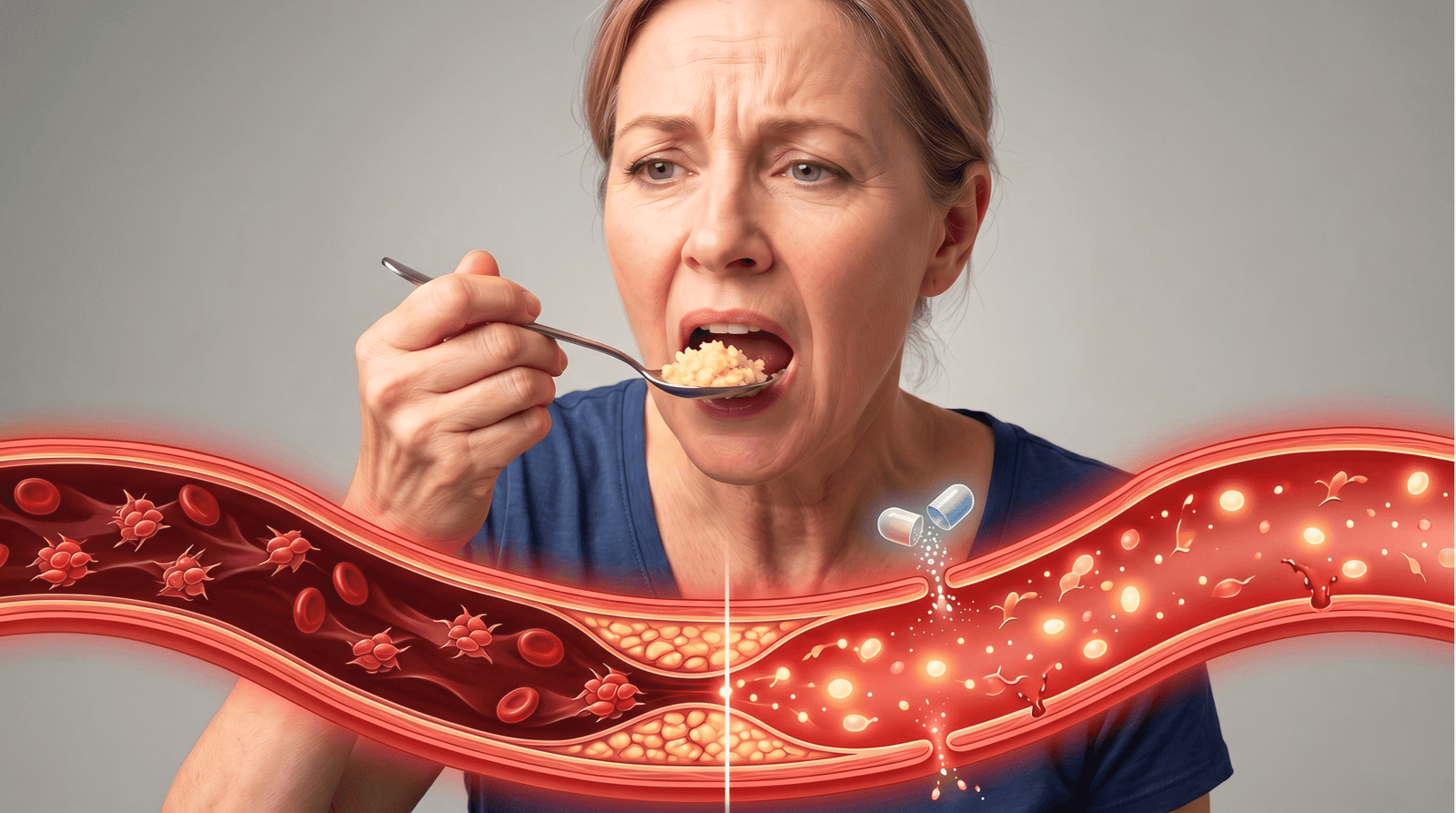


Carmen is 64 years old and suffers from high blood pressure. She takes a pill every morning, but one day she decided to add raw garlic to her daily routine. What she didn’t know was that she was making two huge mistakes. One was about how she prepared the garlic, and the other was that it could cause a serious problem with her medications. At the end of this article I will tell you exactly what happened to her.
The problem is that some people will tell you that garlic is a miracle food. They say it lowers blood pressure, cleans your arteries, and can even replace your medications. Others tell you just the opposite, which is that if you are taking medication, you should not touch it. In fact, both sides are exaggerating. For this reason, today I will explain what garlic can do truly For you, how to take it properly, and when it may cause problems with your medications. (Based on the insights of Dr. Alberto Sanagstín)
Key takeaways
- Preparation is key: You must crush or chop the garlic and leave it for 5-10 minutes to activate its main compound, allicin. Swallowing it whole is ineffective.
- Humble and not a miracle: Garlic can modestly help lower blood pressure and improve cholesterol levels, but it is not a substitute for prescription medications or a healthy lifestyle.
- Know the risks: Garlic can interact with blood thinners (such as aspirin, clopidogrel, warfarin) and other medications. It can also cause stomach irritation, especially on an empty stomach.
- Moderation is crucial: One to two cloves per day is a reasonable amount. More is not better and increases the risk of side effects.
- Consult your doctor: If you have a medical condition or take medication, talk to your doctor before starting a daily garlic regimen.
1. The most common mistake: swallowing garlic whole

Perhaps the most common mistake people make when trying to obtain the health benefits of raw garlic is swallowing a whole clove, such as a capsule. People do this to avoid the strong taste or bad breath, or because someone told them it works too. This is simply not how garlic works. If you swallow cloves whole, you will get much fewer benefits. It’s like swallowing a walnut in its shell and expecting your body to do the rest. Garlic doesn’t work just because it’s in your stomach; A decisive reaction must occur first, and this reaction cannot occur if the clove arrives whole.
2. The Science of Allicin: Why You Should Crush Garlic
So why should you cut or crush it? Because as long as a Garlic clove Completely, its most important components remain separate. They do not mix or interact. When you chop, crush, or chop garlic, you break down its cellular structure. This is when the magic begins. Quite simply, whole garlic is “closed,” while ground garlic is “activated.”
The compound everyone is talking about is allicin. It’s the molecule that explains much of garlic’s biological benefit. But here’s the important detail: A healthy clove of garlic doesn’t actually contain allicin. It contains ingredients To produce it. When garlic is crushed, these components mix and react to form allicin. For this reason, the strong, pungent odor appears immediately after it is cut, which is a sign of this chemical reaction and its changing activity. So, remember this: whole garlic is not the same as crushed garlic.
3. The 10-minute rule: Let it rest!
This is a more important detail than you think. Once you crush or chop the garlic, do not eat it right away. You need to leave it for 5 to 10 minutes. Think of it like steeping tea or letting dough rest. If you eat it right after cutting, the reaction has started, but it’s not completely complete. Giving it those few minutes allows for maximum allicin formation. The first practical message is: You do not benefit from swallowing whole garlic. You benefit most when you break it, let it rest, and then consume it.
4. Can garlic really lower blood pressure?
Yes, it can help. This is perhaps one of the best supported effects of garlic, especially in adults High blood pressure. But I want you to hold on to two words: It can help. I did not say that it solves the problem or replaces the medicine. Garlic encourages blood vessels to relax. When an artery is less stiff, blood can flow with less resistance. Imagine a garden hose: if it is stiff and narrow, water flows under high pressure. If the hose relaxes, the flow improves. Something similar happens with your blood pressure.
Realistically, how much can it help? The effect is there, but it is modest. You won’t see a dramatic decline. In people with high blood pressure, you may notice a real drop of a few millimeters of mercury (mmHg), especially in the top number (systolic pressure). Is this not important? Not necessarily. Small, sustained decreases in blood pressure are a step in the right direction. However, it does not compete with medications when your blood pressure is clearly high. The honest truth is that garlic can be a helpful addition, but it is rarely enough on its own once the problem arises.
5. What about cholesterol and triglycerides?
Here again, it can help, but you need to have realistic expectations. Evidence suggests that garlic can slightly improve your lipid profile, especially if your numbers are already high. However, this does not mean that it will magically “clean” your arteries or erase years of a bad lifestyle. Cholesterol It’s not a stain you can erase with one food. It’s a complicated issue. A sensible approach is to view garlic as a small adjunct within a broader strategy of healthy diet, weight control, physical activity, and medications when necessary. Using it as a supplement makes sense; Using it as an excuse to avoid other changes doesn’t do it.
6. Does garlic “thin the blood”?
This common phrase is poorly explained. When people say that a food “thins the blood,” they are often lumping different mechanisms together. One thing is coagulation, the other is platelet aggregation. They are not the same thing. Garlic does not act as a powerful anticoagulant like warfarin. However, it is He can It affects how easily platelets clump together. This is important for two reasons. First, it helps explain its potential cardiovascular benefits. Secondly, and this is crucial, it explains why you should be careful if you are already taking a medication that works in a similar way.
7. How to eat garlic correctly
Now that we know what garlic can and can’t do, let’s get down to the practical application. You already know the first steps: crush or chop them and leave them for 5-10 minutes. But what comes next?
One or two cloves daily is a reasonable and sufficient amount. You don’t need half a head of garlic or five cloves. More is not better. Many people think: “If one is good, four must be better.” It doesn’t work that way. After a certain point, the benefits do not increase, but the possibility of side effects increases: heartburn, gas, body odor, and upset stomach. The key word is moderation.
As for how to eat it, you can mix it with tomatoes and add it to the salad olive oilOr take it with a little food if that’s better for your stomach. The important part is that it arrives in your system properly prepared, not the rituals surrounding it.
8. Is it better to take it on an empty stomach?
There is no solid scientific basis to say that eating garlic on an empty stomach is better, although it has become something of a sacred ritual across the Internet. What we do know is that for many people, taking it on an empty stomach seems worse. Raw garlic hits your stomach lining without any buffer, which is like pouring hot sauce on a sensitive area. If you tolerate that well, great. But if you feel burning, nausea, or discomfort, don’t force it. Your body is telling you that this method is not right for you. Taking it with food is a much better option if you have a sensitive stomach.
9. Are all forms of garlic created equal?
Choosing between different forms of garlic changes what you can expect.
- Black garlic: This is not the same as raw garlic. It undergoes a slow transformation process that makes it less pungent and easier to tolerate. It loses the aggressive form of allicin but gains other stable compounds. It’s a very reasonable alternative if you can’t tolerate raw garlic, but they are not interchangeable.
- Garlic capsules: The quality here varies greatly. Some are weak, others are serious excerpts with more scientific backing. Many people buy capsules to avoid the taste and smell, but if the capsule is poorly formulated, you may miss out on the very benefits you were looking for. Some can be beneficial, but don’t assume they are the equivalent of fresh, properly prepared garlic.
- Garlic powder and pickled garlic: These are better than nothing but playing in a lower league. They add flavor and some beneficial compounds, but they don’t compare to the active profile of fresh raw garlic.
10. Who should be careful when handling raw garlic?
This is where you need to pay close attention. Raw garlic can irritate the stomach, increase heartburn and reflux, and cause gas or intestinal discomfort, especially in people with sensitive intestines. If it makes you feel bad, don’t force it.
The most important consideration is drug interaction. If you take antiplatelet medications (such as low-dose aspirin or clopidogrel) or anticoagulants (such as warfarin), adding raw garlic daily can amplify their effects and increase the risk of bleeding. This doesn’t mean that one clove will spell disaster, but it does mean that you shouldn’t improvise. Talk to your doctor first.
Likewise, if you are scheduled to have surgery, you should inform your medical team that you are taking garlic regularly. For pregnancy and breastfeeding, garlic as a normal part of your diet is generally considered safe, but high doses or supplements are not recommended as a “treatment.”
Can garlic replace blood pressure or cholesterol pills?
No, this is a wrong and dangerous concept. Because garlic has some effect, people make the risky leap to believe that it can replace medications that have proven effective. A healthy diet containing garlic can help, yes. But it does not replace treatment that has proven for years to reduce the real risk of heart attacks, strokes, and other serious complications.
Conclusion: So, what happened to Carmen?
Now we can answer Carmen’s question: Is it worth eating raw garlic every day? For her, the answer is yes, she can, but only If she doesn’t have any of the risk factors we discussed. If her doctor approves, she can start simply: crush one clove, leave it for 10 minutes, and eat it with food to protect her stomach.
If she does this consistently for weeks or months, it may help lower her blood pressure a little. But there are two things garlic will do no Do for Carmen. First, it will not replace it Blood pressure pillNot now, and probably not ever. This decision should be made with her doctor, based on her blood pressure readings. Second, it doesn’t give her a free pass to relax about her health. High blood pressure is a silent problem that damages the arteries, heart, kidneys and brain over many years.
Garlic can be a helpful player on your health team, but it’s not a lone star. Use it wisely, in moderation, and always in conversation with your healthcare provider, especially if you have a chronic condition.
source: Dr. Alberto Sanagstín

