
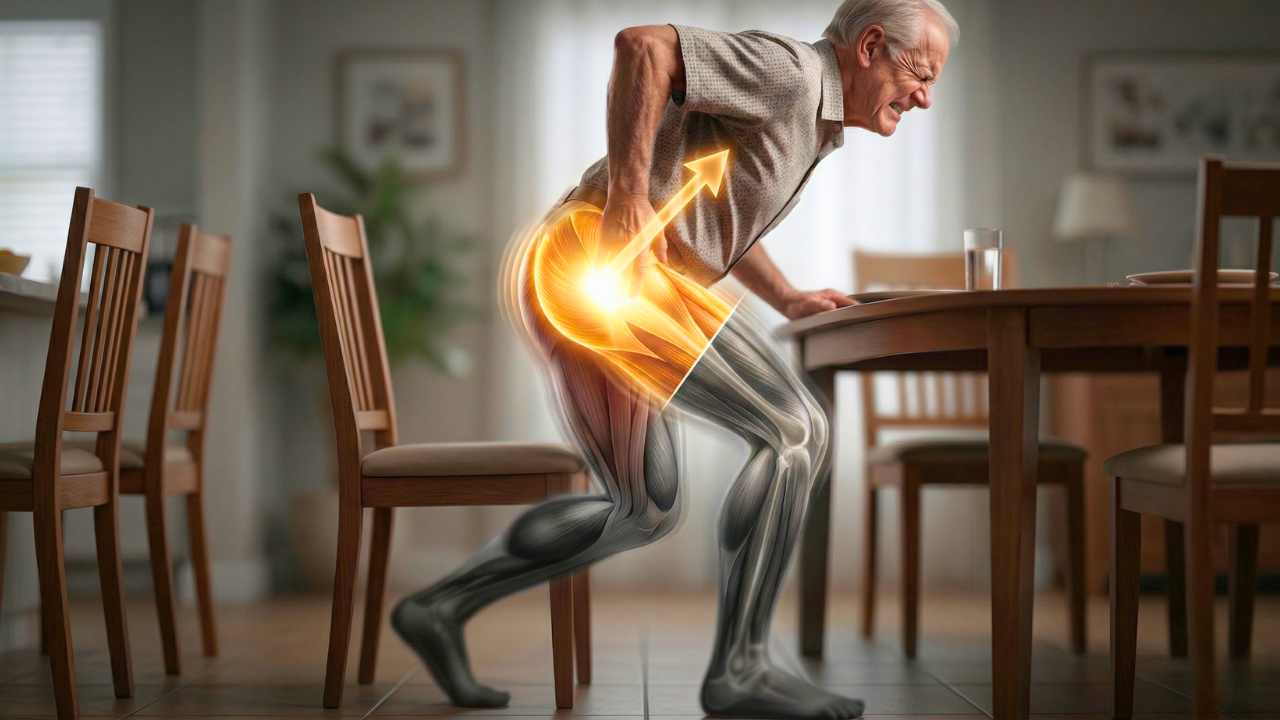

If you’re over 60, what if I told you there’s a simple habit you probably don’t do that has been proven to boost your leg strength by over 30% in just four weeks? This doesn’t include a gym membership, heavy weights, or grueling workouts. In fact, you can do it right from the comfort of your home. This simple, powerful method can transform your ability to stand, walk and live with confidence and independence. It’s called the “workout snack” method, and it’s about to change the way you think about fitness as you age.
This approach is based on a recent scientific study conducted on a group of elderly people and had them follow a simple daily habit for 28 days. The results were nothing short of impressive. They improved their 30-second chair stand test scores by 31%, boosted their maximum leg strength by 6%, and even increased their muscle mass by 2%. These aren’t just numbers on a chart; They represent real improvements in everyday life. We’re talking about standing up from a chair without using your hands, climbing stairs with less effort, and feeling more stable and secure on your feet. The secret was to connect small amounts of the right exercise to things they already did every day, building strength without requiring a lot of willpower. (Based on opinions from physiotherapist Will Harlow)
Key takeaways
- Significant strength gains: A recent study showed that adults over 60 can Increase leg strength Increase by more than 30% in just four weeks using simple, targeted exercises.
- The “workout snack” method: This approach involves performing short bouts of exercise, or “snacks,” linked to your daily routine, such as meal times or brushing your teeth.
- Three basic exercises: The core of this program consists of seated and standing meal time, single-leg dips, and reverse lunges, all of which can be done at home with minimal or no equipment.
- Consistency over intensity: The strength of this method lies in its consistency. Small, regular efforts build up over time to produce noticeable improvements in strength, balance, and muscle mass.
1. What is the “workout snack” method?
The biggest barrier to exercise for most people is not a lack of knowledge; It’s inconsistency. Life gets in the way, motivation wanes, and the thought of working out for a full 60 minutes can seem exhausting. The “workout snack” method turns this problem on its head. Instead of dedicating a large portion of your day to exercise, you can incorporate very small, manageable bouts of movement into your existing schedule. You “snack” by exercising throughout the day.
The problem is that most people choose the wrong sports snacks. They might do some random stretches or arm circuits, which is better than nothing, but it won’t build the functional strength you need for everyday life. The study that produced such amazing results focused on specific, targeted movements that directly translate into better movement. By associating these movements with non-negotiable everyday events – such as eating a meal, boiling the kettle, or brushing your teeth – you create an automatic trigger. This habit becomes easy because it is based on something you already do without thinking. This is how you build your strength without draining your willpower. You’re not trying to find time to exercise; You are simply adding a powerful new layer to the routine you already have.
2. Snack Exercise #1: Meal time from sitting to standing
This first exercise is so simple, you may underestimate its power. But sitting and standing is one of the most effective things you can do to build functional leg strength. It directly mimics one of the most common movements we do every day: getting up from a chair. Reinforcing this pattern is key to maintaining your independence.
How to do it: Every time you sit down to eat a meal, start by sitting on the front edge of the chair. Keep your feet flat on the floor, about shoulder-width apart. Sit up nice and tall, then place your hands on your lap or across your chest to prevent you from using them to push. To stand, lean forward slightly, placing your “nose over your toes” to change your center of gravity, then push through your heels to stand fully. The second part of the movement is no less important: slowly lower yourself into the chair. Aim for a slow, controlled landing, taking about four seconds to sit up. This slow phase, or eccentric phase, is great for building muscle and control.
When to do it: The goal is to do five sit-stand exercises every time you sit down to eat a meal. For most people, that’s three times a day, giving you a total of 15 high-quality repetitions per day. If you don’t eat three structured meals, you may associate this habit with something else, such as every time you go to the toilet. I’ve used this exact approach with patients in their 60s and 70s who thought their legs were getting old. Within weeks, they were walking faster, feeling more confident, and relying less on the handrails.
3. Snack exercise #2: Single leg dips
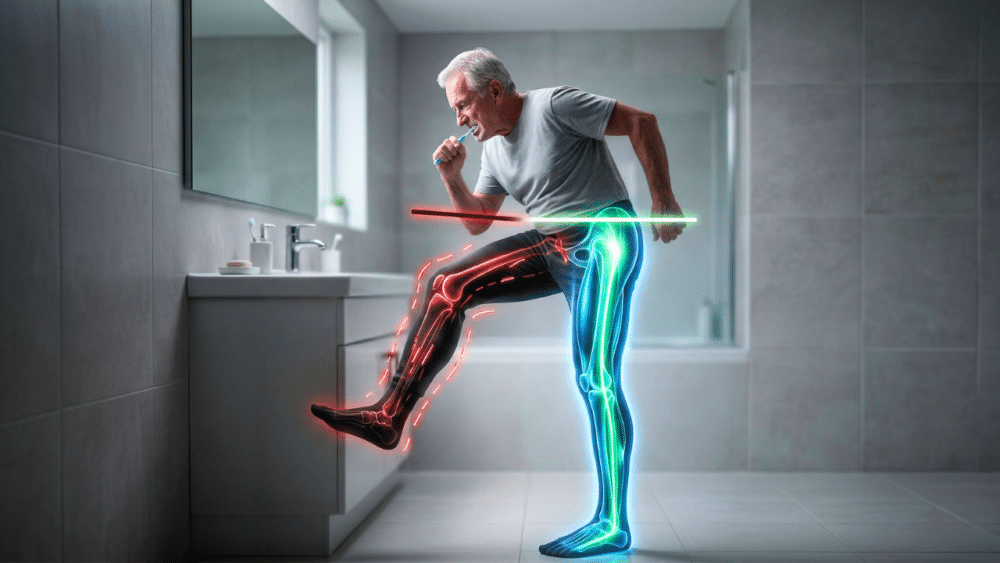
While sitting and standing builds leg strength, much of our lives are spent on one leg at a time. Each step you take involves a brief moment of balance on one leg. This is why single leg dips are so vital. It improves your single-leg stability, which is your ability to control your body while transferring weight from one leg to the other. This is crucial for climbing stairs, crossing the sidewalk, or simply walking without moving your foot.
How to do it: For this exercise, you’ll need something sturdy that you can hold on to for balance, such as the back of a chair or kitchen table. Stand facing him with both hands on him for support. Shift all your weight to one leg and lift the other foot off the ground. The movement itself is small but requires precise control. First, start the movement by sticking your butt out slightly, as if you are about to sit down. Next, bend your standing knee, making sure your knee goes directly over your toes. Lower yourself down about 6 to 8 inches, no need to go deep. The crucial point here is to keep the pelvis level. Don’t let the hip of your raised leg drop to the side. Pause for a moment at the bottom, then push through your heels to return to the starting position.
When to do it: This is the perfect workout snack for those stand-up moments. Aim to do 10 to 15 of these little dips on one side each time you brush your teeth or while you wait for the kettle to boil. Then switch sides and do the same on the other leg. Try to get a maximum of three or four sets per day. The difference you will feel in your balance and leg control in a short time is incredible.
4. Snack Exercise #3: Reverse Lunge
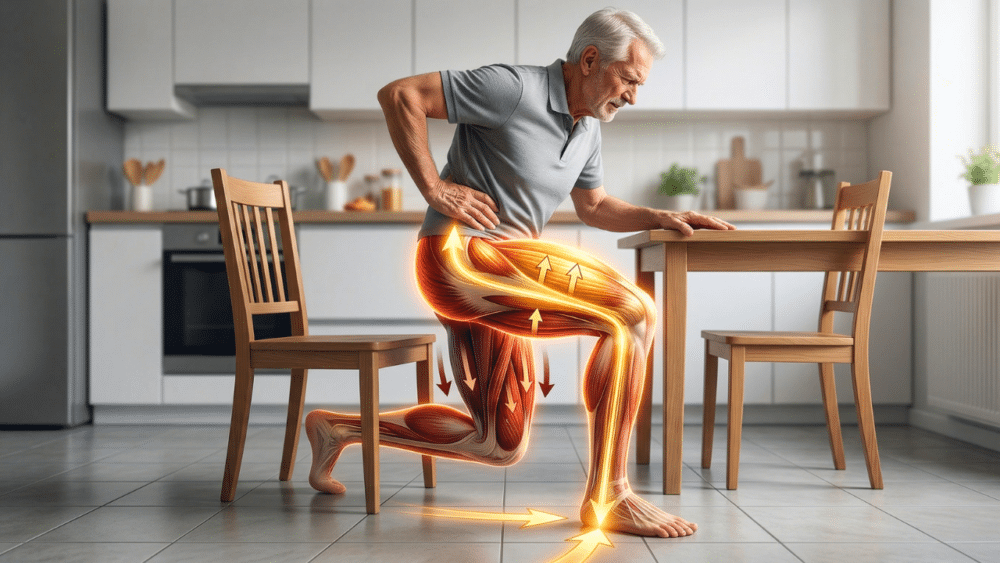
Our final workout snack is the reverse lunge. I love this exercise because it’s incredibly effective for building strength in your quadriceps (front of your thighs) and glutes (buttocks), which are powerful muscles for walking, climbing, and lifting. For many people, the reverse lunge is also much easier on the knees than the traditional forward lunge.
How to do it: Again, stand with something to hold onto for support. With your hands resting on a chair or countertop, take a comfortable step back with one foot, placing only your toes on the floor behind you. Your body weight should move back and down as you bend your knees, aiming for a 90-degree angle in both legs. Make sure your back knee doesn’t hit the ground; Stop about 6 inches above it. From this low position, push off your back foot and use your front leg to push yourself back to the starting position in one smooth motion. I recommend alternating legs, doing one lunge on the left, then one on the right, and continuing this pattern.
When to do it: Just like other snacks, look for opportunities. When you have a sturdy surface you can hold onto, perform five of these reverse lunges on each side, alternating between them. Again, pay close attention to your form. Keep your torso straight and pelvis level throughout the movement. Don’t let it drop to one side. By doing this consistently, you will feel a noticeable increase in the strength of your quads and glutes within weeks.
Conclusion: Your future is in your hands
By consistently performing these three simple exercises — sit-ups, stand-ups, single-leg dips, and reverse lunges — you’re doing much more than just building muscle. You are actively protecting your future. You’re investing in your ability to stand, walk, and live independently, not just for today, but for all the years to come. Power is not a luxury. It is a necessity for a high quality of life as you age. These small daily deposits into your Strength Account will accumulate over time, giving you back the dividends of freedom, confidence and vitality.
source: Will Harlow

