Physical Address
304 North Cardinal St.
Dorchester Center, MA 02124
Physical Address
304 North Cardinal St.
Dorchester Center, MA 02124

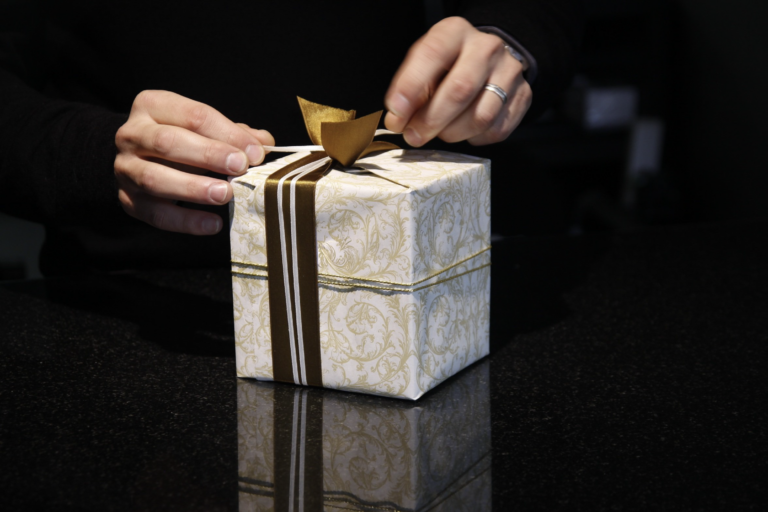
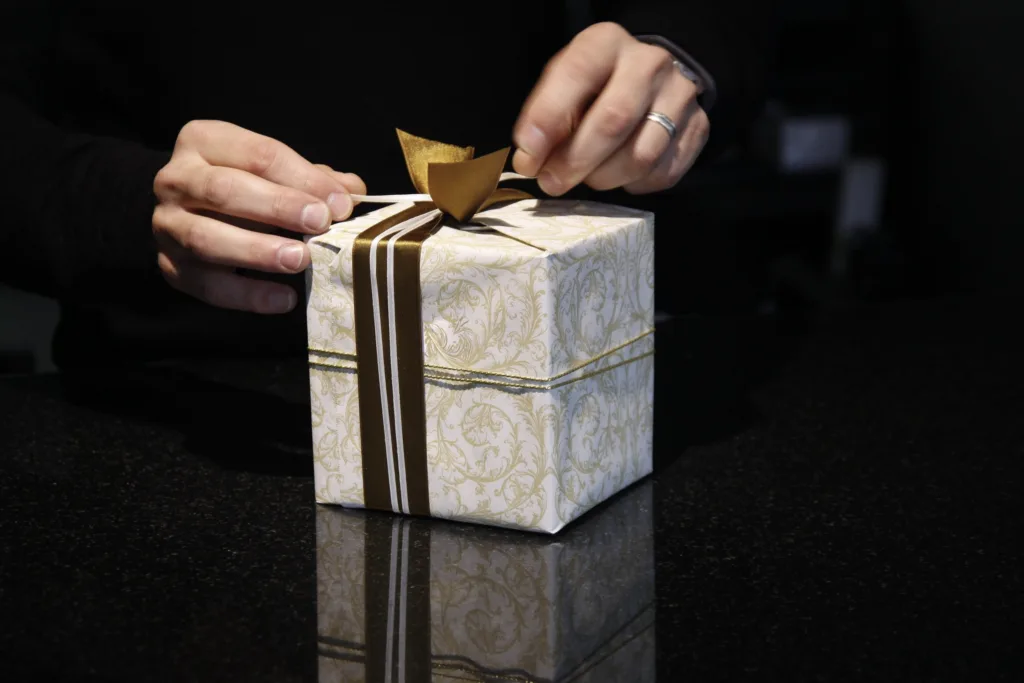
This account is based on reflecting on my childhood experience, as an adult, and how learning to wrap gifts has positively impacted my life. The skills you learn through gift wrapping extend beyond paper and tape and can be applied to many areas of everyday life. Gift wrapping isn’t limited to the holidays. This can happen at graduations, birthdays, weddings, and countless other moments throughout the year. In fact, gift wrapping is a skill that can be used 365 days a year.
After a festive Thanksgiving meal with my family, I wrapped my first Christmas gift of the season. As I worked, I was struck by a sense of gratitude for the people in my life who believed that wrapping gifts was an important skill for a blind child who couldn’t learn. Their faith has made a lasting difference.
When I was a young child, I was involved in the gift-wrapping process alongside my mother. First, she cut the paper to fit the box and carefully placed it in the middle. She would tape one edge of the paper to the box and then let me take care of it. This method gave me a clear starting point and allowed me to practice pulling the opposite edge across the box, finding the tape dispenser, feeling where the overlap was and securing the paper. By gluing the first edge, I kept the box from slipping and sliding, which helped me stay oriented and confident.
I then learned how to fold the ends of the package and learned to press the top flap down, fold each side inward until it forms a point, and then lift the point up to finish the end. The same process was repeated on the other side. At first, my mom used consistent shaped boxes, like clothing boxes, so I could focus on learning the steps. Over time, I made boxes of different sizes and shapes so I could apply the same concepts to shoe boxes and other packaging. Sometimes we were faced with gifts that couldn’t be wrapped traditionally, and those were the most fun. We will wrap the paper at the top like a flower.
As I gained confidence, I moved beyond tape and folding and began learning to use scissors. My mother would roll out the paper to the approximate size needed, fold it lengthwise along the wrapping paper tube, and then hand it to me so I could practice cutting. The fold gave me a straight line to follow. Eventually, I got tired of waiting for someone else to fold the paper, so I started rolling it out myself, creating my own fold, and cutting independently.
This step was the most challenging. It required spatial awareness and precise tactile judgment to determine how much paper was needed to cover the entire box. I wanted the paper to be packaged neatly without excess paper making the edges bulky, or paper so small it barely covered the box. One strategy I used was to roll out the paper and then wrap the box across the width to make sure it would cover all sides.
Once the paper was cut correctly, I centered the package and taped one side to the top of the box to keep it from moving. From there, I followed the steps I’d practiced over time, ending up with a carefully wrapped gift ready for a bow and name tag. I labeled the signs in Braille, but this also became an opportunity to practice handwriting alongside my sighted classmates. This made gift giving universal. I was able to identify packages that had been picked up and reordered, while sighted friends and family members could read the same tags. Over the years, I’ve used a tablet and pen or a Perkins braille writer to label gifts.
Gift wrapping is a year-round activity that teaches you a wide range of transferable skills. Through encapsulation, I developed an understanding of symmetry and centering, improved Braille reading and writing, practiced handwriting, cutting and folding, enhanced tactile recognition, and built critical thinking, problem-solving and appreciation skills. These abilities support orientation, mobility, tasks of daily living, and many other aspects of independence.
Gift wrapping also builds social skills. The ability to wrap and label the package independently allows you to give a friend or family member a meaningful surprise. There is something that encourages you to prepare the gift yourself. A fun little side note is that I accidentally wrapped some of my own gifts when I was a kid. Sometimes, boxes of clothes that my mother claimed were my sister’s turned out to be mine. There may have been a toy or two hidden in a locked box that didn’t reveal anything. Today, apps like Be My Eyes are more likely to prevent that kind of escape.
My motivation to learn gift wrapping came from the desire to give them to others. I was also intrigued by the fact that the 4-H Club offers a gift wrapping class. Although I did not participate in 4-H activities, knowing they existed inspired me to improve my skills.
Giving goes beyond material things. As an adult, I have never lost the joy of wrapping gifts. When I became a mom, staying up after my son went to bed to secretly wrap presents became one of my favorite traditions. Seeing the excitement when packages appear under the tree makes every late night worth it.
Technology has made gift wrapping easier. I use apps like Be My Eyes to help describe wrapping paper so I can intentionally choose patterns and colors. The app has also helped me when I feel the same on both sides of the paper and want to confirm that I’m not wrapping the gift upside down. I’ve used technology to help with matching braces as well, which opens the door to meaningful conversations about color coordination and matching as part of the extended core curriculum.
Gift wrapping may seem like a small thing, but its impact can last a lifetime. It’s a skill rooted in creativity, independence, and generosity, and one that can truly be practiced every day of the year.


