
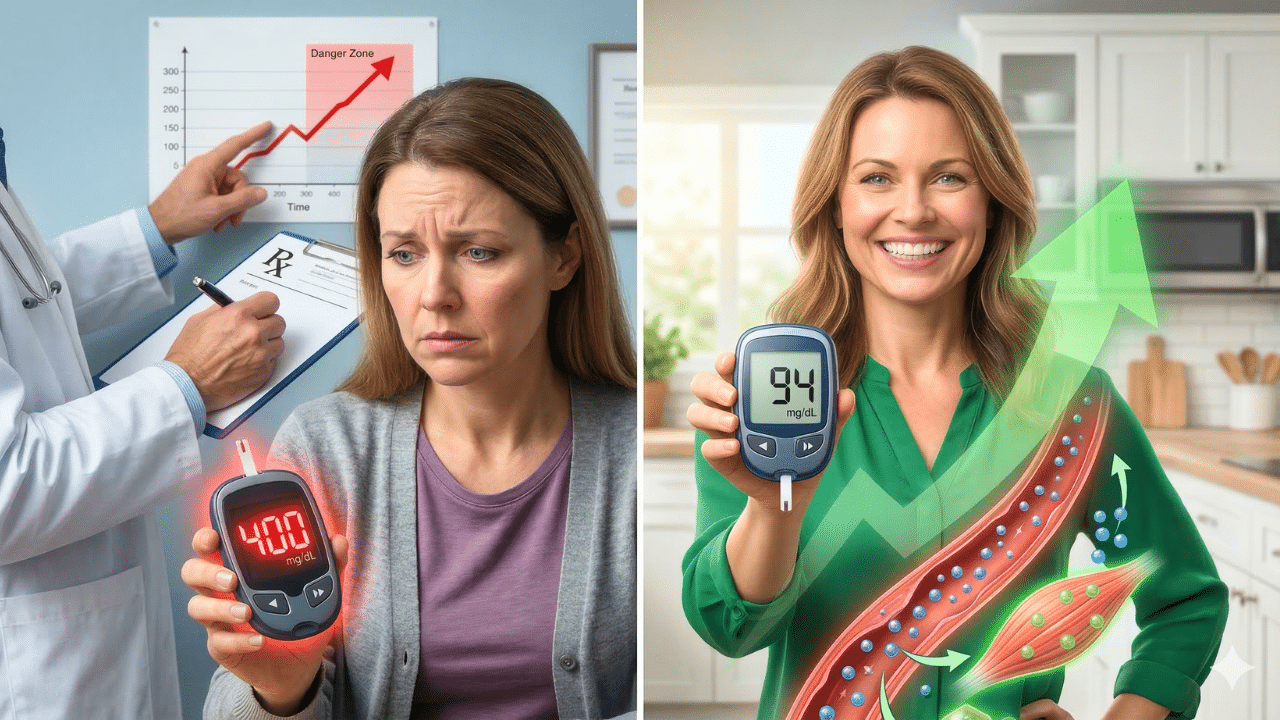


Imagine that your doctor looks into your eyes and tells you that your blood sugar is near 400, your triglycerides are over 700, and you have severe fatty liver disease. For most people, this may seem like a life sentence. This was not a hypothetical scenario. This was the shocking reality for Nancy, a 41-year-old woman who, up to that point, had been pushing her health back in favor of a demanding work schedule.
Facing a future dependent on a few daily medications and the looming threat of insulin injections, Nancy made a brave choice. Instead of just accepting the fate of managing symptoms, I decided to look for the root cause. This is her story – a powerful testament to how profound lifestyle changes can stop, and even dramatically reverse, signs of metabolic disease. It’s not about magic tea or miracle cure; It’s about understanding your body, taking back control of it, and using food as the powerful medicine it was always meant to be. If you’ve ever felt overwhelmed by a diagnosis or lost in a sea of medical advice, her journey offers a clear, doable path to recovery. (Based on the vision of Dr. Antonio Cotta)
Key takeaways
- Your body sends warning signals: Symptoms such as unexplained weight loss, constant thirst, and fatigue are not normal. They are urgent signals from your body that something is wrong.
- You are not your diagnoses: High blood sugar, high triglycerides, and fatty liver are often not considered separate problems but symptoms of one underlying problem: metabolic dysfunction.
- Food is a powerful medicine: A diet that focuses on whole foods, high in fiber and protein and low in refined carbohydrates, can produce much stronger results than many medications.
- You have time for your health: The “too busy” excuse is often a matter of priorities. Taking the time to cook your own meals and take care of your body is a non-negotiable investment in your future.
- Healing is a journey: Reversing years of metabolic damage doesn’t happen overnight. It requires consistency, patience, and commitment to a new, healthier identity.
1. The wake-up call: When subtle symptoms become a crisis
For months, Nancy’s body had been trying to get her attention. She was losing weight quickly – about a kilogram a week – without changing her diet or exercise habits. She was constantly thirsty and had to urinate frequently, which disrupted her sleep. She even noticed foam in her urine. Like many of us, she ignored these signs, chalking them up to stress and her busy life. The breaking point came when she felt a strange pressure in her chest that made it difficult for her to take a deep breath. Fearing a lung problem, I finally went to the doctor.
The laboratory results were amazing. His glycated hemoglobin (A1c), a measure of average blood sugar over three months, was 13% (normal level is less than 5.7%). Her blood glucose was 372 mg/dL, her triglycerides were very high at 740 mg/dL, and an ultrasound confirmed that she was stage 3. Fatty liver disease. She was in a state of severe metabolic crisis. Her story is an important reminder that you should never ignore the whispers coming from your body, because they will eventually turn into screams.
2. Overprescriptions: A pill for every problem?
Nancy left her doctor’s appointments with a stack of prescriptions: antibiotics for urinary tract infections; Metformin For blood sugar, atorvastatin for cholesterol, fenofibrate for triglycerides, and more. A third doctor even recommended starting insulin injections right away. Imagine going from taking no medication to being told that you need approximately seven different medications just to function. It was very confusing and worrying for Nancy, who had always believed in the body’s innate ability to heal.
This approach is the hallmark of a system that often focuses on masking symptoms rather than fixing the underlying cause. Do you have high triglycerides? Here’s a pill for that. Is your blood sugar high? Here’s another pill. While these medications can save a life in an emergency, they rarely treat the root of the problem. Nancy felt that if she started down this path, she would be dependent on these medications for life, and would not give her body a chance to repair itself. This fear became an incentive for her to search for another path.
3. The turning point: identifying the real enemy
In a moment of clarity, Nancy had a profound realization. She didn’t have five or six different problems. She had a major problem with her metabolism which was manifesting itself in different ways. Of all her diagnoses, the one that frightened her the most was stage 3 fatty liver disease. After a quick online search, I learned that this can progress to cirrhosis and even liver cancer. She decided to focus all her energy on this issue, believing that if she could heal her liver, the other problems would solve themselves.
This shift in perspective is crucial. When you see your health problems as interconnected parts of a whole, you can stop chasing individual symptoms and start working on the core system. For Nancy, this meant her lifestyle. She realized that her diet, stress, and lack of self-care had led her to this point, and only by changing them would she be able to truly heal.
4. Food as medicine: simple changes with a big impact
With new determination, Nancy put her trust in the power of nutrition. With the guidance of a nutritionist, she made immediate, drastic changes, even as the holiday season approached in full swing. Her strategy was simple but incredibly effective:
- She cut down on refined carbohydrates: Bread, rice, tortillas, pasta and potatoes were significantly reduced. These foods quickly turn into sugar in the body, placing a heavy burden on the liver and pancreas.
- I made the star vegetables: Every meal – breakfast, lunch and dinner – was built around a foundation of vegetables and fiber. This not only provides essential nutrients, but also helps slow the absorption of sugar and keeps you full.
- She prioritized protein: Along with vegetables, protein has become a cornerstone of her diet, helping maintain muscle mass and promoting satiety.
- I started cooking: This was perhaps the most important change. Nancy had always told herself that she was “too busy to cook.” But in the face of a health crisis, she found the time. I’ve realized that preparing simple, healthy meals like eggs with jicama and cucumber doesn’t take an hour. By controlling her own kitchen, she controlled every element that entered her body.
5. Amazing Results: What one month of dedication can do
Nancy didn’t have to wait long to see the fruits of her labor. Just one month after her diagnosis, she had new blood tests. The results were nothing short of miraculous. Her fasting glucose level dropped from a high of 300 to a normal level of 94 mg/dL. Her triglycerides dropped by more than 500 points, to 235 mg/dL. Her A1c dropped from a staggering 13% to 8.6%, a five-point drop in about a month, a result that can take many people a year to achieve with medication alone.
Most importantly, all of her debilitating symptoms were gone. The constant thirst, frequent urination, and fatigue are gone. Stops rapid and unhealthy weight loss. She was now losing weight slowly and steadily, maintaining her precious muscles while shedding fat. She accomplished all of this by taking just one prescription medication, metformin, and letting her new lifestyle do the heavy lifting.
6. The journey continues: It is a marathon, not a sprint
Although the progress Nancy has made is incredible, her journey is far from over. Her fasting blood sugar is still just above 100, and she is working to completely reverse her fatty liver and understand the role that stress and cortisol play in her health. This is a vital lesson: healing is a process. You’re eliminating years, or even decades, of metabolic damage. It’s easy to get discouraged when she plateaus, but as her doctor advised, you can’t rush time.
Instead of demanding perfection in one month, it’s better to set a realistic timeline of six months or a year. Nancy is no longer the sick person she was before her diagnosis. She has adopted a new identity – a healthy, energetic person who prioritizes her well-being. This mental shift is the secret to long-term success. You’re not just on a diet; I have become a person who eats nutritious food. You don’t just force yourself to exercise; I have become someone who enjoys moving his body.
conclusion
Nancy’s story is a powerful beacon of hope. He explains that a diagnosis of diabetes or severe metabolic syndrome is not necessarily the end of the road. It can be the beginning of a new, healthier life. By refusing to be a passive victim of her circumstances, she took radical responsibility for her health. I have learned that the human body has a tremendous ability to heal when given the right tools. Her journey proves that the strongest prescriptions aren’t always found at the pharmacy; Sometimes, you find it in your kitchen, in your good night’s sleep, and in your decision to ultimately put your health first.
source: Dr. Antonio Cotta

