
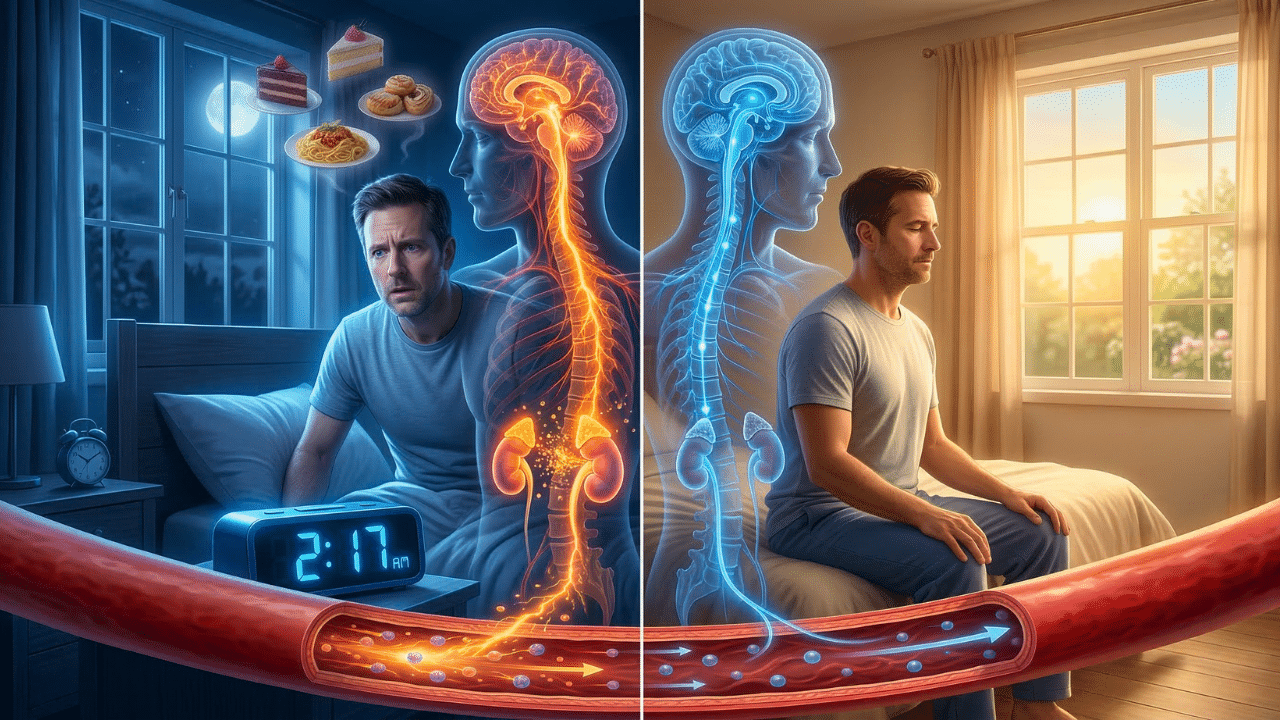


It’s like an internal alarm clock that you never set. You open your eyes, and a quick glance at the clock confirms it: it’s sometime between two and three in the morning. once again. You don’t have to go to the bathroom, you’re not particularly thirsty, but you’re wide awake. You toss and turn, your mind starts racing, and you may not go back to sleep for an hour or two, if ever. If this sounds depressingly familiar, know that this is no coincidence, and it’s not just normal insomnia. Your body is trying to send you a very specific signal.
There is something going on inside your body at that specific time that is disrupting your sleep. The good news is that once you understand the message, you can address the root cause. I’ll explain what might be going on and give you two very simple solutions that can keep you sleeping through the night without interruption. You can see a difference in as little as a week, so stick with me, because what I’m about to share could completely change your nights. (Based on the insights of Dr. Oswaldo Restrepo)
Key takeaways
- It’s a signal: Waking up at the same time every night is a specific cue from your body, not random insomnia. Pay attention to the pattern.
- Role of the liver: According to traditional Chinese medicine, 1-3 am is the time of peak liver activity. An overloaded liver can disrupt your sleep.
- Modern sinners: Modern science points to other causes such as high cortisol caused by stress, low blood sugar, and the digestive system working overtime.
- Simple solutions: Simple natural solutions like drinking artichoke tea and eating a light dinner early can solve the problem within a week.
- Know when to get help: It is important to know when to consult a doctor, because this symptom can also indicate underlying conditions such as sleep apnea or thyroid problems.
1. Why isn’t the 2-3am wake-up call just a coincidence?
Your body operates on an evolving 24-hour internal schedule known as the circadian rhythm. This master clock, located in your brain, controls everything from your hormone levels to your body temperature and of course your sleep-wake cycle. However, Traditional Chinese Medicine (TCM) offers a more detailed perspective on what is known as the organ clock. This theory, developed over thousands of years, suggests that your body’s energy, or chi, moves through different organ systems at specific times of the day.
According to this ancient clock, the hours between 1 a.m. and 3 a.m. are prime time for the liver. During this period, the liver does its best to clean the blood, process toxins, and perform many other detoxification duties. If your liver is healthy and not overburdened, this process occurs smoothly while you enjoy a deep, restorative sleep. However, if your liver is stressed or overloaded, it has to work overtime. This intense activity can generate what traditional Chinese medicine refers to as “heat” or excess energy, which can rise and disturb your spirit (“shin”), causing you to wake up suddenly.
2. The four main reasons behind your interrupted sleep
While the perspective of traditional Chinese medicine is fascinating, modern science offers explanations that are completely consistent with this ancient wisdom. Let’s take a look at the four most common reasons why your body might sound the alarm at 3 a.m.
- Stressed liver: The liver is the body’s primary filtration system, responsible for processing everything you eat, drink and absorb. If you eat a heavy, fatty, or processed meal late at night, or if you consume alcohol, you are essentially giving your liver a huge project to complete at a time when it is supposed to be deep cleaning. This metabolic strain can completely disrupt your sleep. Think of it like a loud dishwasher running in your bedroom, the noise and activity are bound to wake you up.
- The cortisol dilemma: Cortisol It’s often called the “stress hormone,” but its role is more subtle. It’s also an important part of the natural wake cycle. Typically, cortisol levels are lowest around midnight and then begin to gradually rise, peaking around 6-8 a.m. to help you wake up feeling refreshed. However, if you experience chronic stress – whether physical, mental or emotional – this subtle rhythm will be thrown off. Your body may trigger an early surge in cortisol at 2 or 3 a.m. This jolt of stimulant hormone is like a shot of espresso, knocking you out of sleep instantly.
- Blood sugar roller coaster: If your dinner consists of simple carbohydrates like white bread, pasta, rice, or sugary desserts, you’re setting yourself up for a snack. Roller blood sugar. These foods cause a rapid rise in blood glucose, prompting the pancreas to release a large amount of insulin to move this sugar out of the bloodstream. Sometimes, this response is very aggressive, causing blood sugar to drop after a few hours (a condition called hypoglycemia). Your body views this drop as a life-threatening emergency and triggers a survival response, releasing stress hormones like cortisol and adrenaline to get your blood sugar back up. This hormonal surge is a powerful wake-up call.
- indigestion: Digestion is an active process that requires significant energy and blood flow. When you go to bed with a full stomach, your digestive system is forced to work harder when the rest of your body is trying to shut down. This indoor activity can raise your core body temperature and heart rate, both of which are counterproductive to deep sleep. When you eat a heavy dinner, digestion often peaks around 2 or 3 a.m., creating enough internal turmoil to interrupt your sleep cycles.
3. Your simple two-step solution to take back your nights
Now that you understand the possible causes, let’s move on to the solution. You can address this problem with two simple, powerful changes to your evening routine.
- Step 1: Drink artichoke tea before bed: This may seem unusual, but artichokes are a powerhouse of liver health. They contain compounds such as cynarin and silymarin, which have been scientifically proven to protect liver cells, stimulate bile production, and enhance detoxification processes. By drinking artichoke tea, you are giving your liver the support it needs to do its job efficiently without being overburdened. How to do it: Simply boil two fresh or dried artichoke leaves in a cup of water for 10 minutes. Filter the leaves and drink the warm infusion about an hour before bed.
- Step 2: Eat a light, early dinner: This is arguably the most important step. Stop giving your body a huge task to perform overnight. Make it a rule to finish your last meal of the day by 7pm at the latest, and ideally by 6pm. Keep the meal light and easy to digest. Think soups, salads, steamed vegetables, and a small portion of lean protein such as grilled fish or chicken. Avoid anything heavy, fatty, fried, or loaded with sugar and refined carbohydrates.
4. Four common mistakes that spoil your sleep
As you implement these solutions, keep in mind these common mistakes that can keep you stuck in the 3 a.m. wake-up cycle.
- Mistake #1: Ignoring the specified time: Don’t describe your awakening as a “bad sleep.” Time consistency is your biggest clue. Identifying it as a specific liver, blood sugar, or stress response signal is the first step toward fixing it.
- Mistake 2: Consuming caffeine or alcohol too late: Alcohol may make you sleepy at first, but it severely disrupts sleep quality in the second half of the night, right when you wake up. It is also a toxin that increases the burden on your liver. Caffeine has a half-life of 5 to 6 hours, which means drinking coffee at 2pm may still affect you until 8pm. Stop consuming caffeine by 2pm and avoid alcohol in the evening.
- Mistake #3: Staying in bed tossing and turning: If you wake up and can’t fall back asleep within 20 minutes, get out of bed. Staying there trains your brain to associate your bed with frustration and alertness. Go to another room, keep the lights very dim, and do something calming and boring, like reading a guide or meditating. Do not go back to bed until you feel sleepy again.
- Mistake #4: Watching the clock: Staring at the clock and counting how much sleep you’re losing only creates more anxiety, which releases more cortisol and makes it harder to get back to sleep. Turn your watch away from you.
5. Your 7-Day Protocol for Sleeping Through the Night
Ready to put this into practice? Follow this simple plan for one week.
- Days 1-3: Every night, an hour before bed, drink warm artichoke tea. Make sure your dinner is light and finishes before 7pm. Avoid late-night snacks, alcohol, and screens for at least an hour before bed. Your body is starting to adapt.
- Days 4-7: Continue the protocol carefully. By day five or six, you should notice a significant improvement. You may find that you no longer wake up at all, or if you do, you can go back to sleep quickly and easily.
- After the seventh day: If your sleep improves, you should probably stop drinking your daily artichoke tea (save it for nights when you eat a later or heavier meal than usual). However, the habit of eating light and early food should be maintained. This is the most important factor for long-term success. If you return to heavy and late dinners, the problem will likely return.
6. When to stop guessing and see your doctor
While this protocol is very effective for many, it is not a cure-all. Waking up at 3 a.m. may be a sign of a more serious medical condition that needs specialized care. Please consult your doctor if you experience any of the following:
- You also snore loudly, gasp for air during sleep, or are told that you stop breathing (possible signs of sleep apnea).
- You experience night sweats, heart palpitations, or extreme anxiety when you wake up.
- You suffer from severe acid reflux or heartburn at night.
- You have other persistent symptoms such as extreme daytime fatigue, unexplained weight changes, or intolerance to cold (possible signs of a thyroid disorder).
- Your sleep problem has been going on for months and doesn’t get better after trying these changes for a week or two.
conclusion
The constant wake-up call at 3 a.m. is more than just an annoyance; It is a form of communication from your body. He asks you to reduce the burden you put on him at night. By listening to this signal and making a few simple adjustments — supporting your liver with artichoke tea and giving your digestive system a rest with light, early dinners — you can often restore your body’s natural sleep rhythm in a remarkably short time. Try the 7-Day Protocol, pay attention to how you feel, and get ready to finally enjoy the deep, uninterrupted sleep you deserve.
source: Dr. Oswaldo Restrepo

