


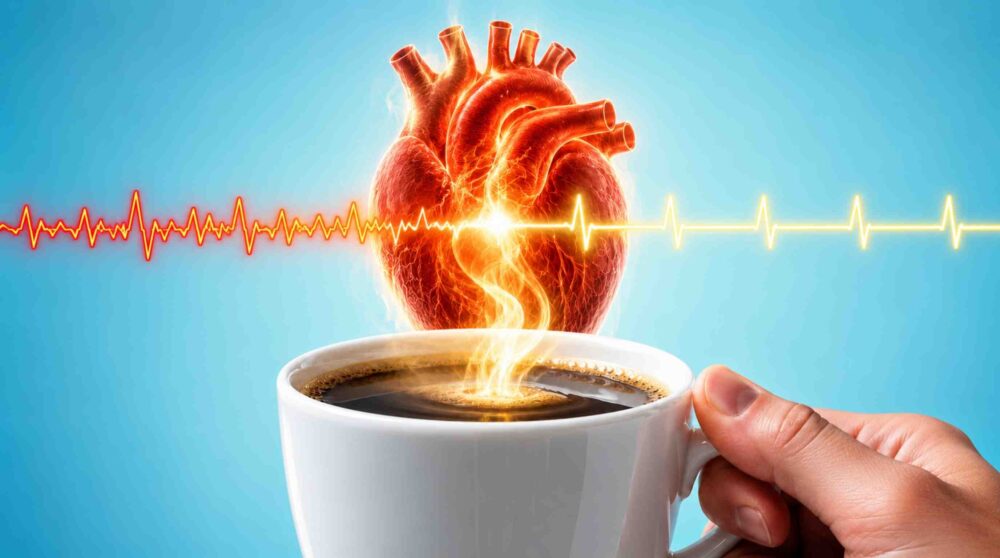
For many years, coffee drinkers have received mixed signals from doctors and headlines alike — one study suggests it’s protective, another warns it may increase heart risks. The American Heart Association has just provided its most comprehensive answer yet: For most adults, up to 5 cups of caffeinated coffee per day is not only safe, but may actually help your heart.
The new scientific statement, “Caffeine and Cardiovascular Disease,” was published July 20, 2026, in the flagship journal of the American Heart Association. Blood circulationLed by Dr. Gregory Marcus, a cardiologist at the University of California, San Francisco.
Key takeaways
- An intake of up to 400 mg of caffeine per day — roughly 3 to 5 cups of regular black coffee — is considered safe for most adults and is associated with a lower risk of many heart diseases.
- Randomized trials, the strongest evidence, show that caffeinated coffee is associated with a lower risk of atrial fibrillation, a common arrhythmia, the opposite of older, more cautious thinking.
- But energy drinks are a different story: Their high caffeine concentration is linked to real damage to the heart and blood vessels, including high blood pressure and irregular heartbeat.
- Adding sugar, cream, or flavored syrups will likely reduce coffee’s potential heart benefits.
- Despite the encouraging results, the American Heart Association has not included caffeine in its 2026 dietary guidelines, citing a lack of strong enough data to issue formal recommendations.
What is considered a safe amount?
The main figure for the statement is 400mg of caffeine per day, which is equivalent to about 3 to 5 cups of regular black coffee with no added sugar, creamer or flavoring – a standard 8 ounce cup contains approximately 75-165 mg depending on how you prepare it. At this level, caffeinated coffee was associated with a lower risk of type 2 diabetes. Coronary heart diseaseStroke and heart failure. Interestingly, the relationship with blood pressure is more nuanced than “more is worse”: for people who already had ideal blood pressure, drinking 1-3 cups per day was associated with a slightly increased risk of high blood pressure, while drinking more than 3 cups was associated with a lower risk.
The discovery of heart rhythm is considered landmark by doctors
One of the most surprising parts of this statement concerns atrial fibrillation, or AFib — a common heart arrhythmia that has long been a reason why doctors tell patients to reduce their caffeine intake. Newer randomized trials, which are a more rigorous form of evidence than the observational studies on which most caffeine research has relied, now support the opposite: Coffee containing caffeine It appears to be associated with a reduced risk of atrial fibrillation. Dr. Marcus, who also led a specific randomized trial on this question, told Newsweek that recent, carefully conducted research now shows that coffee “may actually protect against” this most common form of arrhythmia. However, the statement notes that coffee intake at similar levels may be associated with frequent minor extra heartbeats called premature ventricular contractions, so the picture regarding heart rhythm is not uniformly reassuring.
Why was this so difficult to determine?
Part of the reason why coffee research seems so contradictory is part of the science itself. Most studies cannot fully separate the effects of caffeine from other compounds naturally found in coffee, some of which have antioxidant and anti-inflammatory properties that may contribute to the benefits mentioned. It’s also difficult to separate caffeine from what people add to their coffee – milk, cream, sugar, and flavored syrups are common enough that isolating the effect of caffeine alone is really difficult. Most basic research is observational, which means it can show a strong association without proving that caffeine itself is the cause. One compound worth knowing about: Cafestol, found in unfiltered coffee like French press, espresso, or Turkish coffee (but not paper-filtered coffee or instant coffee), has been linked in randomized trials to higher LDL (“bad”) cholesterol — a good reason to consider your brewing method if cholesterol is a concern.
Energy drinks remain a real concern
The statement draws a sharp line between coffee and energy drinks. Energy shots can contain 40-69 mg of caffeine per fluid ounce — 3 to 4 times more concentrated than regular coffee — and higher caffeine intakes at this level have been linked to serious cardiovascular damage, including high blood pressure and arrhythmia, with reports of arrhythmias even in healthy adults under 30. Dr. Marcus was frank about this category specifically, saying available research suggests these products may cause harm.
What independent doctors say
Dr. Eugenia Gianos, a cardiologist at Northwell Health and chair of the American College of Cardiology’s Prevention Council, who was not involved in writing the statement, told the Wall Street Journal that the confusion around this topic extends beyond patients — many doctors don’t know how to orient people about caffeine either, making this comprehensive statement particularly useful for everyday clinical practice.
What this does not settle
Despite the size and scope of this review, the American Heart Association was careful not to be overconfident: Caffeine was not included in the association’s 2026 dietary guidelines, precisely because the group felt the evidence was not strong enough to support formal recommendations on caffeine intake. The statement calls for more randomized trials, especially on how caffeine affects different people differently based on genetics, age and existing health conditions, and on sources of caffeine other than coffee, such as tea, soda and dietary supplements, which have not been studied much.
What this means for your coffee habit
If you’re a healthy adult who already drinks coffee, this statement is pretty reassuring: up to 5 cups a day without added sugar or cream is nothing to worry about, and may hold some real benefits. But the American Heart Association is clear that there is no universal safe amount — how much caffeine affects you depends on genetics, medications, and existing health conditions, and people who notice heart palpitations, anxiety, or sleep disturbance due to caffeine should treat that as personal, helpful information and not something to move on. People with high blood pressure specifically should talk with their doctor about what is appropriate for their condition.
Source: Markus, GM, Ho, FB, Van Dam, RM, et al. (2026). Caffeine and cardiovascular disease: a scientific statement from the American Heart Association. Blood circulationpublished online July 20, 2026.

