


Millions of people check their blood pressure every day, and almost every one of them gets an inaccurate number — not because their monitor is broken, but because no one has ever told them that the moment they choose to check determines whether that reading can be trusted at all. Here are the five times that reliably produce a misleading number, and the two windows that actually get you closer to your true baseline. (Based on insights from Dr. Mitch Rice)
Key takeaways
- Midday readings, caffeine during the last 60-120 minutes, a full bladder, and post-workout windows can all inflate your blood pressure readings independently of your true baseline.
- A full bladder alone can raise systolic pressure by 10-15 mmHg, enough to push a normal reading into the hypertensive range.
- A single reading on its own is unreliable due to natural moment-to-moment variability – take two readings one minute apart and record the lower reading.
- The two most reliable windows are 20 minutes after waking up (before phone or coffee) and right before bed.
- Average your readings over about 10 days to determine your true baseline, rather than react to any single number.
Worst time No. 1: midday
This is the single most common mistake, and the one that generates unnecessary panic. CortisolThe body’s primary stress hormone follows a natural circadian curve that peaks in the morning and remains high through the middle of the day. Sympathetic nervous system activity — the “fight or flight” response that raises blood pressure — is also at its highest levels during active waking hours, when the brain is processing demands and responding to the environment. Add to that the constant small fluctuations from walking, standing, and general movement, plus the built-up stress of busy mornings, and you get a sustained environment of cortisol and adrenaline that keeps blood pressure measurably higher than its true resting baseline. Research published in the Journal of Clinical Hypertension found that readings taken during active daytime hours were significantly higher and more variable than readings taken under standardized resting conditions, and that midday readings produced the highest rate of pseudohypertension classification in home monitoring. Solution: Don’t check your blood pressure in the middle of the day at all.
Worst time #2: Within 30-60 minutes of consuming caffeine
Many people check their blood pressure right after drinking their morning coffee, which undermines their reading. Caffeine directly stimulates the sympathetic nervous system, which increases heart rate and constricts blood vessels. Within 30 to 60 minutes of consuming caffeine, systolic blood pressure can rise anywhere from 5 to 15 points in individuals who are sensitive to caffeine — and sensitivity varies greatly from person to person. Solution: Wait at least 60 minutes, and preferably up to two hours, after consuming caffeine before checking.
Worst time #3: With a full bladder
This one surprises people the most. A full bladder activates the sympathetic nervous system through stretch receptors in the bladder wall – and when the bladder is full, these receptors signal the nervous system to increase alertness and alertness. Research in the journal Human Hypertension found that a full bladder raises systolic blood pressure by 10-15 mmHg, enough to push the reading from normal to the high blood pressure category, or stage 1. Solution: Empty your bladder completely before the examination.
Worst time #4: Within an hour of a hard workout
Exercising is truly one of the best long-term habits for blood pressure, but checking it immediately afterwards is almost certain to mislead you. During exercise, the heart pumps a much larger volume of blood and the pressure rises significantly, sometimes as high as 180-200 systolic pressures in healthy adults during intense exertion. Blood pressure begins to decrease in the first 3-5 minutes after stopping, but does not fully return to baseline until about 60 minutes later. In that 30-60 minute window, readings can be paradoxically high in some people (residual unresolved sympathetic activation) or paradoxically low in others (post-exercise vasodilation causing pressure to temporarily fall below resting baseline) – in either case, not representative of your true resting state. Solution: Wait at least 60 minutes after exercise before checking.
Worst time #5: Relying on one reading
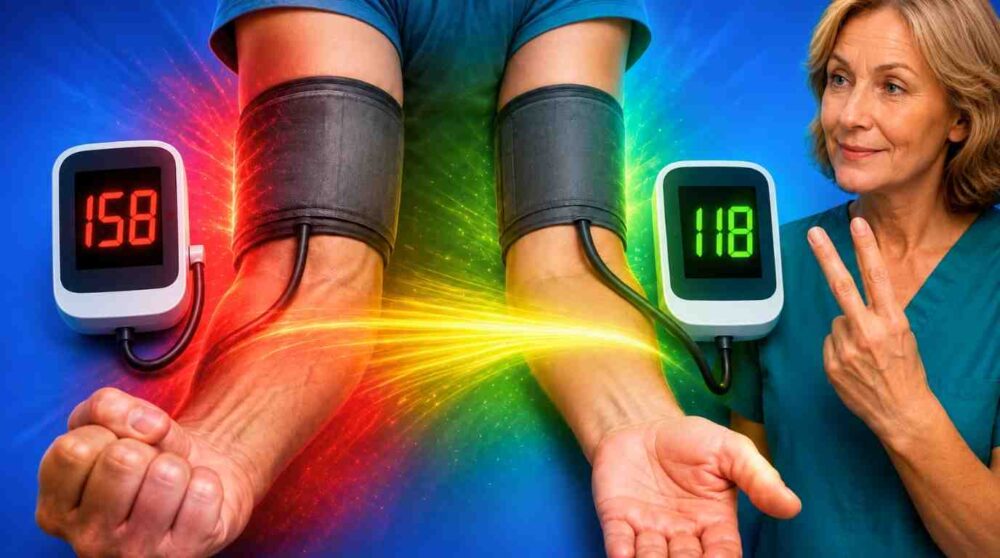
This is by no means time specific, but it may be the most important item on this list. Your blood pressure fluctuates constantly throughout the day in response to breathing, posture, temperature, and dozens of other variables — and a single reading captures just one moment of this constant fluctuation, and it may be anywhere on the spectrum around your actual baseline. A person who gets a reading of 158, panics, then gets a reading of 134 two minutes later and feels disoriented, is experiencing a completely normal fluctuation from moment to moment – neither reading is necessarily wrong, and neither tells the whole story on its own.
Recommended protocol: Sit quietly for a full 5 minutes with feet on the floor, bladder empty, arm at heart level, and not talking. Take two readings one minute apart, and record the bottom of the two readings. Do this daily and average all your numbers over time, this average is your true baseline.
The two best times to actually check out
There are two windows that get you closer to real basic reading:
- 20 minutes after waking up — Before checking your phone, before drinking your morning coffee, and after emptying your bladder.
- In the evening, just before bed – After you have had enough time to settle down for the night.
At each of these windows, take two readings and record the bottom reading. Do this for about 10 days, then average all your systolic blood pressure numbers together and all your diastolic blood pressure numbers together – this combined average is your true baseline blood pressure, and is much more reliable than any single reading taken at a random point in the day.
Frequently asked questions
Why shouldn’t I check my blood pressure in the middle of the day?
Cortisol and sympathetic nervous system activity rise during active daylight hours, along with constant small fluctuations of movement – and research has found that midday readings are much higher, more variable, and produce the highest rate of pseudohypertension classification.
I got two completely different readings just a few minutes apart – which one is correct?
This is normal fluctuation from moment to moment, and neither reading is necessarily wrong. The recommended method is to take two readings one minute apart, record the lowest reading, and look at your average over several days rather than responding to a single number.
Does a full bladder affect blood pressure to this extent?
Yes, research has found that a full bladder can raise systolic blood pressure by 10-15 mmHg through stretch receptors that increase stimulation of the nervous system. Emptying your bladder before the examination is a simple but meaningful step.
How long should I wait after exercise to check my blood pressure?
At least 60 minutes. Blood pressure begins to fall within 3 to 5 minutes of stopping exercise, but it does not fully return to baseline until about an hour later, and readings taken in between can be unexpectedly high or low.
Close reading checklist
- ☐ Check 20 minutes after waking up, before phone or coffee
- ☐ Check back right before bed, once you’re settled
- ☐ Empty your bladder first
- ☐ Sit quietly for 5 minutes, with your feet flat, your arms at heart level, and do not talk
- ☐ Take two readings one minute apart and record the lower reading
- ☐ Average your readings over approximately 10 days to get a true baseline
source: Dr. Mitch Rice
Disclaimer: This article is for general informational purposes only and is not a substitute for professional medical advice, diagnosis, or treatment. If you consistently get high readings using this protocol, or experience symptoms such as chest pain, severe headache, or vision changes, contact your doctor immediately.

