


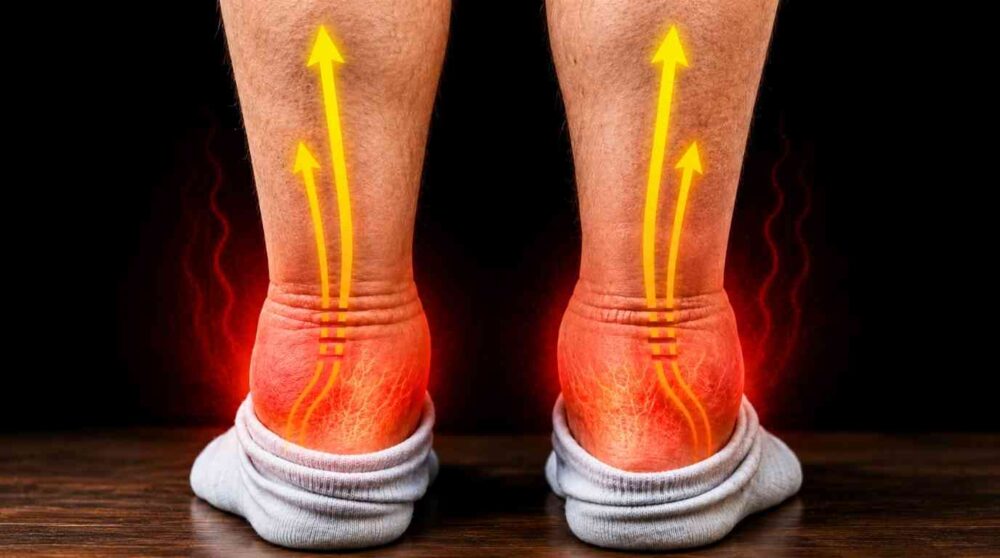
If you feel like your shoes are getting tighter every summer, or that your socks are leaving deep marks by the end of the day, you’re not imagining it. Swelling of the ankles and legs in hot weather is very common, especially for people over 60 years of age. Most of the time it’s simply how your body responds to heat — but sometimes it can be a sign of something that needs medical attention. Here are the three main reasons why this happens, what actually helps, and warning signs worth knowing about. (Based on opinions of Dr. Sunil Dand)
Key takeaways
- Heat causes swelling in the ankle and leg through dilatation of blood vessels and reduced pumping of the leg muscles, especially with prolonged sitting.
- Moving at least once every hour and raising your legs above heart level for short periods can significantly reduce swelling.
- Certain medical conditions and medications, including some blood pressure medications, can also contribute to ankle swelling.
- Heat-related swelling is usually symmetrical (both legs), painless, and improves overnight.
- Swelling that is painful, red, warm, one-sided, or accompanied by chest pain or shortness of breath needs immediate medical care.
Cause No. 1: Vasodilation
Just as with most things that expand during heat, the veins in your legs expand in hot weather, allowing more fluid to seep into the surrounding tissue. Gravity makes it worse, since your feet and ankles are the lowest point on your body — which is why swelling tends to build up throughout the day and is usually less noticeable in the morning.
What helps: Elevating your feet above heart level for short periods, even just 20 minutes at a time, can make a real difference when this is the underlying cause.
Reason No. 2: Your leg muscles are not pumping blood enough
for you Leg muscles It works almost like a second heart, with each step helping to pump blood back toward your heart. When you sit for long periods, whether it’s because it’s too hot to be active, while traveling, or just relaxing indoors, blood and fluid can start to pool around your ankles.
What helps: Move at least once an hour, even if just for a few minutes. Walking, standing, rotating your ankles, or walking in place helps keep the pump going — even for people who have difficulty walking, leg movements while sitting can help.
Reason #3: Underlying medical conditions
Sometimes it’s not just the heat. Conditions such as heart failure, kidney disease, liver disease, Poor blood circulationPeripheral vascular disease can worsen ankle swelling. Some medications can also contribute, a common example of which is blood pressure medications such as amlodipine (brand name Norvasc). It’s not worth it to automatically assume that every ankle swelling is simply due to the summer heat.
A note on electrolytes
Sweating more in hot weather means losing sodium along with other things Electrolytes Like potassium and magnesium, this does not help the condition. For most people with normally functioning kidneys, maintaining adequate salt intake in hot weather is actually important and not something that should be severely restricted. However, this is really different for people with certain health conditions – anyone with kidney disease, heart failure or a condition that affects sodium levels should follow their doctor’s specific instructions rather than general advice.
When swelling is just heat versus when to worry
Heat-related swelling usually affects both legs and ankles equally, tends to improve overnight, is not particularly painful, and does not usually come with redness.
Seek medical attention right away if any of the following apply: One leg is noticeably more swollen than the other, the area is painful, red, or warm to the touch, or the swelling is accompanied by chest pain, shortness of breath, or heart palpitations. These can be signs of something like a blood clot, especially if you’re relatively immobile, and require urgent evaluation — often with an ultrasound or CT scan in an urgent care facility or emergency room.
Practical tips to reduce heat-related swelling
- Avoid being too sedentary — keep moving throughout the day
- Stay hydrated, drink several cups of water daily, up to 10-15 cups on very hot or sweaty days.
- Maintain your electrolyte intake along with your water intake
- Avoid standing in one place for long periods
- Elevate your legs above heart level for short periods when possible
- Wear loose clothing, and avoid socks or very tight pants
- Ask your doctor about compression stockings, which many people find helpful
Frequently asked questions
Is ankle swelling in summer always harmless?
Usually, but not always. Heat-related swelling usually affects both legs equally, is painless, and improves overnight. Swelling that is one-sided, painful, red or warm to the touch varies and should be checked immediately, because it could indicate something like a blood clot.
Why does swelling get worse throughout the day?
Gravity plays a role. Since your feet and ankles are the lowest point on your body, fluid tends to accumulate there throughout the day, which is why swelling is usually more noticeable in the evening than in the morning.
Should I reduce my salt intake if my ankles are swollen?
Not necessarily. For most people with normally functioning kidneys, sweating causes sodium loss as well. However, anyone with kidney disease, heart failure, or a condition that affects sodium levels should follow their doctor’s specific directions rather than general advice.
What is the quickest way to reduce swelling if it is just heat?
Elevating your legs above heart level for about 20 minutes, along with moving regularly throughout the day to keep your leg muscles active, are the two simple steps that are most effective.
Quick start checklist
- ☐ Move at least once every hour, even indoors
- ☐ Elevate your legs above heart level for 20 minutes when possible
- ☐ Stay hydrated with water and electrolytes, especially on hot days
- ☐ Wear loose clothing and avoid tight socks or pants
- ☐ Ask your doctor about compression stockings
- ☐ Seek medical care if the swelling is one-sided, painful, red, warm, or accompanied by chest pain or shortness of breath
source: Dr. Sunil Dhand
Disclaimer: This article is for general informational purposes only and is not a substitute for professional medical advice, diagnosis, or treatment. If you experience swelling with pain, redness, or warmth, affecting one leg much more than the other, or swelling accompanied by chest pain, shortness of breath, or palpitations, seek medical care immediately.

