


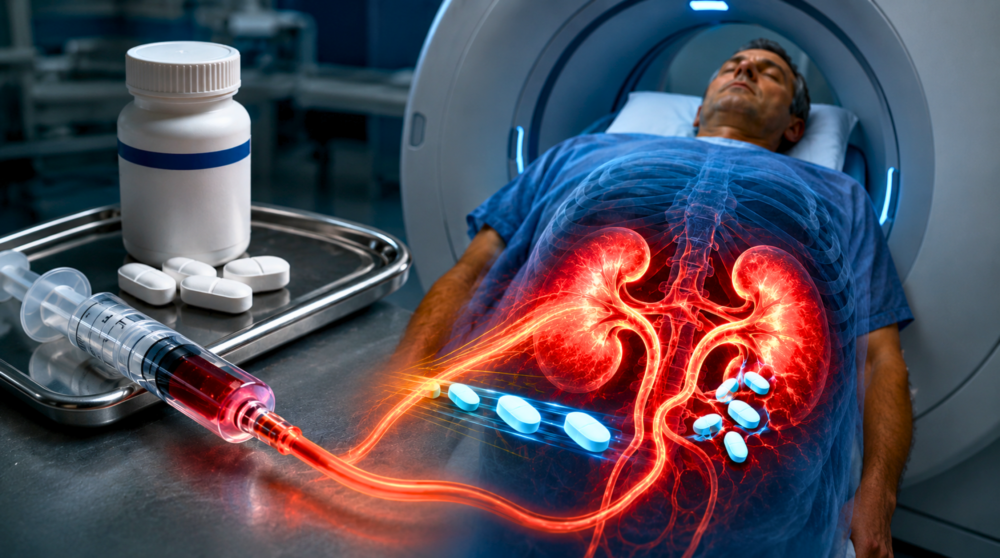
Last Tuesday, a 62-year-old diabetic patient arrived at the emergency room in the middle of the night, writhing in back pain. It was a kidney stone, something that happens every day in every hospital. The doctor on duty ordered a completely routine examination, but no crucial question was ever asked. No one asked about the medication she was taking at home. Twelve hours later, she was in the intensive care unit, her blood turning to acid, and her organs began to fail one by one. The culprit was not kidney stones. It was a medication she had been taking for years. The same drug that millions are taking right now as you read this: Glifage or Metformin.
If you are taking metformin, if someone in your family is taking it, or if you are pre-diabetic or diabetic and may take it in the future, you need to read this article to the end. What I’m about to tell you is something that most doctors don’t have time to explain in a 10 or 15 minute consultation. Her test was so popular that you’ve likely taken it in the last couple of years. This is exactly what makes this situation so dangerous. The scariest part? In the emergency room, almost no one asks the right question, and patients rarely know they need to volunteer information. Sometimes, as with my patient, by the time someone realizes what’s wrong, it’s already too late. (Based on the vision of Dr. Andre Wampert)
Key takeaways
- Hidden danger: The combination of metformin and intravenous (IV) contrast dye, used in common scans such as CT scans, can lead to a life-threatening condition called metformin-associated lactic acidosis (MALA).
- Golden rule: If you are scheduled for a contrast test, you should tell the medical staff with this simple phrase: “I’m having a contrast test. I’m taking metformin.”
- It’s not just metformin: Other common medications, such as Ozempic for weight loss and Forxiga for diabetes, also carry significant risks during surgery or other medical procedures if they are not stopped beforehand.
- You are your own best advocate: In the hospital, especially during emergencies, you are the most reliable source of information about your health. Keeping an updated list of your medications on your phone can be a lifesaver.
1. What is metformin and why is it so popular?
First, I want to reassure you. Metformin It is a wonderful medicine. It is the number one treatment for type 2 diabetes worldwide. It rarely causes hypoglycemia (low blood sugar), helps with weight management, and protects blood vessels. If your doctor prescribed it for you, you have made the right decision. But this is what few people know. You may have heard of Brian Johnson, the American billionaire who spends millions every year to reverse his aging. Do you know what medicine is at the heart of this anti-aging protocol? Metformin. The same drug is widely available and affordable.
This is not science fiction. A major international study called TAME (Targeting Aging with Metformin) is testing this drug as the first potential anti-aging drug in medical history. It is serious science conducted by leading researchers. So metformin is safe and effective and may help prolong your life.
2. Two “doctor’s office” tricks for taking metformin
And since we’re pulling back the curtain, let me give you two insider tips that doctors rarely have time to explain in a short appointment.
- Trick #1: Ghost Pill. If you take the extended-release version (often labeled XR) and one day see the entire pill in your stool, don’t panic. And definitely do not stop taking the medication. Glifage XR pills are like a hard sponge. Your intestines absorb the active ingredient from inside the tablet, and what comes out is just the empty shell. The medicine is in your blood, and it works perfectly.
- Trick #2: The sandwich method. Many people give up metformin in the first few weeks because of gas, bloating, and diarrhea. The trick is the “sandwich”. Do not take it before your meal. Don’t take it yet. Take it in the middle. Eat half your plate, swallow the pill, and then finish the rest of your food. This greatly improves tolerance. Your stomach will thank you.
3. Hidden danger: When a routine examination becomes a medical emergency
So, if this drug is so wonderful, how did a routine daily checkup almost kill a 62-year-old woman in 12 hours? (Don’t worry, she survived.) Let’s go back to my patient. She arrived at the emergency room with unbearable back pain. The very competent doctor on duty suspected kidney stones and ordered the exact test that anyone can do: a CT scan with contrast.
This is the correct test. It’s this big donut-shaped machine that you lie down in. The scan itself takes minutes. A fluid is injected into a vein to “light up” your organs and blood vessels, giving doctors a clearer picture. Thousands of these are performed every day. It is one of the most common tests in modern medicine. But when metformin is circulating in your blood, it is no longer safe.
4. How metformin and contrast dye create a “perfect storm”
I want you to understand what’s happening inside your body because this information could save your life. This fluid, iodinated contrast dye, puts intense pressure on your kidneys to filter and eliminate it. Think of your kidneys as a swimming pool filter. Contrast pigment puts a heavy load on it at once. The filter becomes fatigued and slows down. For a few hours, the kidneys work much slower than usual.
Now, metformin also relies on the same kidneys to exit the body. If the kidneys are busy processing the contrast dye, metformin gets trapped in the bloodstream. It cannot be eliminated. Every dose you took in the last 24-48 hours is still there and accumulating. When metformin builds up above a certain level, it hijacks your cells’ metabolism. Instead of producing energy the normal way, your cells switch to an emergency pathway that produces lactic acid, a large amount of which. Your blood, which is normally kept at a delicate, near-neutral balance, begins to turn acidic. When the blood becomes acidic, organs fail one by one. This is called Metformin-associated lactic acidosis (MALA). It is an ICU-level emergency, and the mortality rate, when not identified in time, can reach 50%.
5. The golden rule that could save your life
What makes MALA so tough is that the first symptoms are insidious: nausea, stomach pain, rapid breathing, and mild confusion. The patient may appear a little groggy or out of sorts. It can feel like a stomach bug, anxiety, or dozens of other things. In the chaos of an emergency room, it can take a doctor a very long time to connect the dots. This is exactly what happened to my patient. No one asks that three-second question: “Are you taking metformin?”
Now you understand why a common medical examination can be fatal for someone taking this medication. But don’t worry, because I’m going to give you exactly what my patient didn’t have: a golden rule that you can use tomorrow if you need to. It’s one sentence, 10 seconds, that separates a smooth procedure from a spot in the ICU. Write this sentence down or commit it to your memory, because it is the most important sentence in this entire article:
“I’m having a contrast scan. I’m taking metformin.”
That’s it. Just say those words.
6. What about real emergencies? 4-step hospital safety protocol
This is a great question. What if it’s a real life-or-death situation, like a car accident or a suspected blood clot? In those cases, the hospital will do the test right away, regardless of whether you are taking metformin or not. The risk of death without diagnosis is greater than the risk of lactic acidosis. But this is where a good medical team shines. In these cases, the hospital begins a 4-step protection protocol.
- Scanning occurs: Life-saving diagnosis is the absolute priority.
- Instant ban: Metformin is stopped the moment the patient enters the hospital. No more doses.
- Fluid shield: The team will start you on intravenous fluids before, during, and especially after the test. This forced hydration pushes the kidneys to work at maximum capacity, eliminating the contrast material and metformin before it builds up.
- 48-hour quarantine: Metformin remains in suspension for two days. A new blood test is done to check kidney function. If the kidneys cope with the pressure, metformin is restarted. If not, they wait a little longer. During this pause, insulin may be used temporarily to control blood sugar.
So, even in extreme emergencies, there is a protocol to protect you. But it only works if the medical team knows you’re taking metformin.
7. It’s not just metformin: other common drugs with hidden risks
Metformin is not the only drug that can become a time bomb within a hospital. Millions of people are taking two new classes of medications that are great for everyday life but can cause disasters during surgery.
- Time bomb #1: Weight loss pens (Ozempic, Wegovy, Mounjaro). These medications work by slowing down how quickly your stomach empties. This is why you feel full for hours and lose weight. But in a surgical setting, this effect can be fatal. You can follow the 8-hour fasting rule perfectly, but still have food in your stomach. During general anesthesia, when your muscles relax, this food can go up and down in the wrong direction – into your lungs. This causes aspiration pneumonia, which is severe and potentially fatal. The American Society of Anesthesiologists’ 2023 guidelines are clear: These medications should be discontinued at least one week before any surgery with general anesthesia.
- Time bomb No. 2: SGLT2 inhibitors (Forxiga, Jardiance). These nifty drugs work by making you excrete sugar in your urine. They are excellent for diabetes and protecting the heart and kidneys. But during the stress of surgery, it can cause a serious problem. The body, thinking it is low on fuel due to eliminating sugar, begins to overproduce ketones. The blood becomes acidic, and the organs suffer. The treacherous part? A finger-prick blood sugar test can appear normal. This is called hypoglycemic ketoacidosis, and it is a perfect trap. The guideline is to stop these medications 3-4 days before any surgery.
8. The silent side effect: How metformin can drain your energy
There is one last thing you need to know about metformin. If you’ve been taking it for years and start feeling constant tingling in your feet, numbness in your legs, fatigue that never goes away, or your memory starts to decline, don’t just blame diabetes or age. Long-term use of metformin has a known side effect: it inhibits its absorption Vitamin B12 In your intestines. Without vitamin B12, your nerves lose their protective covering. They have become, quite literally, frayed wires. This is why you feel tingly and why your brain feels sluggish. The solution is simple. Ask your doctor to test your vitamin B12 level. If it’s low, a simple, inexpensive supplement can solve the problem and restore your energy and mental clarity within weeks.
Your most important job is in the hospital
Your doctor — cardiologist, endocrinologist or family doctor — knows your history and prescribes the appropriate medication. Trust them. But when you cross the threshold of the emergency room or are taken to the operating room, reality changes. In this chaos, information is lost. The doctor on duty has never met you. Your family member is nervous and may not remember the names of your pills. The only person who can ensure that the right information reaches the right person at the right time is you.
So I’m asking you to do one thing. It takes three minutes and could save your life. Pick up your phone now. Open the Notes app and create a new note titled “My Medications.” List everything you take: name, dose, and how many times a day. Include everything – for heart, diabetes, blood pressure, thyroid, and even vitamins and supplements. Save it. The next time you walk into a hospital or a new doctor’s office, show this list to the first person who treats you. Three minutes of effort today for a lifetime of security tomorrow.
source: Dr. Andre &

