


Posted on May 25, 2026 at 08:08 AM
If you’ve been feeling incredibly tired or exhausted, whether for the past few hours or as far back as you can remember, you need to try Yin Yoga. It is a less intense style of yoga and requires you to do less work. In order not to pressure yourself to change. To give your nervous system a rest. The following Yin yoga practice in particular is specifically designed for when you are too tired to move. Each pose is done while lying down, and yes, you can do the entire exercise in bed.
The poses are supported so you can practice finding stillness and a steady breathing rhythm. The more you practice these two things, the more easily your body will return to them at other stages of your life. There is also an extended Savasana at the end, although you can also adjust the final pose and let it sleep.
30 minutes of yin yoga for exhaustion
The idea behind Yin Yoga is to remain still for several minutes in each pose. So you will be in each position for 3 to 4 minutes. I talk enough to share instructions on how to get into the pose, and then I’ll leave you in silence so you can focus inward and find a space to rest.
It’s helpful to have props of some sort for this class. I use a bolster to make poses more comfortable, although if you don’t have one, reach for some couch cushions or bed pillows that you can easily stack to give you plenty of support. Each pose can also be done unsupported and completely flat without any props.
Supported fish pose
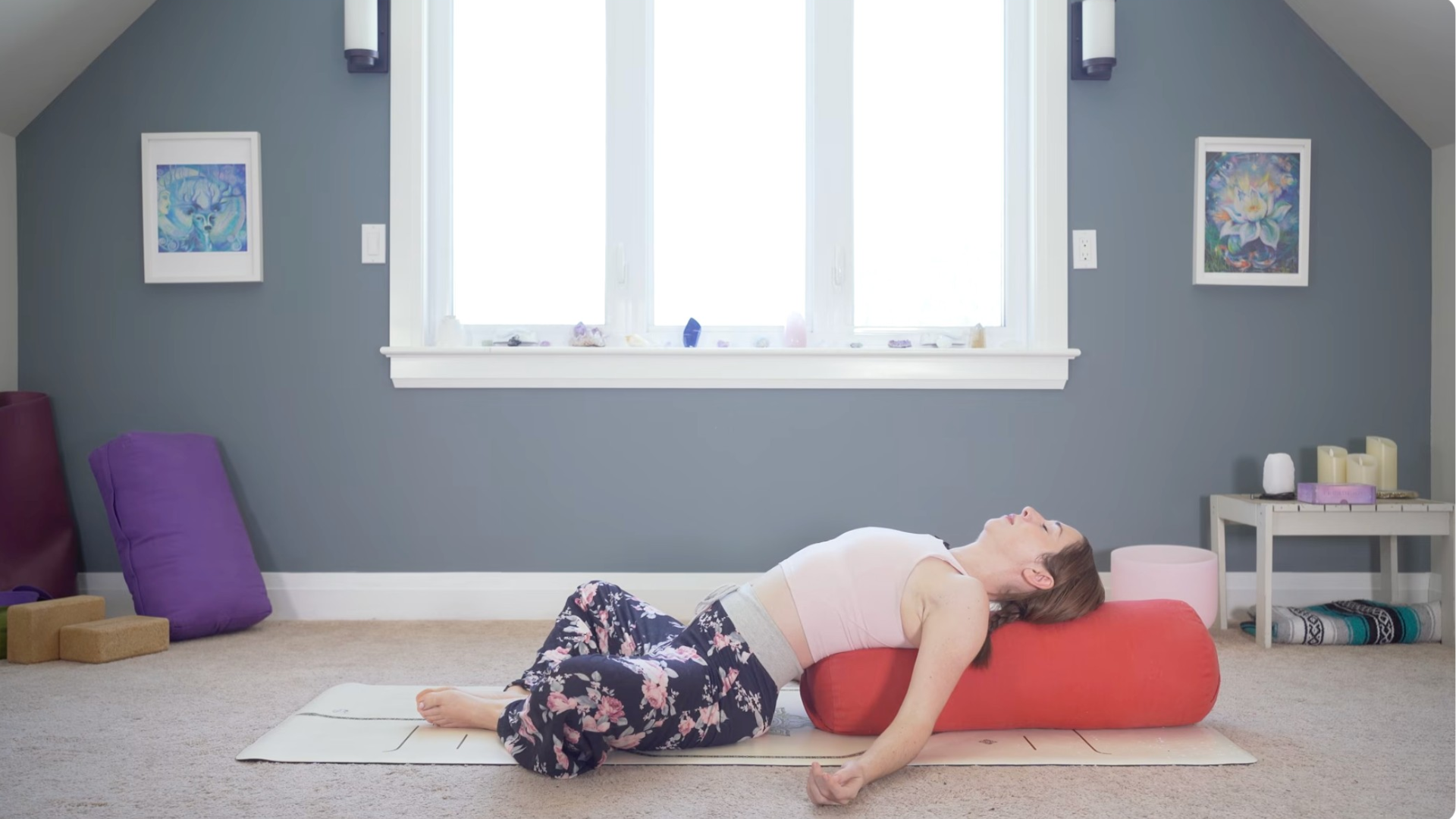
Arrange your bolsters, stacked bed pillows, folded blankets, or anything you have on hand to have lengthwise supports along the middle of the rug. The supports will support your mid-back, upper back, and the back of your head. Sit facing the props and slowly lower yourself onto the props in the “supported” position. Fish pose. Take the first 10 or so breaths in each pose to make any small movements or adjustments to the props until everything feels comfortable to you. If your lower back feels any strain, make your set of supports lower so there is less arch in your back.
Keeping your feet on the mat, extend your legs straight out in front of you with your feet wider than your hips, or bring the bottoms of your feet together to touch and let your knees fall away from each other. Let your shoulders sink into the brace so that there is an opening across your chest.
Then allow yourself to inhale and exhale through your nose. Feel the expansion in your chest, sides and back each time you inhale, then feel the release as you exhale. Stay here with your breath for at least 3 minutes.
We’ll start easing our way out of this situation. If you have this butterfly shape with the legs it may feel good. Just to be straight, I’m going to extend my arms up, extending the fingers away from the toes, and we’re going to lift ourselves off the supports.
Bridge position supported
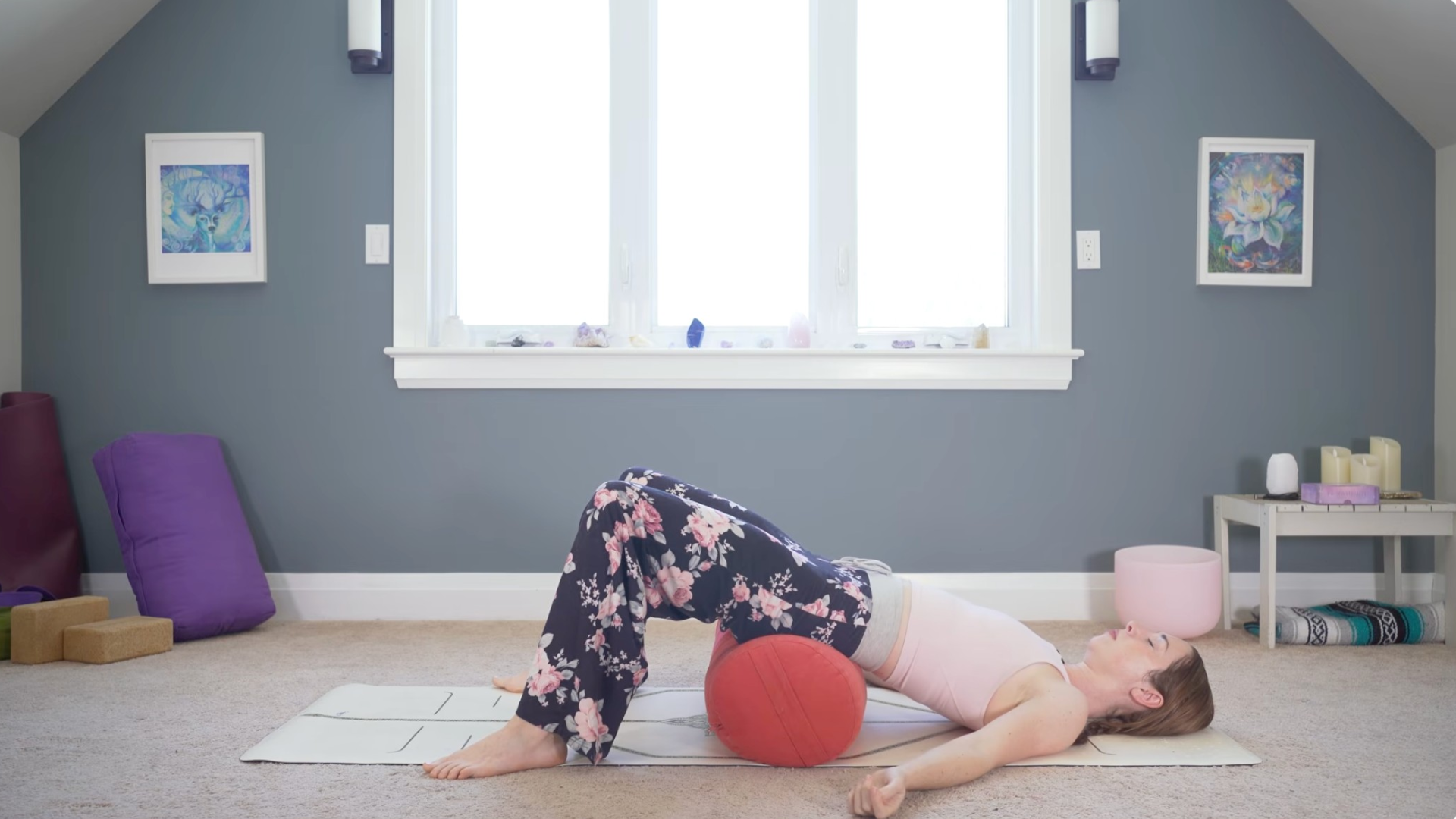
Lie on your back with your knees bent and your feet flat on the mat. Lift your hips and bring bolsters or stacked pillows under your hips and sacrum Supported bridge. You want to make sure you’re not stacking the supports too high down your back. Your hips should be slightly higher than your shoulders in a not-so-intense flexion. If you feel any discomfort, lower the pile of supports.
Stay here or try to slowly straighten your legs. You can also play with where you place your arms. Take a few breaths here to find something comfortable. Then settle into your breath.
Knees to chest or waterfall
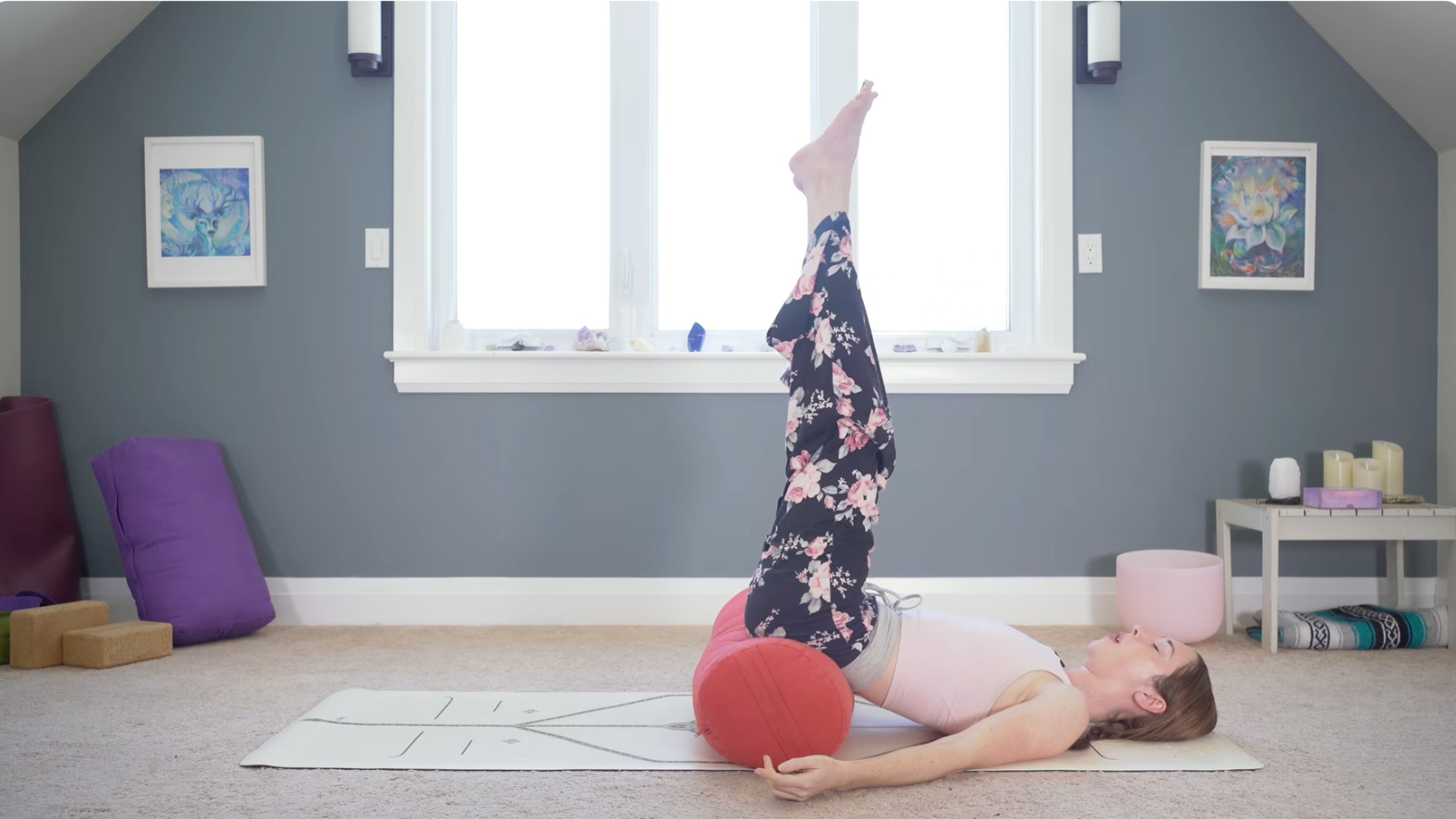
With your hips still supported, hug your knees toward your chest, or if this feels a little pressing on your lower back, allow your legs to point straight toward the ceiling in a waterfall position and perhaps circle your ankles or flex and point your toes.
Stretch your hip abductor muscles
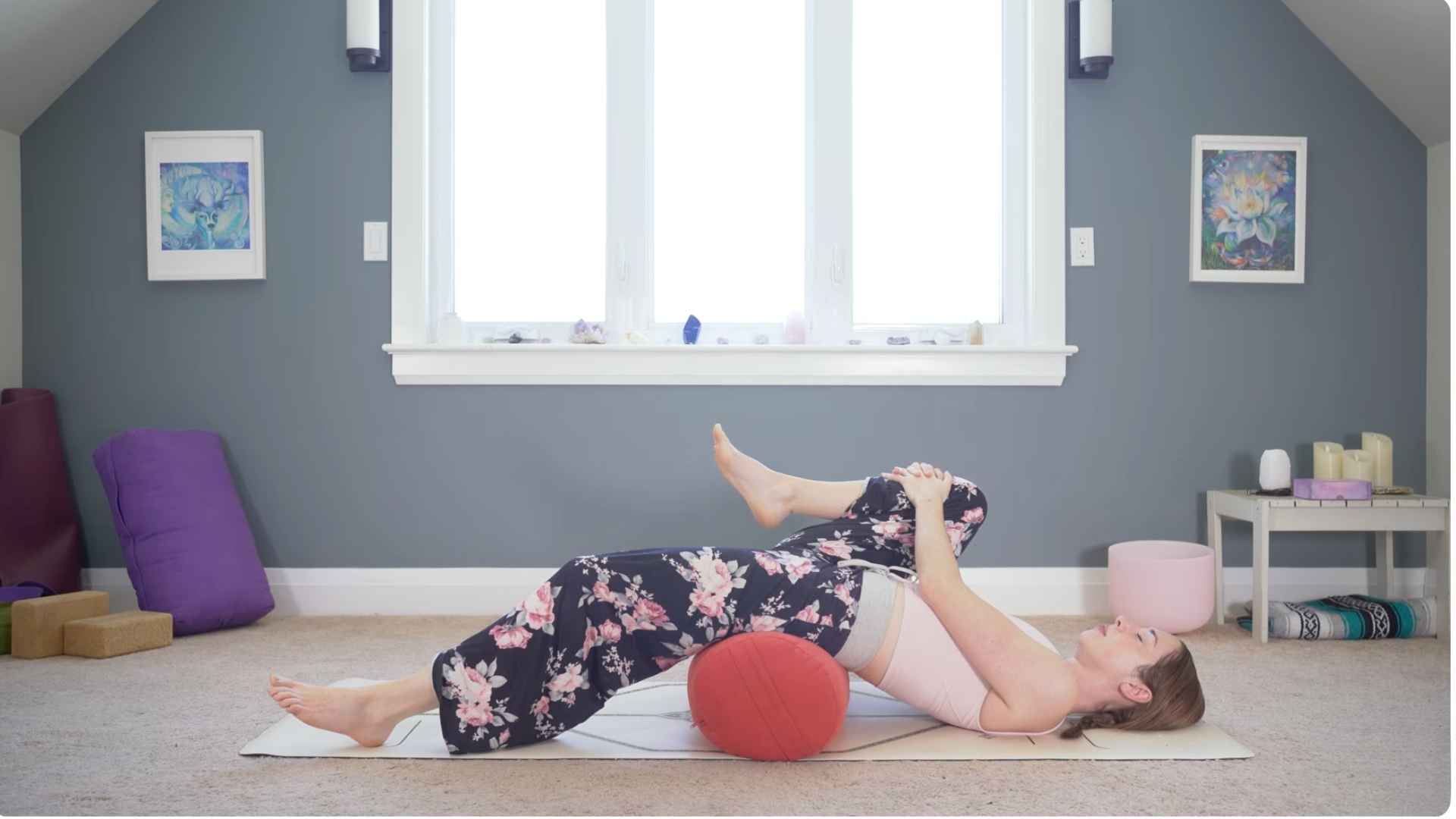
Wherever you are, bring your right knee toward your chest and extend your left leg as much as feels comfortable. Depending on how tight your hip flexors are, sometimes your leg will swing off the mat, and that’s okay. You’re just looking for a nice opening along the front of your left hip and a little bit along the inside of your right thigh. You want to keep your arms relaxed and your head and shoulders heavy on the mat to make this stretch as passive as possible. Get rid of any tightness or tension in your jaw, face muscles, neck and shoulders. Stay here for a few minutes.
Slowly ease your way up to take the stretch on the other side. It is very normal for one party to feel completely different from the other.
Bring your right leg toward your chest as before for a few breaths, or if you prefer to extend your legs toward the sky again, do so. Then return your feet to the mat, raise your hips, and remove any support you are using from underneath you.
Reclining twist
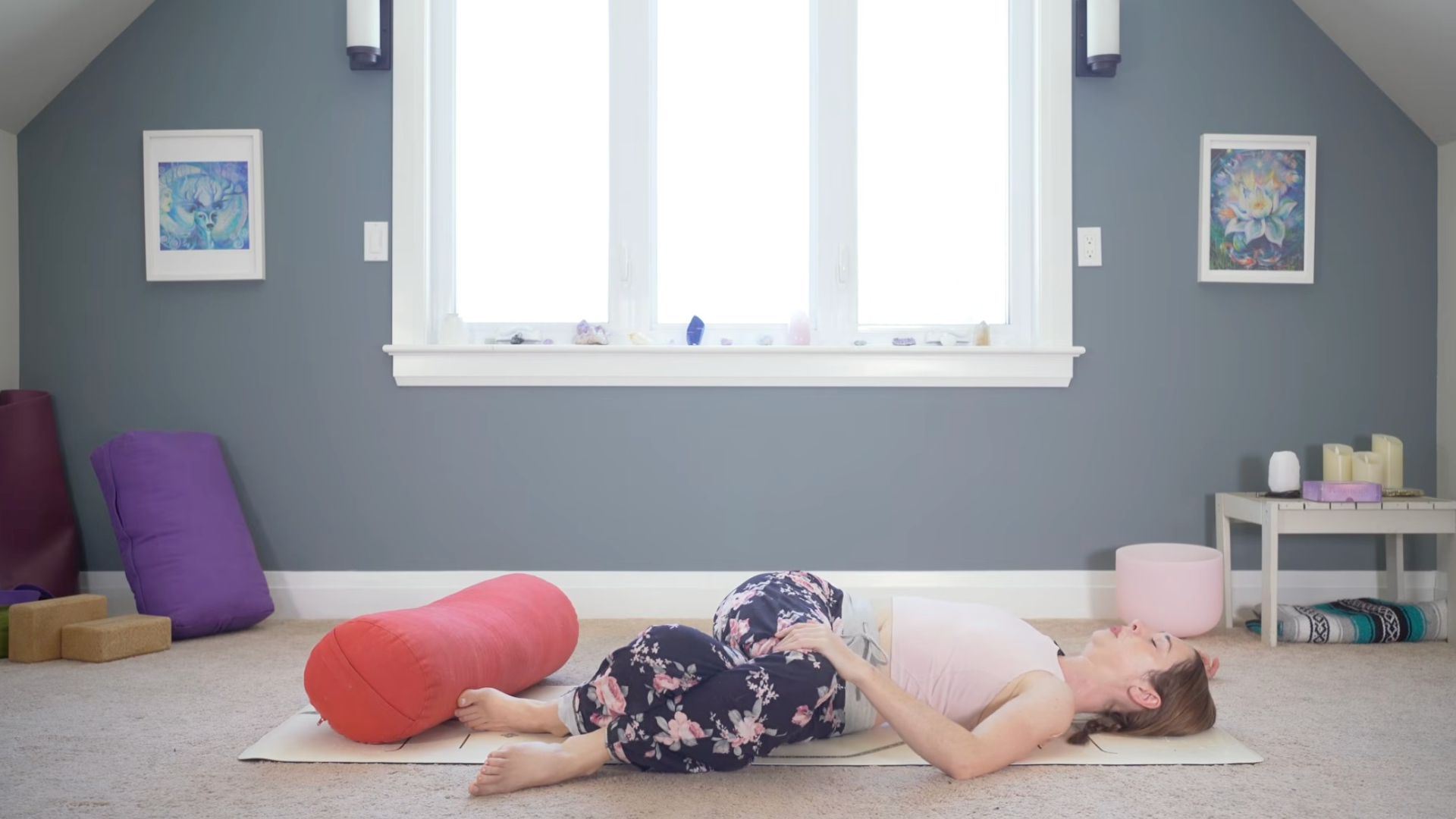
You may not need support for this yin yoga pose. Lie on your back, bend your elbows and make your arms into a small cactus shape. Lift your hips and move them slightly to the right, then let the knees and thighs drop to the left. And you can use your left hand, if you wish, to help guide that thigh down in a gentle twist of the spine. Keep your collarbones facing the ceiling.
You can move the supports down your thigh for more support if that’s more comfortable. If you want to intensify this twist, you can always wrap your right thigh over your left thigh and then let the knees drop. If this feels like there is too much sensation in your lower back or hips, ease up on the twist a little. Take slow, steady breaths while you stay here for a few minutes.
Then slowly return to center, move your hips slightly to the left, then lower your knees to the right. Stay here for a few minutes while your breathing settles.
Slowly release yourself from the twist and return to center. Pull your knees toward your chest for a few breaths.
Savasana
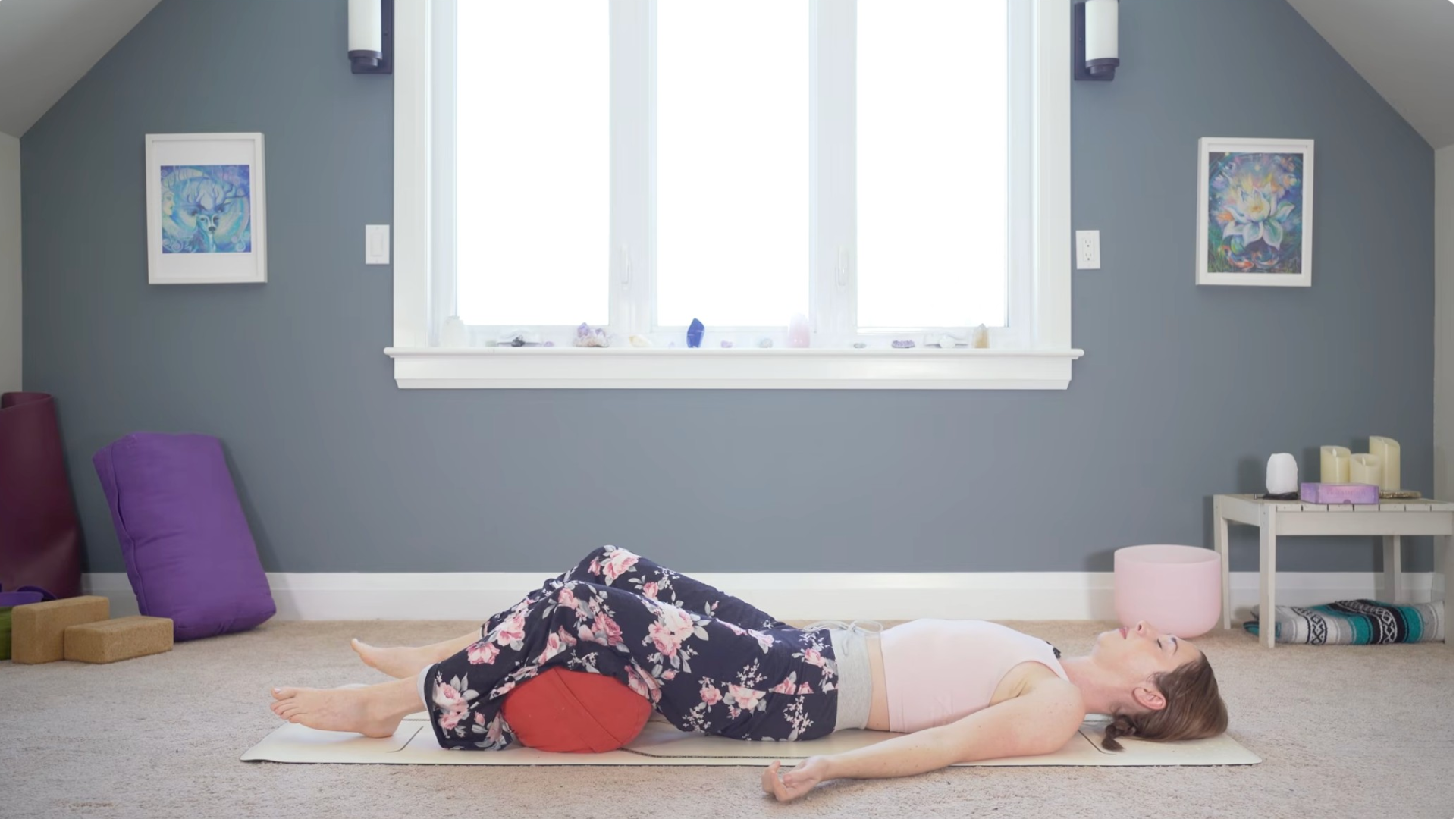
Settle into your version of Savasana. Sometimes, using a bolster under your knees for a little support can make this final pose more comfortable, especially if you’re feeling tension or pinching in your lower back. You are also welcome to stay completely flat on the mat.
Consider shrugging your shoulders down and away from your ears. Lift your palms up, allowing yourself to take up plenty of space here and fully relax. There’s nothing to do, nowhere to be. When you notice that your mind is wandering, you can just acknowledge it and not overdo it. Instead, focus on the flow of your breath or any sensations in the body. Sometimes, choosing an affirmation, mantra, or word to repeat internally can help us stay centered and focused inward. You can try saying “I am calm,” “I am at peace,” “I am at peace,” or whatever you want to feel. You will stay here for a few minutes or you can use this space to try to let yourself fall asleep.
closing
If you are coming out of Savasana, begin to deepen your breath. Then start moving a little, enough to slowly wake yourself up. Maybe extend your arms above your head. I’ll turn to one side and push the kickstand out of the way.
When you’re ready, sit up slowly and sit tall. You can bring your hands together in front of the heart or place them on your thighs. Close your eyes and take a moment to notice how you feel now, and notice what has changed, and what feels different, as a result of your practice. Stay here as long as you want.
Thank you so much for doing this yin yoga to relieve fatigue season with me.

