
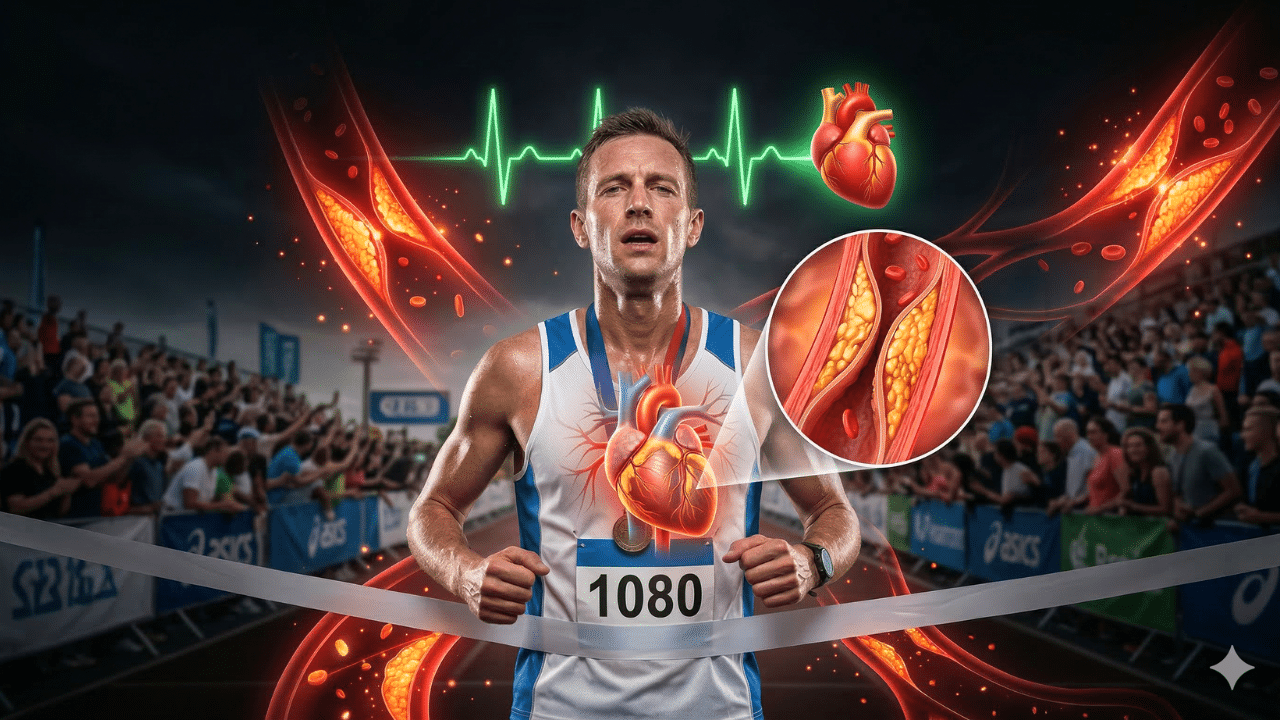


What if I told you that the most dedicated and courageous athletes — the ones who spent hours each week pushing their bodies to the limits — were nearly six times more likely to develop plaque in their arteries than people who trained less? Sounds quite backwards, doesn’t it? For decades, we’ve been told that getting more exercise is the key to a healthier heart. But a startling new study has revealed a relationship that is the exact opposite of what most of us assume.
This is not a simple case of “exercise is bad for you.” The truth is much more nuanced and fascinating. We’re beginning to realize that the relationship between physical activity and heart health isn’t as clear as we previously thought, especially when it comes to high-volume, high-intensity endurance training. This article will break down the latest science, explore what’s really going on inside the arteries of lifelong athletes, and explain what it means for your health and fitness routine. We’ll look at the evidence, separate the facts from the fear, and give you practical advice to make sure you’re protecting your heart in the long term.
Key takeaways
- The amazing link: Recent high-quality studies show that lifelong high-endurance athletes can have a significantly greater amount of plaque in their arteries than moderately active individuals.
- Intensity is most important: The latest research, which uses wearable technology rather than self-reported data, suggests that high-intensity training (when combined with high volume) is the main driver of these increased deposits.
- Plaque vs. Heart Attack: Importantly, while these athletes may have higher plaque scores, they do not appear to have more heart attacks or have a greater risk of dying from heart disease. The overall health benefits of their active lifestyle appear to provide a powerful protective effect.
- Fitness is not immunity: Staying fit is one of the best things you can do for your health, but it doesn’t make you invincible. This research is a reminder that even the fittest people should be aware of other cardiovascular risk factors, such as cholesterol.
1. The discovery that shocked researchers: more exercise, more sediment?
This whole conversation started in 2008 when German researchers decided to examine a group of 108 seemingly healthy marathon runners. These were no ordinary runners. They were men over the age of 50 who had completed at least five marathons in the past three years. The researchers compared them to a control group with the same heart disease risks, with the only major difference being marathon running. The results were completely unexpected. Marathon runners had much more strength, Calcified plate Buildup in their arteries The study authors concluded that we made an “unwarranted assumption” that being a marathon runner automatically meant healthier arteries.
This was not just a one-time result. Subsequent studies continued to confirm the signal. In 2017, two major papers were published in the journal Blood circulation I found the same pattern. One study of endurance professors in the United Kingdom found that they had a high incidence of plaque even though they had lower traditional risk factors. Another looked at the lifetime exercise habits of men around 55 years of age and found that 77% of those with the highest weekly exercise volume had plaque, compared to just 56% in the lowest volume group. It became clear that something was going on, but the big question remained: Why?
2. Volume vs. Intensity: Unpacking the Rules with New Technology
For many years, there has been a heated debate in the scientific community. What was driving the formation of this painting? Was it the sheer volume of exercise – the total number of hours logged on the road or bike over a lifetime? Or was it the intensity and strenuous effort to push your limits? The evidence was ambiguous, and both sides could make a convincing case.
The major weakness of all previous studies was that they relied on self-reported training data. Researchers will ask participants to remember and report their exercise patterns, which is not reliable. Our memories are not perfect, and it is difficult to remember every exercise accurately.
This has all changed with a groundbreaking 2023 study from Masters at Heart Consortium. This time, the researchers didn’t rely solely on memory. They tracked participants using wearable monitoring devices to obtain accurate and objective data on training duration and intensity (measured by heart rate). When they analyzed this granular data, the answer became crystal clear. Athletes who trained at the highest intensity had nearly six times the risk of developing plaque. It is interesting, when they looked at The same participants Using the old method of self-reporting, the association disappeared. This showed how important accurate measurement is. The data revealed that high-intensity exercise itself was not the problem, but high volume combined with high amounts of high-intensity training was the strongest predictor of plaque buildup.
3. But is this painting really dangerous?
This is the most important question, and the answer is where the nuance comes from. Studies have found more plaque, but they do no Find more heart attacks or other cardiovascular events. The plaque was found in these athletes because researchers were specifically looking for it using CT scanners; It was not causing symptoms or problems.
Some previous research has suggested a silver lining: that plaque in athletes tends to be more stable and calcified, making them less likely to rupture and cause a heart attack. However, a more recent 2023 study complicated this, finding that lifelong endurance athletes did not necessarily have a less severe form of plaque than healthy non-athletes.
So, if plaque isn’t “safer,” why aren’t these athletes having more heart attacks? To answer that, we need to look at a huge study that followed more than 21,000 participants for 17 years. It found exactly the same pattern: high-volume exercisers were more likely to have elevated plaque levels. But here’s the crucial part: they were no More likely to die from heart disease or any other cause. In fact, when it comes to overall health and mortality rates, the group with very high training volumes still has an advantage. The amazing benefits of exercise at the system level—such as improved blood pressure, decreased inflammation, and improved metabolic health—seem to be so powerful that they offset the potential risks posed by this extra plate.
4. The bigger picture: Why exercise is still your best medicine
It is important to put this information in context. These studies don’t compare hardcore athletes to couch potatoes. Comparison groups usually consist of fairly healthy and active people. If you compare highly physically active athletes to a really sedentary group, the health outcomes for sedentary individuals will be much worse. Nothing in this research overturns the mountain of evidence showing that exercise is the most powerful tool we have for promoting a long, healthy life.
This is a classic case where it is better to focus on the hard outcomes (such as heart attacks and deaths) rather than the signs (such as plaque findings). A sign is a sign, but it is not the destination. In this case, the sign (plate) points in one direction, but the actual health results go in another direction. The data is clear: exercise, even at very high levels, still reduces your overall risk of death.
5. What this means for you: A practical guide to heart health
So, what should you do with this information? The first step is not to panic or stop exercising. The message is not that intense exercise is dangerous. Instead, the main idea is that fitness is not a suit of armor. You can’t completely bypass poor diet or other risk factors.
If you’re an endurance athlete, this research suggests you shouldn’t assume you’re immune to heart disease. It’s a good idea to be proactive and know your numbers. This means managing other cardiovascular risk factors just like everyone else. Pay attention to your blood pressure and blood sugar, especially cholesterol.
For example, many experts now believe that lowering LDL cholesterol (“bad” cholesterol) to very low levels is one of the best ways to prevent plaques from forming in the first place. It is not a matter of choosing between exercises or Cholesterol management. It’s about doing it both of them. For some people, this may mean considering lipid-lowering medications such as statins, even if they are young and fit, to reach an optimal LDL level (eg, less than 50-60 mg/dL). This is a conversation to have with your doctor, armed with your personal health data.
conclusion
The relationship between exercise and the heart is more complex than we imagined. While it is true that very high levels of intense training may contribute to the buildup of plaque in the arteries, the enormous benefits of this exercise appear to protect these same athletes from the serious consequences of that plaque. The idea is not to be afraid to exercise, but to take a holistic view of your health. Keep pushing yourself and stay active, but don’t neglect the basics. Use your physical fitness as a foundation, and build on it by managing all the other factors that contribute to a long, healthy life.
source: Dr. Brad Stanfield