
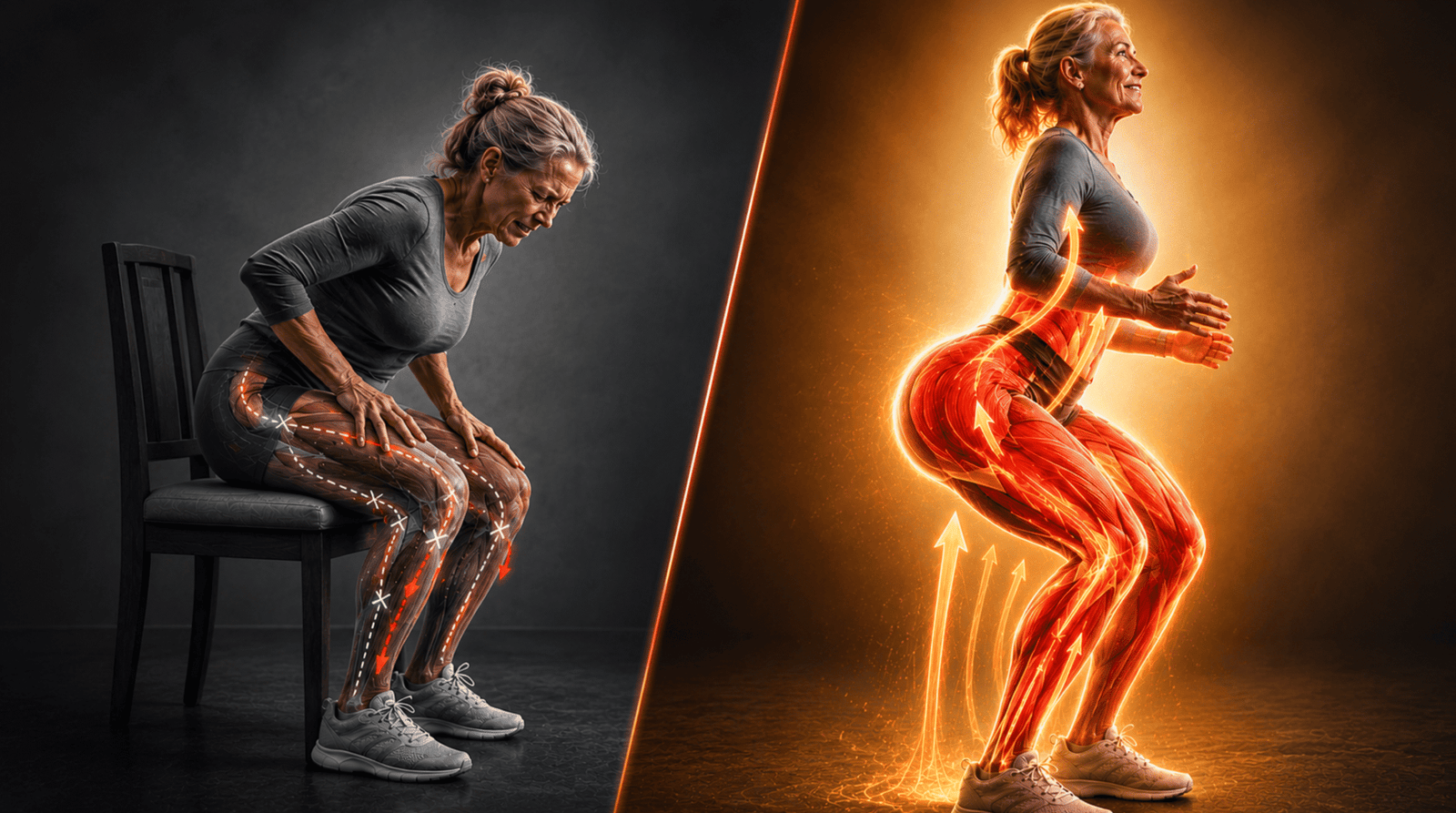


Have you noticed that it’s a little harder to get out of a low chair, or that carrying groceries seems to take more effort than usual? If you are a woman over 50, you are not imagining this. This is often the result of age-related muscle loss, a condition called muscular dystrophy. It’s a silent process that can sneak up on you, but its effects are anything but quiet. It can slow your metabolism, increase your risk of falling, and even affect your independence. Many people think the only solution is to spend countless hours at the gym or doing cardio on the sidewalk. But what if I told you that for women over 50, this approach often backfires and even makes muscle loss worse? The truth is, you don’t need to become a gym rat to regain your strength.
The secret is not in the duration of your training, but in the intelligence of it. We need to focus on compound movements, which are powerful exercises that engage several large muscle groups at once. Think of it as getting the most out of your money. These movements trigger a hormonal response in your body that signals you to build and maintain lean muscle. I’m going to show you three simple and incredibly effective moves you can do from the comfort of your home. You can incorporate them into a quick 10-minute routine that will help you not only stop muscle loss, but actually reverse it, building a stronger, more flexible person. (Based on Coach Tyler’s insights)
Key takeaways
- Sarcopenia is reversible: Age-related muscle loss It is a common concern for women over 50, but it is not an inevitable fate. You can effectively reverse this with targeted strength training.
- Compound movements are key: Forget long and exhausting workouts. The most effective way to build muscle is through compound exercises that work multiple muscle groups at once, such as the buttocks, hamstrings, quads, chest and back.
- Consistency over intensity: Performing a short, consistent routine several times a week is much more beneficial than long, sporadic gym sessions. A simple 10-minute workout can deliver powerful results.
- Form is everything: Performing these exercises with proper form is crucial to increasing muscle engagement and preventing injury. It is better to do fewer reps correctly than to do many reps poorly.
1. Sit-Stand Exercise (Ultimate Functional Squat)
First up is the king of all functional exercises: the sit-stand, which is essentially a bodyweight squat. Why is this step so important? Because it simulates one of the basic movements you do every day, which is getting up and down from a sitting position. Mastering this exercise will build strong strength in your largest muscle groups: your glutes (glutes), quadriceps (front of thighs), and hamstrings (back of thighs). Strengthening these muscles not only makes daily activities easier, but also creates a strong foundation that protects your knees and lower back. It’s the final step to maintaining your independence and strength.
To do it correctly, start by standing in front of a sturdy chair. Your feet should be slightly wider than your hips, with your toes pointing slightly outward. Keep your stance high, chest up, and shoulders back. Start the movement not by bending your knees, but by pushing your butt back as if you were about to sit down. Keep your back straight and your core engaged. Slowly and controlledly lower yourself until your butt taps the chair, then drive through your heels to stand back up, squeezing your glutes at the top. Remember to keep your knees facing the same direction as your toes; Don’t let them collapse inward. For your breathing, inhale as you descend and exhale forcefully as you stand up. If this is too difficult at first, place your hands on your knees for a little extra support. If you feel like it’s too easy, you can increase the speed a little or even add a small jump on top to recruit more muscle fibers and speed up your results.
2. High chair push-ups
Next, we’ll target your entire upper body with high chair pushups. Many women neglect upper body strength, but it’s essential for everything from opening a heavy door to catching yourself if you trip. This modified push-up is the perfect way to build strength in your chest, shoulders and triceps without the intimidation of a floor push-up. The most important part of this exercise is form, as doing it correctly protects your joints and activates the large, strong muscles in your back and chest.
Find a sturdy chair or work surface. Place your hands on the edge, slightly wider than your shoulders. Return to plank position. Your body should form a straight line from your head to your heels. It’s important to avoid two common mistakes: Don’t let your hips sag, and don’t lift your butt into the air. For a perfect plank, squeeze your buttocks and gently tuck your pelvis underneath. This engages your core and protects your lower back. Now for the most important cue: Instead of opening your elbows out to your sides, I want you to think about pulling your arms back and bending your elbows toward your sides, pointing them toward your hips as you go down. You should feel the muscles in your abdomen (underarms) and your chest flare. Inhale as you lower your chest toward the chair, keeping your elbows tucked. Exhale as you press back to the starting position, maintaining this tension. If this becomes too easy, you can progress with a lower surface, such as the seat of a chair or coffee table. Finally, you can work on doing push-ups on the floor.
3. Gluteal bridge
The final movement is designed to wake up and strengthen the strongest muscle in your body: your glutes. In our modern, sedentary world, the glutes can become weak or “sluggish,” often leading to lower back pain and poor posture because smaller, weaker muscles have to compensate. A strong glutes are the best defense against back pain and the key to strong, stable movement. The gluteal bridge is a simple but very effective exercise to specifically target and activate these muscles.
You can do this movement anywhere, on the floor, on the couch, or even in bed. Lie on your back with your knees bent and your feet flat on the floor, about hip-width apart. Place your arms at your sides with your palms facing the sky. To really isolate your glutes, lift your toes toward your nose so that only your heel is pressing into the floor. Now, push your heels into the floor and squeeze your glutes to lift your hips toward the ceiling. At the top, your body should form a straight line from your shoulders to your knees. Hold for a second, squeezing your glutes firmly, then slowly lower your hips down until your tailbone taps the floor. Inhale as you lift up, then exhale as you slowly lower down. If this seems too easy, you can try the progression up the bridge. Lift your hips up and lift one leg off the floor, keeping your pelvis level. Lower one leg, then raise the other. This variation, the “gluteal bridge can,” challenges your core stability and works each glute individually.
Your simple 9-minute muscle toning routine
Now, let’s bring it all together into a simple, powerful routine you can do from home. The goal is to work for time, not for a set number of repetitions. This allows you to go at your own pace and focus on perfect form.
- 1 minute from sitting to standing
- Rest as needed (30-60 seconds)
- One minute of high chair push-ups
- Rest as needed (30-60 seconds)
- 1 minute of gluteal bridges
- Rest as needed (60 seconds)
Repeat this entire circuit for a total of three rounds. That’s it! A simple 9-minute routine (plus rest) that you can do 3-4 times a week on non-consecutive days. As you get stronger, you can challenge yourself by trying harder variations, doing more reps within a minute, or taking shorter rest periods. This is called progressive overload, and is the key to consistently building muscle.
conclusion
Reverse muscle loss Building a stronger, more capable body after the age of fifty does not require you to devote your life to the gym. It’s about working smarter, not longer. By adopting these three powerful compound movements and sticking to this short, consistent routine, you’re sending a powerful signal to your body to build and maintain lean muscle. You are actively taking control of your health, strength and vitality. Start today, listen to your body, and take pride in every rep. You have the ability to feel stronger and more confident at any age.
source: Coach Tyler

