
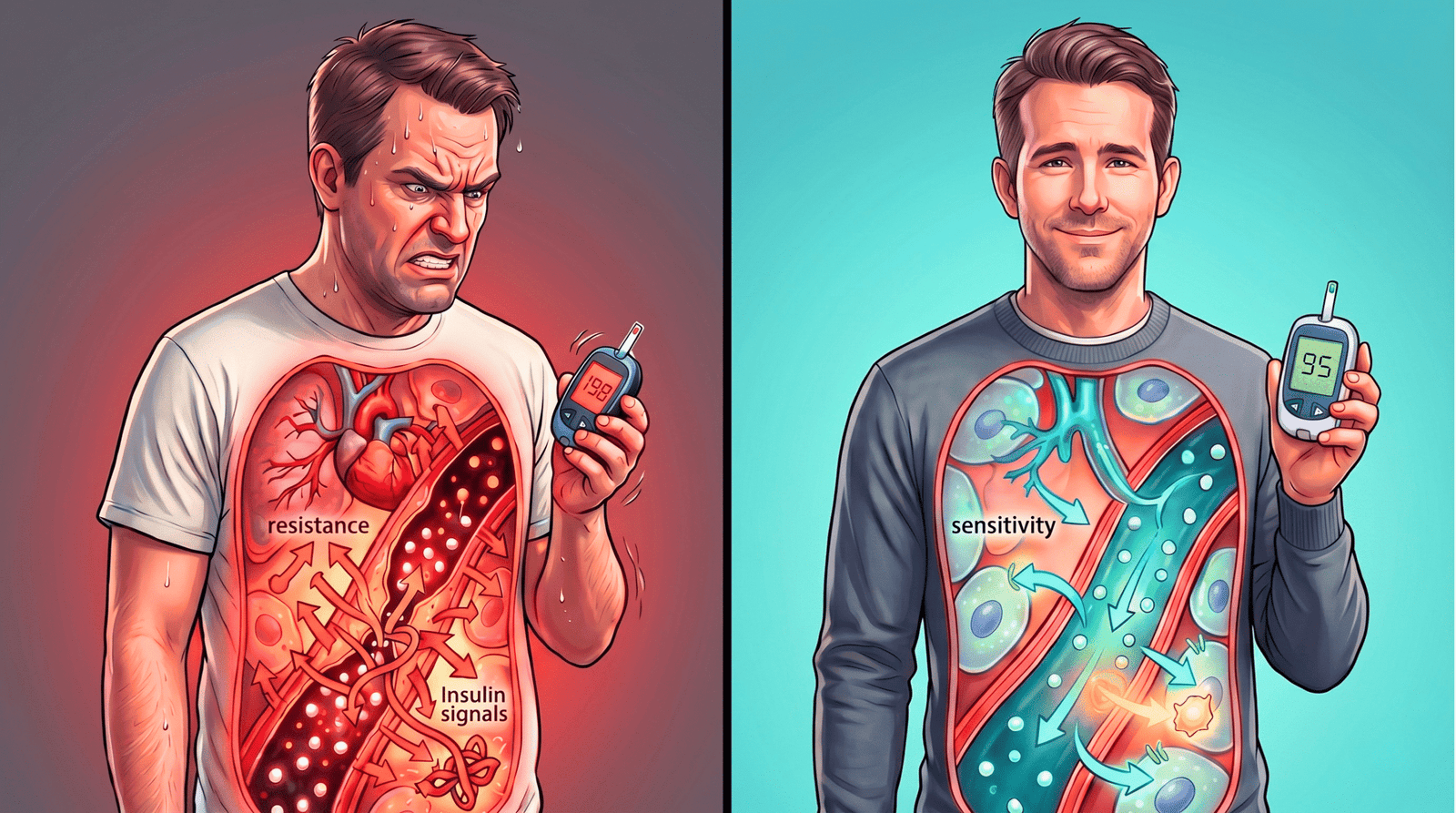


What if you were told for 15 years that your type 2 diabetes was a life sentence, and then you discovered that you had been holding the key to reversing it the whole time? This is not a hypothetical question. It is the true-life story of Francisco, a 69-year-old man who resigned himself to a future of ever-increasing medications and inevitable complications. For more than a decade, he followed his doctors’ orders, took his pills, and watched his health deteriorate. He was told he was a “bad patient” when his sugar levels did not go down. Then the health crisis forced him to look for answers outside the traditional medical playbook, and what he found changed everything. His journey from a despairing diagnosis to a state of partial remission — without any medication — is a powerful testament to the body’s ability to heal and a crucial lesson for anyone who’s been told, “There’s nothing you can do.” (Based on the vision of Dr. Antonio Cotta)
Key takeaways
- Type 2 diabetes is reversible: Even after 15 years of living with the diagnosis, it is possible to put type 2 diabetes into remission.
- Medication is not always the solution: The standard “pill for every disease” approach often fails to address the root cause of high blood sugar and can lead to a cycle of increasing doses and declining health.
- You are your best health advocate: Doctors don’t always have all the answers. Taking charge of your education is crucial to finding what truly works for your body.
- Data is power: Using tools such as a continuous glucose monitor (CGM) can provide real-time feedback, revealing the true impact of food, stress and medications on blood sugar.
- Lifestyle is the ultimate medicine: Basic changes to your diet and habits are much more powerful than any prescription medication to reverse metabolic disease.
1. Diagnosis: Life imprisonment
When Francisco was first diagnosed Type 2 diabetes In 2007, the news hit him like a ton of bricks. His doctor’s words were blunt: “You have diabetes. Accept it.” In that moment, it seemed like his future would flash before his eyes — a bleak landscape of amputations, blindness, and dialysis, the fates he saw befall others. His father was diabetic, and the diagnosis seemed like inevitable genetic fate. This is a story you probably know well. The emotional weight of a diabetes diagnosis is enormous. You may feel like you have lost control of your life, your future, and even your identity. Francisco felt this deeply, and considered it a sentence that would only get worse with time.
2. 15 years in the dark: more pimples, poorer health
For the next fifteen years, Francisco did what he was told. Take his MetforminWhich doctors prescribed without question. It is the first-line treatment recommended by almost every medical guide. However, despite his discipline in taking his medication, his blood sugar level was never under control. It either stays high or goes higher. With each visit to the doctor came the same depressing pattern: more medications, more effective, new-generation drugs that promised hope but produced the same poor results. His symptoms worsened – blurry vision, Neuropathy in his legsAnd signs of kidney stress. Doctors response? They told him he was “misbehaving.” No one stopped to wonder whether the treatment itself had been a failure. They simply blamed the patient, a common and damaging pattern in traditional diabetes care.
3. Wake-up call: Heart attack
The turning point did not come from A Complications of diabetesBut the heart. In 2023, Francisco began experiencing heart palpitations. A 24-hour Holter monitor detected an irregular heartbeat, and doctors told him he was a candidate for a pacemaker. But there was a catch. Before they could schedule the procedure, his cardiologist told him: “You need to get your blood sugar down.” This was the catalyst. For the first time, a medical professional gave him a clear and urgent reason to take control, linking his immediate survival to his glucose levels. It forced him to look beyond the pills and protocols that had failed him for years.
4. The power of self-education and a game changer
With a new sense of urgency, Francisco plunged into research. The Internet in 2023 was a far cry from the limited information available in 2007. He read books, watched videos, and learned about the roles of diet, fasting, and the microbiome. A friend recommended a continuous glucose monitor (CGM), and it became his most important tool. For the first time, he could see in real time what was happening inside his body. The data was undeniable and shocking. First, he asserted that his medications did almost nothing Reducing blood sugar. Second, he saw a direct and immediate relationship between his food choices and his glucose levels. CGM takes the guesswork out and puts you in the driver’s seat. He realized that what you can’t measure, you can’t correct.
5. A radical decision: giving up carbohydrates and medications
Armed with this new knowledge and data, Francisco made a decision he described as “quite risky.” He had seen enough information to believe a different path could be taken. One day, everything stopped. He radically cut out carbs and, on the same day, stopped taking all his diabetes medications. It was a leap of faith, guided by CGM and his research. The results were almost immediate and were nothing short of miraculous. Within three weeks, his vision was clear, the neuropathy in his legs began to fade, and his glucose readings were stable and in a healthy range for the first time in years. He achieved more in just a few weeks by changing his lifestyle than he did in 15 years of taking pills.
6. Opposite the medical institution
When Francisco returned to his doctor, proud of his progress, he was met not with praise but with resistance. He showed her the CGM data: His hemoglobin A1c had dropped from 9.4% to 6.2% in a few months, and his morning blood sugar was in the 90s. But the doctor was focusing on the fact that he had stopped taking the medication. She insisted that it was her responsibility to keep him under the influence of drugs. It was a difficult and disappointing encounter. Francisco realized he was dealing with a doctor trained in medicine, not one focused on true health and healing. This is an obstacle that many people face. When you challenge conventional wisdom and get results, it may threaten the foundation of a physician’s training. Francisco had to make a choice: either follow the doctor’s protocol or trust the amazing results his body was achieving. He chose himself.
7. The continuing journey to complete forgiveness
Today, Francisco is in partial recovery. He does not take any medication for diabetes. His fasting glucose is around 105-115, and his last A1c was 5.9% – a world away from his previous numbers. His journey is not over. After the initial drastic changes, he experienced significant weight loss and constipation. By carefully reintroducing healthy carbohydrates like beans and lentils, he was able to resolve constipation, stabilize his weight, and even regain 7 kilograms of healthy muscle mass without his belly growing. He is still working on improving his diet, addressing the chronic insomnia he has suffered from since childhood, and understanding the role of cortisol. But he is no longer a negative patient. He is an active participant and learner in his health, and uses his knowledge and tools to navigate his path to full recovery.
conclusion
Francisco’s story is a powerful reminder that a diagnosis is not your destiny. For 15 years, he was trapped in a system that offered him more pills but no real solutions. By taking his health into his own hands, educating himself, and using modern tools to understand his body, he broke free. He has proven that type 2 diabetes, a condition often considered chronic and progressive, is actually curable. If you have a similar diagnosis and are feeling lost or given up, let this story inspire you. You have the power to change the course of your health. It requires courage, a desire to learn, and the conviction to follow a path that may differ from the one prescribed for you. Your journey to health begins with believing that it is possible.
source: Dr. Antonio Cotta

