

Cooking is one of the most sensory-rich activities in everyday life. For people who are blind or visually impaired, this is also one of the most achievable things. With the right technology, the kitchen doesn’t have to feel like an obstacle course.
Voice-based tools have made a huge difference. They turn tasks that previously needed sighted assistance into things people can do on their own. People can do this independently, confidently, and on their own terms.
This is a look at the tools that are making a big difference for blind and visually impaired chefs today — from smart speakers to accessible apps to adaptive gadgets — and how they work together in a real kitchen.
“The hardest thing about cooking as a blind mother is listening to your food,” says Therrien. “At the same time, you’re teaching long division to a 10-year-old.” She is co-host of Children go down, bottles go upa podcast for blind mothers.
It is a clear example of the difficulty of cooking with blindness. The kitchen needs your full attention. Life rarely cooperates.
Smart speakers: the original
For many blind and visually impaired chefs, a smart speaker is the most useful tool in the kitchen. Amazon Echo (Alexa) and Google Home (Google Assistant) can handle a wide range of cooking tasks completely hands-free:
- Set timers
- Measurement conversion (“How many cups are in a pint?”)
- Add items to your shopping list when you realize you’ve run out of something.
Google Assistant has a recipe feature. Ask for a recipe by name and they will guide you through the ingredients and steps. Can stop when asked. For simple recipes that don’t take long and don’t have many steps, this works well.
The limitation of smart speakers is that they work from the Internet, not from your personal prescription collection. They read recipes step by step, which can be frustrating. It’s more difficult when you need to navigate, and it’s even more difficult when you need to ask a specific question in the middle of the cooking process.
Accessible applications
Many apps are designed with accessibility in mind.
Audio cookie recipes iOS is designed specifically for blind and visually impaired users. It imports recipes from websites and removes all the clutter like ads and long introductory stories that make most recipe sites difficult to navigate with a screen reader.
But its main feature is conversation: Instead of navigating through steps sequentially, users can ask the app anything about the recipe they’re working on, at any time during cooking, and get a spoken answer. Likes:
- What’s next?
- How much butter do I need?
- I just ran out of sour cream, what can I replace?
- What temperature should the oven be?
It also includes an auto-focus image import feature for blind users. Point the camera at the printed recipe. The app picks it up when it detects text. This takes the guesswork out of framing.
Be my eyes It is a free app that connects blind and visually impaired users with sighted volunteers via live video. In the kitchen, this can be useful for:
- Read a label on an unfamiliar product
- Check if something is cooked by color.
- Ensure that the settings on the device are correct.
- Identify products at the grocery store before cooking them
Artificial intelligence vision It can read text, identify products by barcode, describe images, and even identify food. Pointing it to a can or package will give you the name of the product and often the full label. In the kitchen, this is especially useful for distinguishing similar containers or confirming the contents of a pantry.
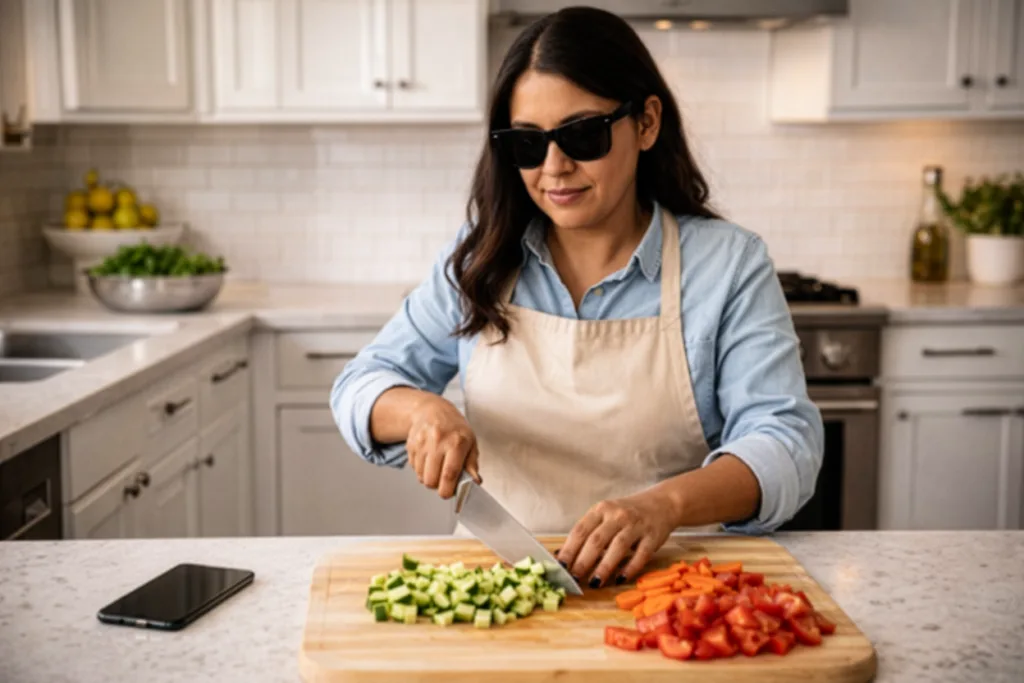
In addition to apps, a growing range of kitchen tools includes audible feedback:
- Talking meat thermometers Announce the internal temperature of your food, eliminating one of the most difficult guessing games in cooking.
- talking kitchen scales, Read measurements out loud, making precise baking easier.
- Induction hobs They are often recommended by occupational therapists for the visually impaired. The surface does not heat up, reducing accidental burns. Many models also have touch controls.
Bumps and tactile markers (small protruding adhesive dots) can be added to any appliance to identify frequently used settings such as medium heat or 350°F on the oven dial. They are inexpensive, widely available, and make a huge difference in everyday cooking.
Blind kitchen is a fantastic resource for adaptive cooking tools designed specifically for blind and visually impaired chefs, founded by Chef Debra Erickson, who lost her sight as an adult and has since dedicated her work to helping others cook independently.
“The one thing that changes everything for blind chefs is when they realize they can still cook safely despite their vision loss,” Erickson says. “For many newly blind chefs, cooking for family and friends was what defined them and a return to that identity.”
Put it together
The most effective kitchen setup for cooks who are blind or visually impaired usually combines several of these tools. The accessible recipe app manages the recipe itself. Speaking instruments deal with measurement and temperature. An identification app like BeMyEyes handles unfamiliar labels and products.
None of these tools require significant technical expertise to use, and most are free or low-cost. The biggest transformation is knowing it exists. It is also helpful to try them in a low-risk environment and you can do so before using them during a full meal.

